Last Updated: August 5, 2026
Medicare RPM reimbursement in 2026 typically ranges from about $90 to $150+ per patient per month when CPT codes 99454, 99457, and 99458 are billed appropriately, with additional one-time reimbursement available under CPT 99453.
What if your practice could earn revenue even when your patients are at home?
That’s exactly what the healthcare industry is experiencing with Remote Patient Monitoring (RPM) in 2026. As healthcare transforms from reactive to proactive, continuous care, RPM has become a real revenue driver for many practices.
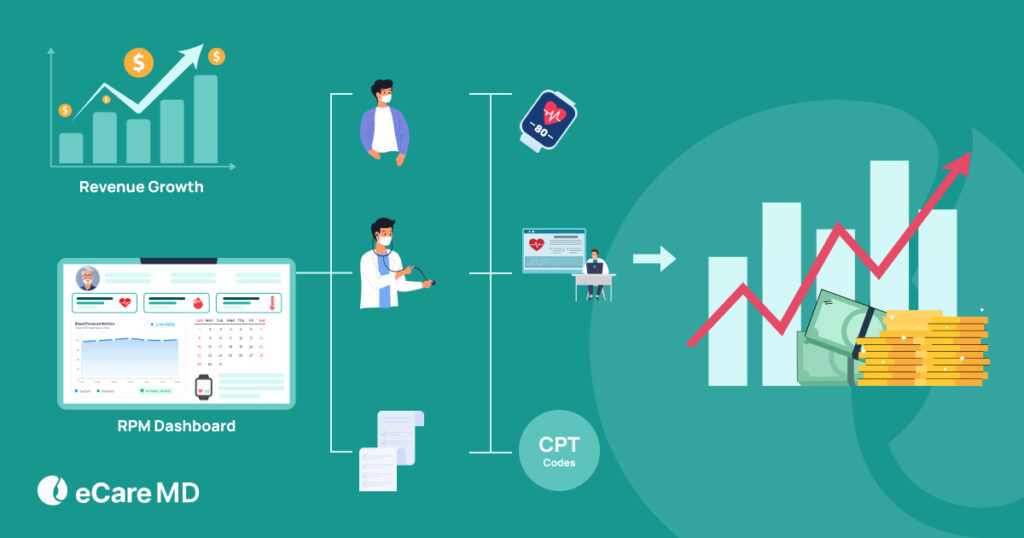
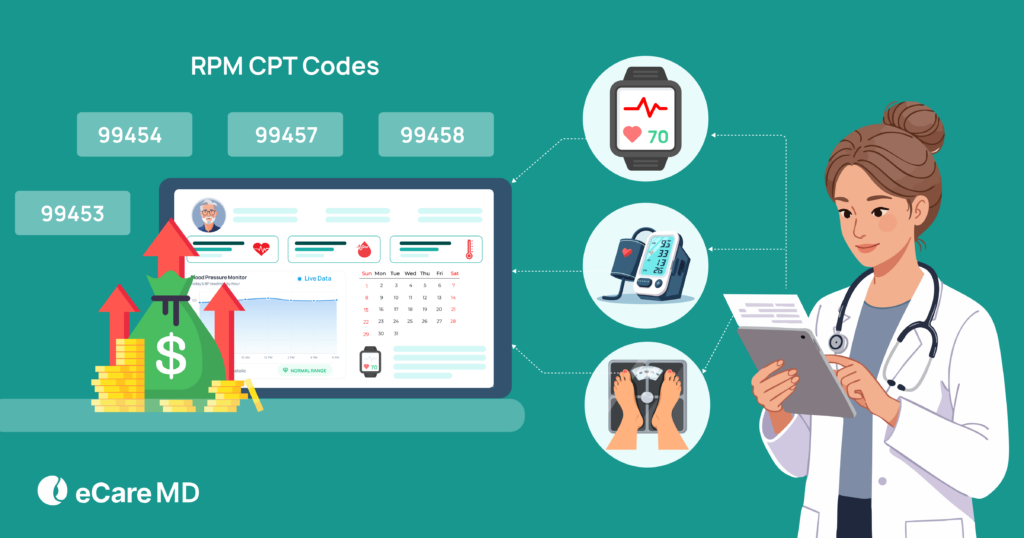
Every interaction, every data point, and every coded activity under CPT 99453, 99454, 99457, and 99458 contributes to overall earnings. This highlights that RPM is not just about better patient care anymore; it also involves how efficiently that care is billed and reimbursed under the Medicare RPM payment schedule.
At this stage, it becomes clear why understanding RPM reimbursement rates for Medicare is essential in 2026. You should know what actually drives payments and how small operational changes can affect your overall profitability.
In this guide, we’ll explore what RPM reimbursement looks like in 2026 and what truly affects your earnings. This highlights where real financial opportunity lies.
RPM Reimbursement Rates 2026
To understand how RPM generates revenue, it’s important to see how each CPT code contributes to the bigger picture. To create a consistent monthly income stream for your practice, the 2026 RPM reimbursement rates are structured to combine one-time payments with time-based reimbursement.
Let’s have a look at what the estimated Medicare national averages look like in 2026:
| CPT Code | Service | Estimated Rate |
|---|---|---|
| 99453 | Setup & education | $18–$25 (one-time) |
| 99454 | Device & data | $45–$55/month |
| 99457 | Monitoring (20 min) | $45–$55/month |
| 99458 | Addl. 20 min | $35–$45 |
When combined, these codes typically generate ~$90–$150+ per patient per month, depending on engagement level and time spent on monitoring
To put that into perspective:
- 99454 + 99457 → ~$100/month
- With 99458 → ~$140/month
Each code plays a specific role in building revenue, making this model more effective. For example:
- 99454 → recurring base revenue
- 99457/99458 → time-based, scalable revenue
In simple terms, RPM creates a scalable revenue model where earnings grow with patient engagement and monitoring time. If you manage monitoring time and documentation more efficiently, you can unlock the full potential of remote patient monitoring reimbursement rates.
However, actual payments can vary based on geographic adjustments (GPCI) and individual payer policies. Even so, the overall structure remains consistent across the Medicare RPM payment schedule.
What Impacts Your Actual RPM Reimbursement
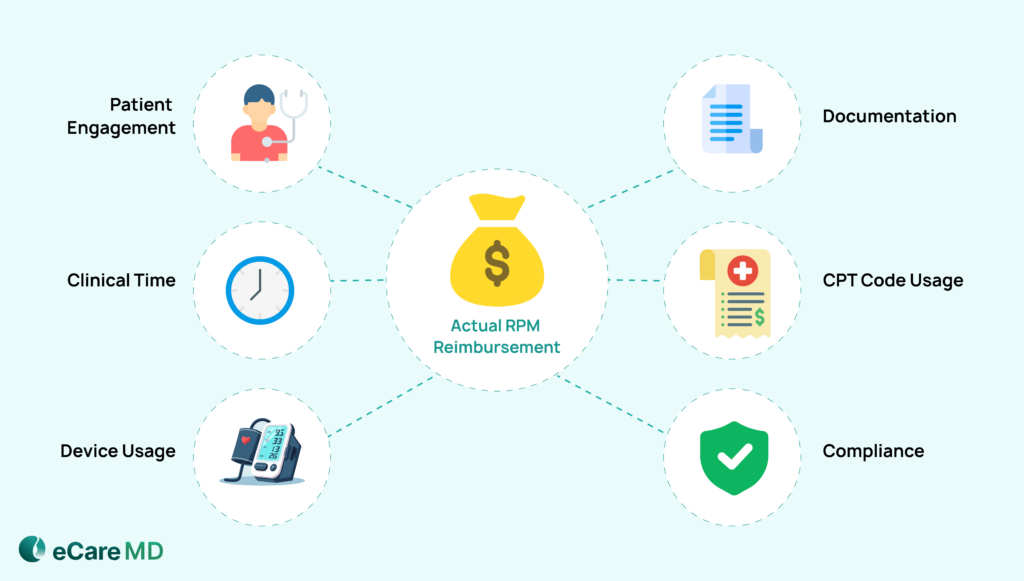
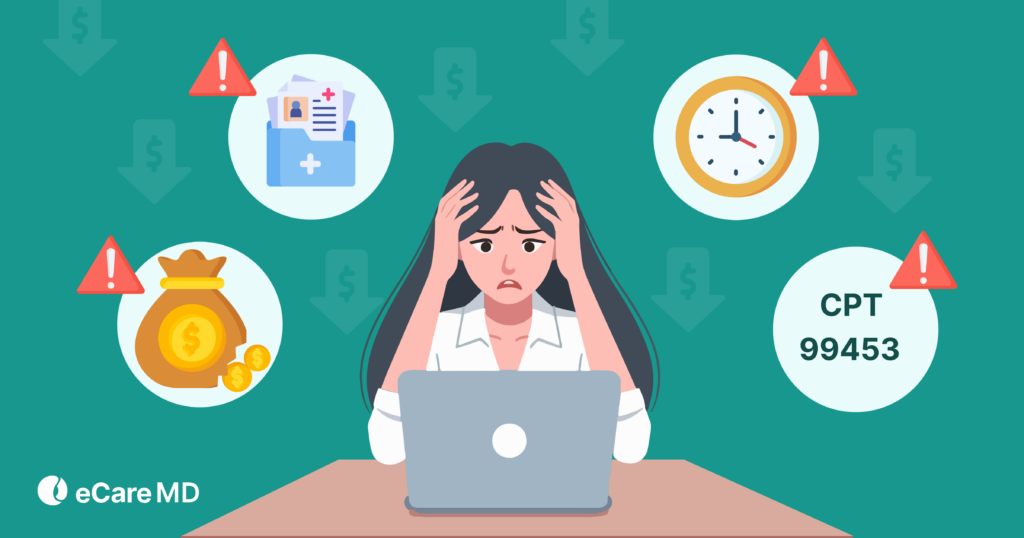
At this point, the structure of RPM reimbursement rates 2026 may seem straightforward. However, in practice, what you actually earn can be very different. The gap between expected and actual revenue often comes down to a few critical operational factors that are easy to overlook.
One of the key factors is the 16-day data requirement for CPT 99454. If your patient’s data is not recorded for at least 16 days in a month, you can’t bill for it. Missing small details like this can directly affect your monthly revenue.
Equally important is time tracking. CPT codes like 99457 and 99458 rely on the overall time your care team spends on monitoring. If that time is not tracked properly, you can’t get paid for the work you have done. In simple terms, no tracking means no billing.
Furthermore, documentation also plays a key role. If records are unclear or incomplete, it can ultimately result in missed payments or issues during audits. Along with all this, patient engagement also contributes to it. If your patients don’t use their devices regularly, it becomes harder for you to meet billing requirements.
Let’s have a look at a quick summary of where many practices can lose revenue:
- Missed time tracking for 99457/99458
- Incomplete documentation
- Failure to meet the 16-day monitoring requirement.
- Inconsistent patient device usage.
However, these issues are fixable. With better tracking, clear documentation, and consistent monitoring, you can make sure that you are capturing the full value of your services. This also helps maximize RPM reimbursement rates for Medicare.
How Much Does Medicare Pay for RPM in 2026?
From a revenue perspective, the real value of RPM reimbursement rates in 2026 comes from how the codes stack together each month.
Here’s a simple breakdown of what that can look like:
| Scenario | Monthly Revenue per Patient | Annual Revenue per Patient |
|---|---|---|
| 99454 + 99457 | ~$90–$110 | ~$1,100–$1,300 |
| 99454 + 99457 + 99458 | ~$120–$150+ | ~$1,400–$1,800+ |
Here, you can see that you can generate meaningful recurring revenue even from a single patient. When scaled across a patient panel, the financial impact becomes significantly greater.
For example, if you have 50 active RPM patients, they can create a consistent monthly income stream. And with 200 patients, it can turn into a major revenue channel for the practice.
Factors such as patient adherence, monitoring consistency, and efficient time tracking directly influence total earnings.
Practices that regularly track patient activity and billing performance are more likely to see predictable results. If you have clear visibility into per-patient revenue, it can become much easier for you to spot gaps, enhance workflows, and identify opportunities to grow your RPM program.
Conclusion: Making RPM Financially Predictable
RPM is no longer just a care delivery tool; now it has become a scalable, recurring revenue stream for practices in 2026. With the structure of RPM reimbursement rates 2026, you have a real opportunity to build consistent income while improving patient outcomes at the same time.
However, reimbursement alone doesn’t guarantee results. The real difference comes down to execution. How well your team tracks time, maintains documentation, and ensures consistent patient monitoring ultimately decides how much revenue you actually capture.
When these pieces are in place, RPM becomes far more predictable, not just clinically, but financially as well. And that’s the real goal: turning a variable revenue source into something steady, reliable, and scalable through better use of RPM reimbursement rates for Medicare.
Click here to know more about it.
Frequently Asked Question’s
RPM reimbursement rates in 2026 are based on a combination of CPT codes—99453, 99454, 99457, and 99458. Together, they create a mix of one-time, monthly, and time-based payments. On average, providers can expect around $90–$150+ per patient per month, depending on how consistently services are delivered and billed.
Medicare typically pays around $90 to $150+ per patient per month when RPM services are fully utilized. This depends on whether providers bill only the base codes (99454 + 99457) or include additional monitoring time through 99458.
Here’s a quick breakdown of estimated rates:
- 99453: $18–$25 (one-time setup & education)
- 99454: $45–$55/month (device & data)
- 99457: $45–$55/month (first 20 minutes of monitoring)
- 99458: $35–$45 (each additional 20 minutes)
These rates may vary slightly but follow a similar structure across Medicare.
The biggest factors include:
- Meeting the 16-day device data requirement
- Accurate time tracking for 99457/99458
- Proper documentation
- Consistent patient engagement
Even small gaps in these areas can reduce overall reimbursement.
Patient adherence plays a direct role in reimbursement. If patients don’t use their devices regularly, providers may not meet the 16-day data requirement for 99454. Lower engagement can also reduce the need for monitoring time, which impacts billing for 99457 and 99458.























![The Future of Remote Patient Monitoring: CMS Innovations & Emerging Trends [2026]](/wp-content/uploads/2024/07/Blog-36-The-Future-of-Remote-Patient-Monitoring_-Trends-AI-Innovation-CMS-Updates-for-2026-1024x538.png)