Last Updated: July 14, 2026
Approximately $1 trillion, or 20% to 25% of health care dollars, is spent annually on administrative services in the United States.
This is not just a cost problem; it’s actually a revenue problem. And the reasons behind it are smaller issues that quickly turn into major complications like missed billing opportunities, workflow gaps, and processes that quietly drain your practice’s earnings.
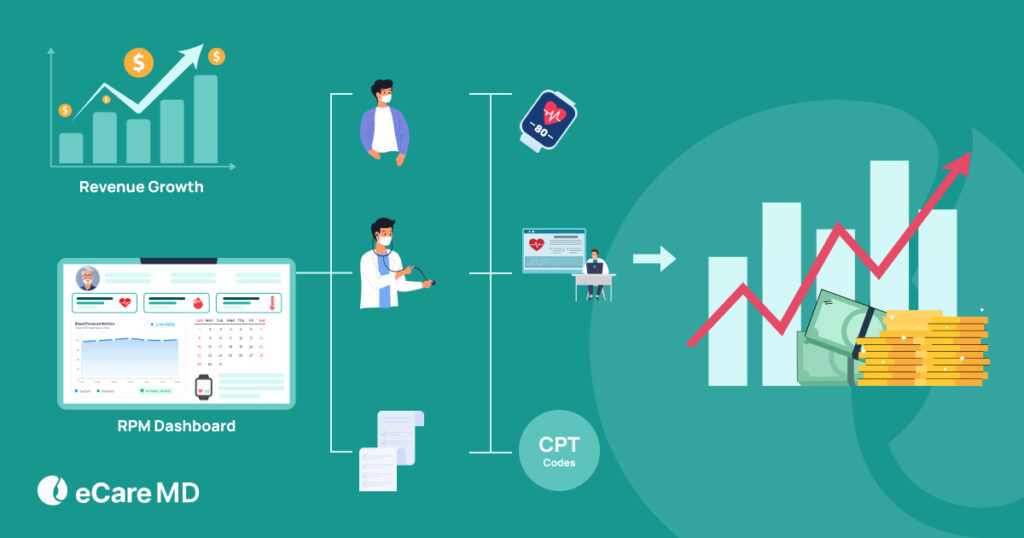
However, here comes the Remote Patient Monitoring (RPM) to flip the script. Along with improving your patient care, RPM also provides a strong financial opportunity. If you managed it in the right way, RPM also helps you to create a recurring revenue stream.
That’s why it’s necessary for you to understand remote patient monitoring revenue per patient. It helps you to get a clearer picture of how much patients actually contribute and which areas you can actually improve to earn more without adding extra burden.
By connecting these operational factors with the ROI of remote patient monitoring, RPM starts to look like a growth strategy, rather than just an add-on.
Here you might be wondering about: How much can a practice earn from remote patient monitoring?
Let’s explore this blog to find out more about it, along with understanding what impacts those numbers, and how to make sure you are not leaving money on the table.
The RPM Reimbursement Model: CPT Codes Explained
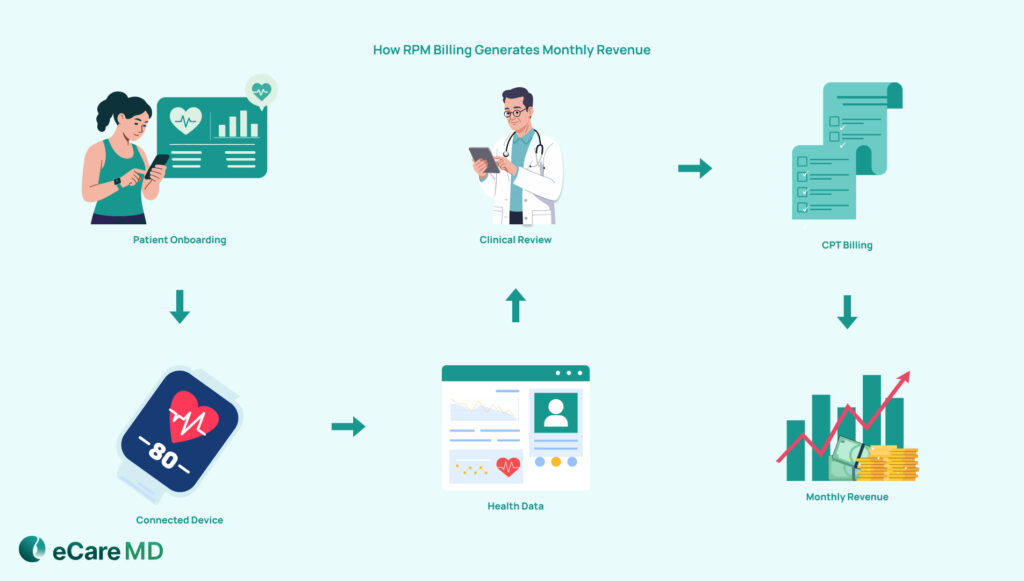
You can imagine remote patient monitoring as an engine, and CPT codes as the fuel that keeps it running. If you don’t understand how these codes actually work, your program can struggle to generate consistent returns. In many cases, it’s actually the lack of correct billing that can hold your practices back.
Furthermore, these CPT codes are defined under the CMS Physical Fee Schedule, setting the standard for Medicare RPM reimbursement rates. Staying aligned with these guidelines is essential for you to increase revenue and maintain compliance.
Let’s explore how each CPT code actually works:
1. CPT 99453: One-time setup and patient education:
CPT 99453 covers the initial onboarding of your patients into your RPM program. It includes setting up devices and patient education on how to use these devices correctly. While it is billed only once per patient, it lays the foundation for everything that follows. If you rush or overlook this step, patient adherence can drop, impacting future billing.
2. CPT 99454: Monthly device supply and data transmission:
This is where recurring revenue begins. CPT 99454 is often billed monthly to provide the device and collect patient data. The key requirement here is that your patient must record data for at least 16 days within a 30-day period. If you miss it, you will not be able to bill for the month. So, it’s fair enough to say that this is a classic example of: No data, No dollars!
3. CPT 99457: First 20 minutes of clinical monitoring and management:
CPT 99457 code accounts for the time staff spend reviewing your patient data, communicating with patients, and managing care. It needs at least 20 minutes of total interactive time per month. This is where RPM starts blending clinical care with valuable revenue.
4. CPT 99458: Additional 20 minutes of clinical time:
CPT 99458 is an add-on code that can be applicable if your team spends more than the initial 20 minutes. This code enables you to bill for each additional 20 minutes. If you are running practice with high-risk or highly engaged patients, this can significantly increase remote patient monitoring revenue per patient.
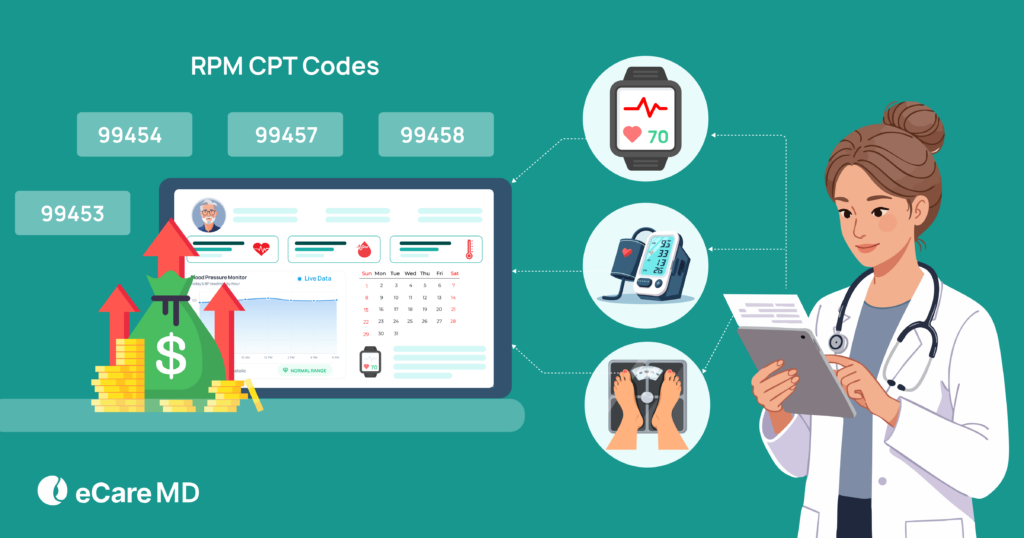
Here is a quick snapshot of RPM CPT codes:
| CPT Code | What It Covers | Billing Frequency | Key Requirement |
|---|---|---|---|
| 99453 | Device setup & patient education | One-time | Completed onboarding |
| 99454 | Device supply & data transmission | Monthly | ≥16 days of patient data |
| 99457 | First 20 mins of clinical monitoring & interaction | Monthly | ≥20 mins of clinical time |
| 99458 | Additional 20 mins of clinical time | Monthly (add-on) | Each extra 20 mins beyond initial time |
How Much Can You Earn Per Patient Per Month?
This is where things actually start to get real.
Once your RPM program is up and running, the next question is: What does each patient actually bring in every month? Because at the end of the day, the profit of your program depends on remote patient monitoring revenue per patient.
Average monthly revenue per patient for RPM programs can be approximately USD 120 to USD 180 per patient per month when billing is done correctly and consistently. It depends on fully utilizing the available CPT codes and meeting all billing requirements.
Let’s see how that number comes together for RPM CPT codes reimbursement:
Your base revenue typically includes:
- CPT 99454 (device supply + data transmission)
- CPT 99457 (first 20 minutes of clinical monitoring
These two codes are the core base of your monthly earnings. You have a strong baseline in place if both are billed successfully.
Additionally, CPT 99458 allows you to bill for each additional 20 minutes if your clinical teams spend more time managing a patient. This helps you to increase your remote patient monitoring revenue per patient.
However, it’s not guaranteed that you can reach the $120–$180 range, because it depends on the following key factors:
- Patient adherence: Must meet the 16-day data rule
- Accurate time tracking: Ensures all billable time is captured
- Complete documentation: Prevents denied claims.
If all these factors are in place, it’s easy for you to create a stable RPM billing revenue per patient.
Factors That Impact RPM Revenue Per Patient
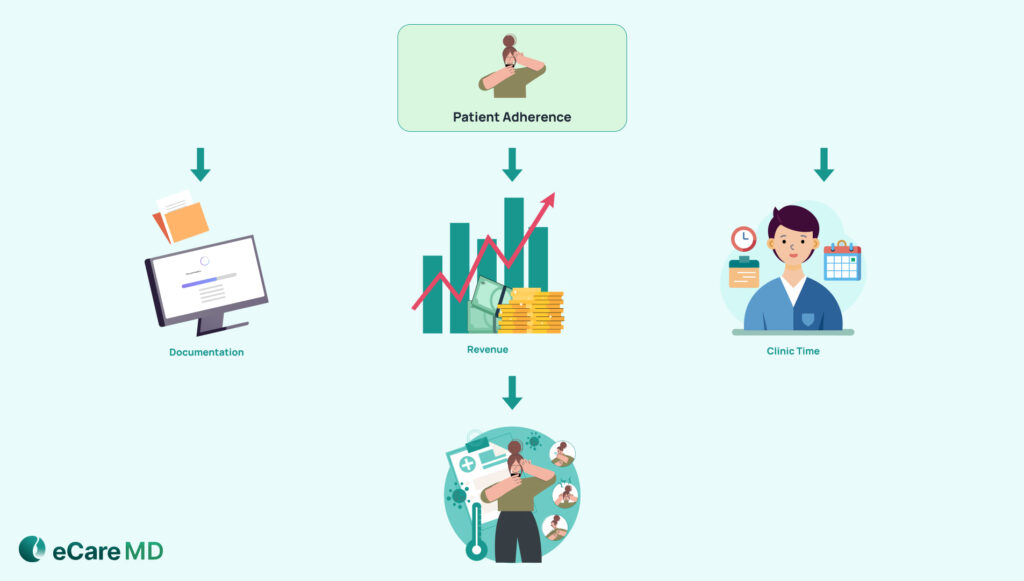
Every RPM program does not perform the same, as there are differences in how well each practice can manage a few key variables. As your remote patient monitoring revenue per patient is not fixed, it continuously moves up or down on the basis of these operational factors. If you get them correctly, revenue grows steadily.
Let’s have a closer look at some of the key factors that can impact remote patient monitoring revenue per patient:
1. Patient adherence (16-day rule):
Patient adherence is the foundation of RPM billing. As mentioned earlier, under CPT 99454, your patients must record data for at least 16 days in a 30-day period. If your patient fails to do so, that whole month becomes non-billable. That’s why patient engagement is a key factor that is directly tied to revenue.
2. Clinical staff time & documentation accuracy:
As RPM billing is totally time-based, every single minute counts when tracked and documented correctly. No matter if your team spends time on data reviewing or patient interaction, poor tracking can result in lost revenue. On the other hand, accurate documentation makes sure that you are capturing the full value of provided care.
3. Geographic Practice Cost Index (GPCI):
Reimbursement is not the same everywhere. The Geographic Practice Cost Index adjusts payments on the basis of location. It means that different regions earn different amounts for the same service. You cannot do this, but when you estimate revenue, you can definitely account for it.
4. Patient complexity & monitoring intensity:
It is a fact that not all patients need the same level of care. Your high-risk or complex patients usually need more consistent monitoring and communication, increasing clinical time. This helps you to create more opportunities for billing additional minutes like CPT 99458.
Scaling Revenue: From Per Patient to Practice Growth
After understanding your remote patient monitoring revenue per patient, it becomes smart execution for you to scale your program. And, this is where RPM really starts to pay off.
For example:
- 100 patients → ~$12,000–$18,000/month
- 200 patients → ~$24,000–$36,000/month
Up to here, you might understand that it’s no longer just about individual patients, but about building a whole system that can actually grow without things falling apart.
Even so, scaling is not just about adding more patients. Without efficient workflows, more patients can create more chaos rather than more revenue. That’s why efficiency is key here. To handle higher volumes, you need seamless workflows, better time tracking, and automation. These factors help you to work smarter without increasing your staff burden.
Equally important is value-based care alignment. By enhancing patient outcomes and generating revenue, RPM naturally fits into this model. This makes it a win-win situation for both care quality and financial performance.
Ultimately, successful scaling depends on consistent workflows and strong patient engagement. With this, you can turn your RPM billing revenue per patient into a predictable growth engine for your entire practice.
Avoiding Revenue Loss and Billing Gaps
If you overlook even one small gap, even a well-structured RPM program can lose revenue. And the tricky part here is that these small gaps are easy to miss, but over time, they become really costly. If you fail to address these gaps, it can directly affect your remote patient monitoring revenue per patient and overall profitability.
Let’s explore the most common areas where your revenue can slip:
1. Missing documentation or incomplete data:
If you do not fully document patient interactions or monitoring activities, it can result in claim denials or underbilled. In RPM, if you do not document this data, it simply does not count.
2. Failure to meet the 16-day requirement:
Under CPT 99454, without at least 16 days of recorded data, you cannot be billed. It doesn’t matter if everything else is in place; if you miss this threshold, you can lose that month’s revenue for sure.
3. Untracked clinical time:
Time-based codes rely on accurate tracking. If your team spends time but does not record it properly, you are essentially working for free.
4. Manual tracking errors:
Using spreadsheets or disconnected systems can increase the chances of missed entries, incorrect data, or billing errors. Over time, these small errors add up and eat into your earnings.
All these issues can result in revenue leakage, making it really difficult to maintain a continuous RPM billing revenue per patient. However, you can bridge these gaps with the right systems and workflows.
Maximizing Revenue with Efficient Workflows
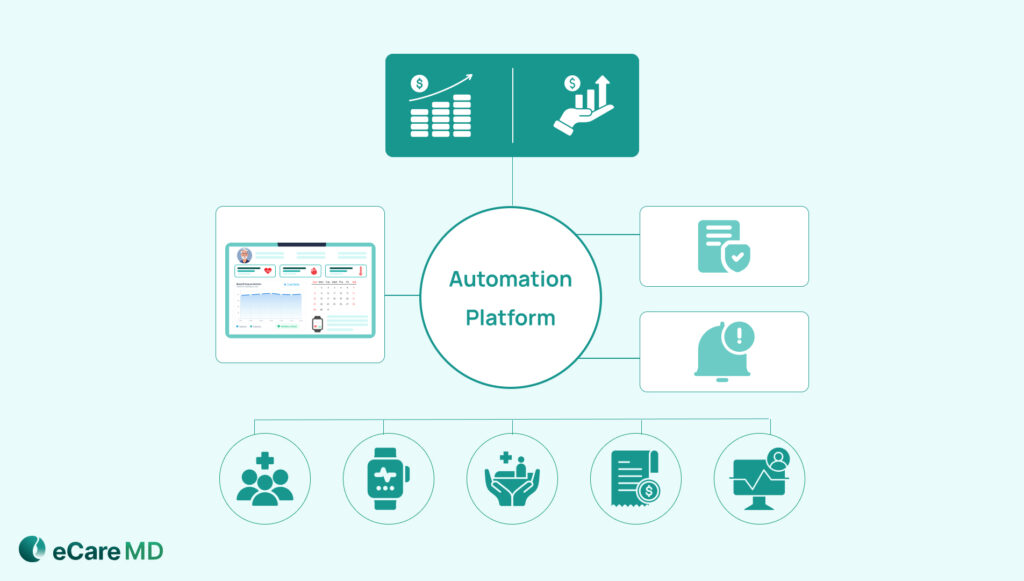
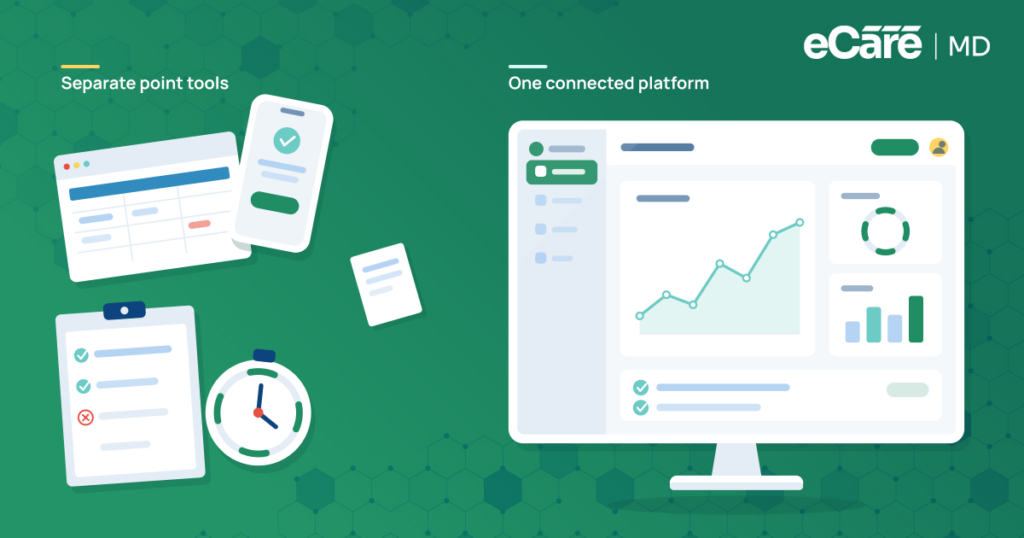
Your RPM revenue does not depend on how many patients you enroll, but on how seamlessly your entire system can run behind the scenes. If your workflows are disorganized or manual-heavy, even a strong patient base cannot help you create consistent earnings.
Moving away from manual processes is a key shift here. Automated tracking and documentation can capture every clinical work minute accurately. This enhances billing accuracy and makes sure that your actual care is being delivered.
Moving forward, when systems are specifically built to support compliance, it becomes much easier to stay compliant with billing requirements. Automated workflows ensure every claim actually meets the essential guidelines, instead of double-checking thresholds or worrying about any missed requirements. This keeps your revenue steady while reducing denials.
Equally important is patient adherence. As we discussed above, a 16-day requirement is necessary for consistent monitoring, and that does not happen by chance. Simple interventions like reminders or alerts contribute more to keeping your patients engaged, impacting your overall monthly earnings.
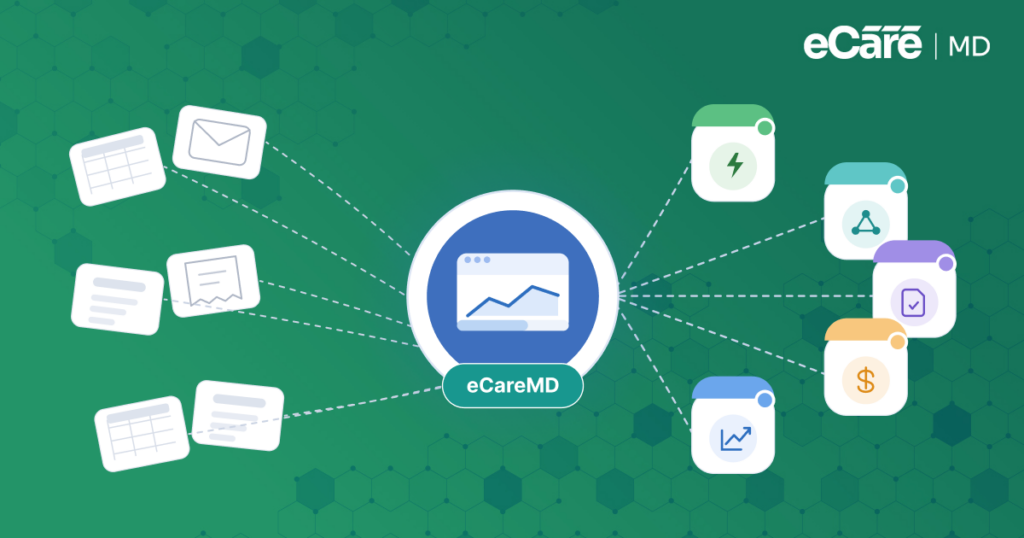
And, this is where platforms like eCareMD make a huge difference. They help your practice to capture the full potential of RPM programs by automating tracking, checking compliance, and providing real-time insights.
Conclusion: Turning RPM into a Scalable Revenue Stream
RPM has the potential to be both a clinical and financial win, but only when it is executed the right way. It is not just about enrolling patients; it is about ensuring that every interaction, every minute, and every data point is captured accurately.
When your workflows are efficient and billing is precise, your RPM revenue per patient becomes consistent and scalable. That is what separates a program that struggles from one that drives steady growth.
At the same time, practices that focus on automation, compliance, and patient engagement are better positioned to avoid revenue gaps and maximize long-term profitability.
Click here to calculate and optimize your RPM revenue potential with eCareMD.
Frequently Asked Question’s
Most practices earn around $120–$180 per patient per month when billing is done correctly. This usually includes CPT 99454 (device + data) and CPT 99457 (first 20 minutes of care). If additional time is billed, the number can go higher. This range forms the baseline for remote patient monitoring revenue per patient and helps practices estimate overall program value.
Medicare typically reimburses about $50–$65 per patient per month for CPT 99454. This covers device supply and data transmission, provided the patient meets the 16-day data requirement. The exact amount can vary slightly based on location and adjustments like the Geographic Practice Cost Index.
There is no fixed upper limit, but in practice, providers can reach $180 to $250+ per patient per month. This happens when base codes are billed consistently and additional clinical time (CPT 99458) is captured. Higher patient complexity and more engagement often lead to higher earnings.
Several factors play a role, including patient adherence to the 16-day rule, accurate tracking of clinical time, complete documentation, and geographic adjustments. Even small inefficiencies in these areas can reduce reimbursement, while strong workflows can significantly improve revenue consistency.
If the patient does not record data for at least 16 days in a month, CPT 99454 cannot be billed. This means losing a key portion of your monthly revenue for that patient, even if other services were provided.
Providers can improve revenue by ensuring patients stay engaged, accurately tracking all clinical time, and billing for additional minutes using CPT 99458. Using automated systems and reducing manual errors also helps capture the full value of care delivered.
Patient adherence directly affects whether you can bill key codes. If patients consistently record data, billing remains steady. If they do not, revenue becomes inconsistent. In short, better adherence leads to more predictable remote patient monitoring revenue per patient.
A 200-patient RPM program can generate approximately $24,000–$36,000 per month at full billing capacity. This estimate is based on average earnings per patient and highlights how scaling patient volume can significantly increase total revenue.













![The Future of Remote Patient Monitoring: CMS Innovations & Emerging Trends [2026]](/wp-content/uploads/2024/07/Blog-36-The-Future-of-Remote-Patient-Monitoring_-Trends-AI-Innovation-CMS-Updates-for-2026-1024x538.png)