Last Updated: August 26, 2026
RPM software is usually priced per-patient-per-month or as a flat monthly fee; watch for additional costs for devices, setup, integrations, and support.
Once, Remote Patient Monitoring (RPM) was seen as just an added expense, and today it has become the core pillar of scalable care delivery. This shift highlights why RPM software cost 2026 is no longer just a budgeting question; it’s actually a growth decision.
As your patient volume grows or your workflow becomes more complex, what looks cost-effective initially may not hold up. And here’s where things get tricky. The hidden cost of RPM software implementation, involving onboarding, training, and integrations, can add up quietly. If you are not prepared, this cost can put unexpected pressure on your budget.
This makes it necessary to understand the true cost of remote patient monitoring systems. The major reason behind it is that when it comes to RPM software pricing, it’s not just about selecting a tool; it’s actually about deciding how well your practice can scale and operate efficiently.
In this blog, let’s break down how much RPM software costs in 2026, while exploring different RPM platform pricing models. This will give you a clear and practical view of what to expect, so you can easily move forward with clarity.
What Are the Common RPM Software Pricing Models?
While evaluating the RPM software cost 2026, first you need to understand the different RPM platform pricing models. Each RPM platform pricing model impacts how your remote patient monitoring software costs scale as your practice grows.
1. Per-Patient Per-Month (PPPM):
PPPM is one of the common modes, where RPM software pricing per patient per month is based on active patients. It helps you to keep the cost of remote patient monitoring systems flexible and directly tied to usage.
This is the major reason why many growing practices prefer this model, as it scales as you scale, without locking you into high upfront costs.
2. Flat Monthly Licensing:
As the name suggests, this model is based on a fixed monthly fee, regardless of patient volume. For larger practices, this monthly approach makes RPM software pricing more predictable and easier to budget. Even so, for smaller practices, it may feel like you are paying for unused capacity.
3. Tiered Subscription Models:
In this model, RPM platform pricing models depend more on features like basic vs advanced. Even though they can lower the initial remote patient monitoring software cost, some of the key features may be available only in higher plans. This can increase the overall cost over time.
The selection of the right model depends on how it fits and not just on price. You should decide which RPM software cost 2026 structure works best for you on the basis of your patient volume, care model, and growth plans. Your aim should not just be saving money, but also using it wisely.
How Much Does RPM Software Cost?
One of the major challenges when you look at the RPM software cost 2026 is understanding what the numbers actually look like in real-world settings. The remote patient monitoring software cost can differ based on your practice size, features, and level of automation.
However, despite the variation, here are some of the clear patterns that help you explain how costs are actually structured:
1. National averages (per patient per month):
On average, RPM software pricing per patient per month relies heavily on what the platform actually involves. For example, basic RPM tools focusing more on monitoring and data collection usually stay on the lower end of the pricing range.
However, more advanced systems offering analytics, automation, and patient engagement features involve a higher remote patient monitoring software cost. And the reason behind this higher cost is more operational value and efficiency.
2. Cost by practice size:
The cost of remote patient monitoring systems depends on how big your practice is. As small practices don’t have large patient volumes to reduce costs, they are more likely to pay more per patient. On the other hand, mid-size practices tend to get more balanced pricing that feels predictable.
In contrast to both of these practices are large or enterprise-level organizations, as they are beneficial from scale and often negotiate lower per-patient rates. This makes their overall RPM software pricing more cost-efficient.
3. Cost variation factors:
Features, automation, and integration level are the biggest drivers of RPM software pricing. Platforms with general tracking are usually more affordable. The remote patient monitoring software costs rise once you add EHR integration, AI-based insights, and automated workflows.
Even so, these advanced features can totally justify this higher price by reducing manual workload and enhancing efficiency.
4. Standard vs advanced platforms:
- Standard RPM platforms: These platforms are easier to adopt as they offer key monitoring features, while keeping your RPM platform pricing lower. Yet, these types of platforms need more manual efforts from your staff.
- Advanced platforms: Even though these platforms may increase the RPM software cost 2026, it is fair enough to say that they help you to save time and scale more effectively, by providing automation, reporting tools, and smoother workflows.
5. Cost vs reimbursement reality:
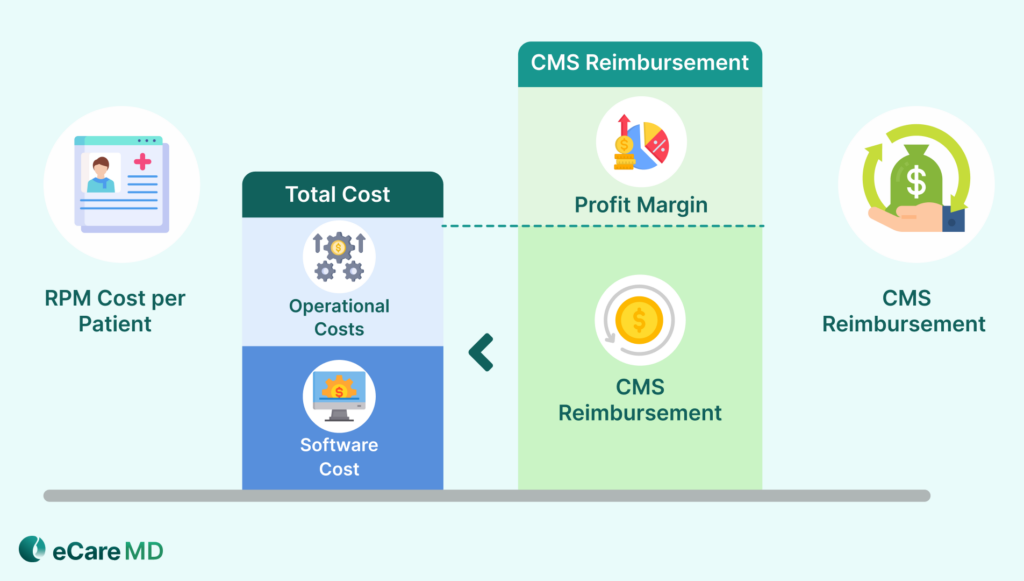
Reimbursement is a key factor in cost evaluation. To check if the model is profitable or not, you can compare your RPM software pricing per patient per month with CMS reimbursement rates. When set up properly, many RPM programs still remain financially viable even after covering software and operational costs. This further helps to maintain healthy margins over time.
Identifying Hidden Costs and Cost Drivers
Until here, you may think that the upfront RPM software pricing is simple and straightforward. However, the real impact on RPM software cost in 2026 actually comes from the less visible expenses that appear during and after implementation.
These hidden elements can influence the overall remote patient monitoring software cost significantly. Let’s break down these hidden cost drivers one by one:
1. Implementation and onboarding (training + integration):
The cost of your RPM software starts to increase during setup itself. It may involve your staff training, system configuration, and integration with EHRs or existing workflows. Even though it looks like a one-time effort, it can take more time and resources to fully stabilize the system.
2. Device logistics (shipping, returns, inventory):
Another major cost factor is device management. Key steps like shipping devices to your patients, handling returns, and maintaining inventory can add operational expenses. Device and logistics management alone can add up to $8-15 per patient/month, if not included in the package. This can increase overall RPM software pricing per patient per month.
3. Administrative workload and staffing requirements:
In the case of limited automation, your staff is more likely to handle manual tasks like patient tracking, coordination, and follow-ups. As a result, even if the software subscription appears affordable, it can increase workload and indirectly raise the cost of remote patient monitoring systems.
4. Inefficiencies that increase long-term operational cost:
Operational costs can increase due to various factors like poor integration, manual data entry, or disconnected systems. Even though you don’t see these hidden efficiencies in initial RPM platform pricing, they can majorly impact long-term RPM software pricing and profitability.
How Does RPM Software Cost Affect Profitability?
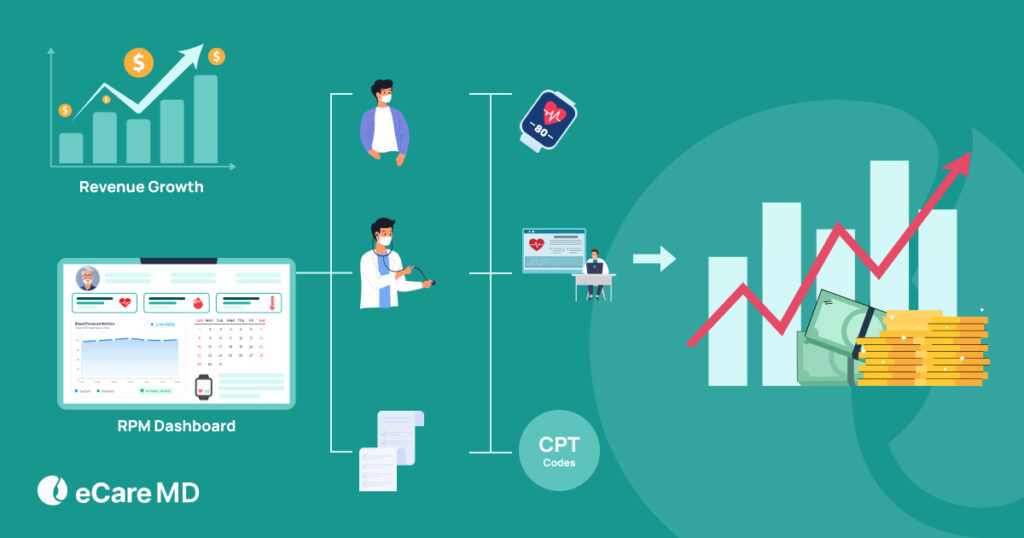
Before finalizing the RPM software cost 2026, another key factor you need to understand is how reimbursement directly impacts profitability. The remote patient monitoring software cost only makes sense when compared against potential revenue from CPT billing and operational efficiency.
Another key factor before finalizing the RPM software cost 2026 is how reimbursement directly impacts profitability.
Let’s explore the following table to understand how reimbursement impacts profitability in real terms:
| Factor | What It Means | Impact on Profitability |
|---|---|---|
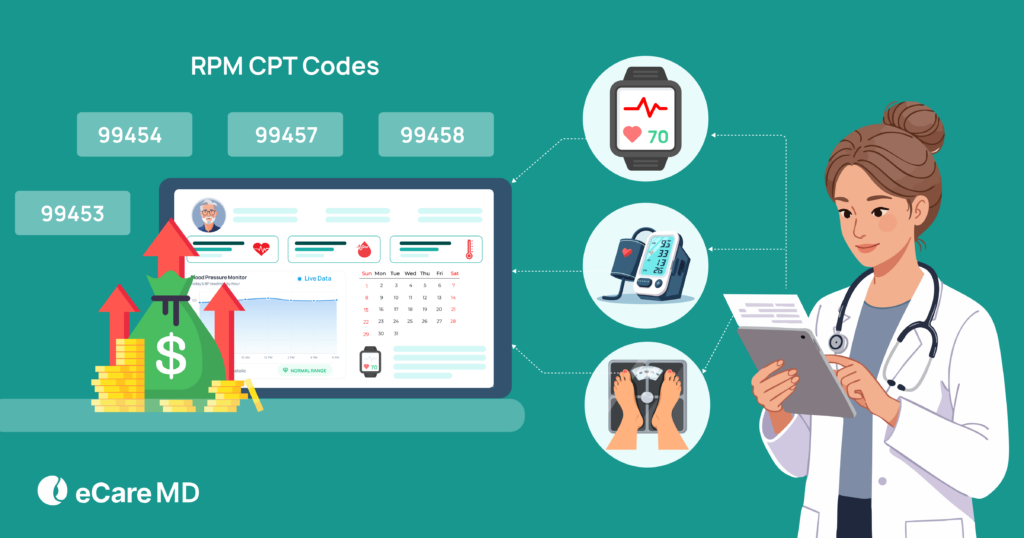
| CPT-based revenue (99453, 99454, 99457, 99458) | Billing codes that generate RPM revenue per patient for setup, device use, and ongoing monitoring | Determines total earning potential per patient and sets the baseline for ROI |
| Cost per patient vs reimbursement | Comparison between RPM software pricing per patient per month and CPT reimbursements | If costs exceed reimbursements, margins shrink; if optimized, RPM becomes profitable |
| Revenue leakage risks | Missed billing, denials, or documentation gaps | Direct loss of revenue even when services are delivered, reducing overall returns |
| Platform automation | Automation in billing, tracking, and documentation | Reduces errors, improves billing accuracy, and ensures maximum CPT capture |
| Margin sensitivity | Impact of inefficiencies on financial outcomes | Small workflow gaps can significantly reduce profitability at scale |
Calculating Your Practice’s Projected ROI
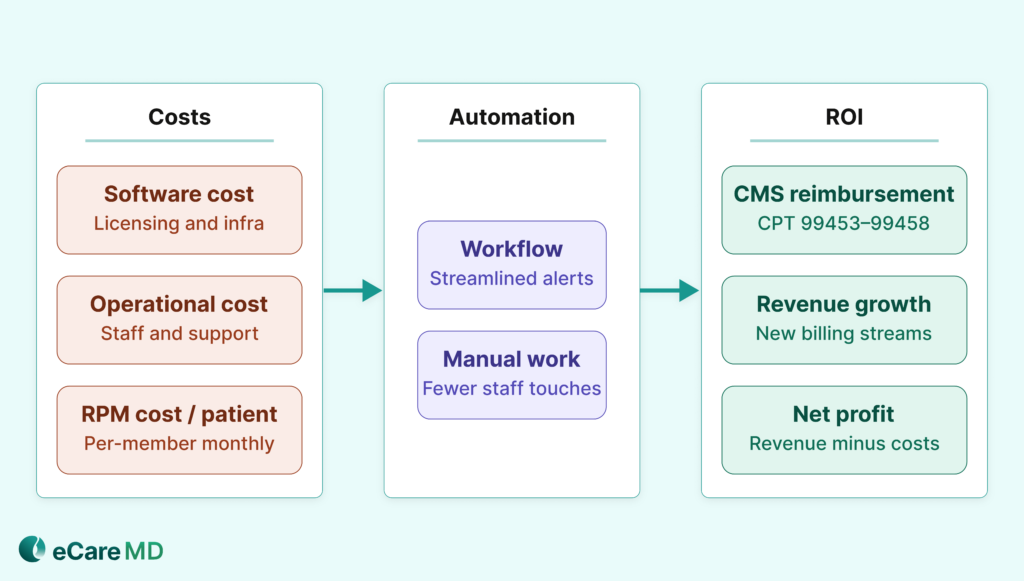
The next key step after understanding the RPM software cost 2026, and reimbursement is the evaluation of actual returns. The remote patient monitoring software cost only matters if it delivers valuable ROI in real practice settings.
In simple terms, ROI can be understood as: Revenue generated – RPM software cost = Net profit, which then scales on the basis of patient enrollment. The impact of RPM software pricing per patient per month becomes more efficient as patient volume increases. This further helps to enhance overall margins.
An equally important pointer to forecast profitability is patient growth. In many cases, the cost of remote patient monitoring systems becomes more optimized as fixed efforts are spread across more patients. This further leads you towards better financial outcomes over time.
For example, as enrollment increases and workflows become more efficient, a mid-size practice starting with a smaller RPM base may see consistent gains. Over time, better utilization of the RPM platform pricing results in improved revenue performance and steadier returns.
Along with all these, another key factor to drive ROI at a large scale is platform efficiency. Automation minimizes manual effort, enhances billing accuracy, and reduces leakage. As a result, it may help you to gain more value from the same remote patient monitoring software cost.
This is where eCareMD stands out. It helps you to streamline your workflows, minimize operational friction, and maximize ROI by making RPM programs more scalable and efficient.
Download Free Guide - Care Coordination Software Cost Estimation Tool for Your RPM Program
Download NowConclusion
As we wrap up the discussion on RPM software cost 2026, one thing that becomes clear here is that pricing is directly tied to scalability, efficiency, and long-term margins. The choice of RPM platform pricing models plays a major role in how smoothly a practice can grow.
For most growing practices, the RPM software pricing per patient per month (PPPM) model offers the most flexibility, since costs scale with patient volume and keep the remote patient monitoring software cost predictable.
Ultimately, the best platforms don’t just lower the cost of remote patient monitoring systems; they also help maximize billable opportunities and improve workflow efficiency.
To give you a head start, click here to check out our software, where you can decide the features and the other way around.
Frequently Asked Question’s
The most common rpm platform pricing models include:
- Per-patient per-month (PPPM)
- Flat monthly licensing
- Tiered subscription plans based on features
Each model impacts the overall cost of remote patient monitoring systems differently depending on practice size and usage.
In PPPM models, practices pay based on active patients, making rpm software pricing per patient per month flexible and scalable. In flat-rate pricing, a fixed monthly fee is paid regardless of patient count, making costs more predictable but less flexible. PPPM is usually preferred by growing practices, while flat-rate suits large, stable patient bases.
Hidden costs in rpm software cost 2026 often include onboarding, staff training, system integration, device shipping, returns, and inventory management. These factors can quietly increase the cost of remote patient monitoring systems if they are not bundled into the platform pricing.












![The Future of Remote Patient Monitoring: CMS Innovations & Emerging Trends [2026]](/wp-content/uploads/2024/07/Blog-36-The-Future-of-Remote-Patient-Monitoring_-Trends-AI-Innovation-CMS-Updates-for-2026-1024x538.png)