Last Updated: August 26, 2026
The simple answer is that cellular RPM devices send data on their own, making them best for seniors and patients without reliable Wi-Fi; Bluetooth devices need a smartphone but generally cost less.
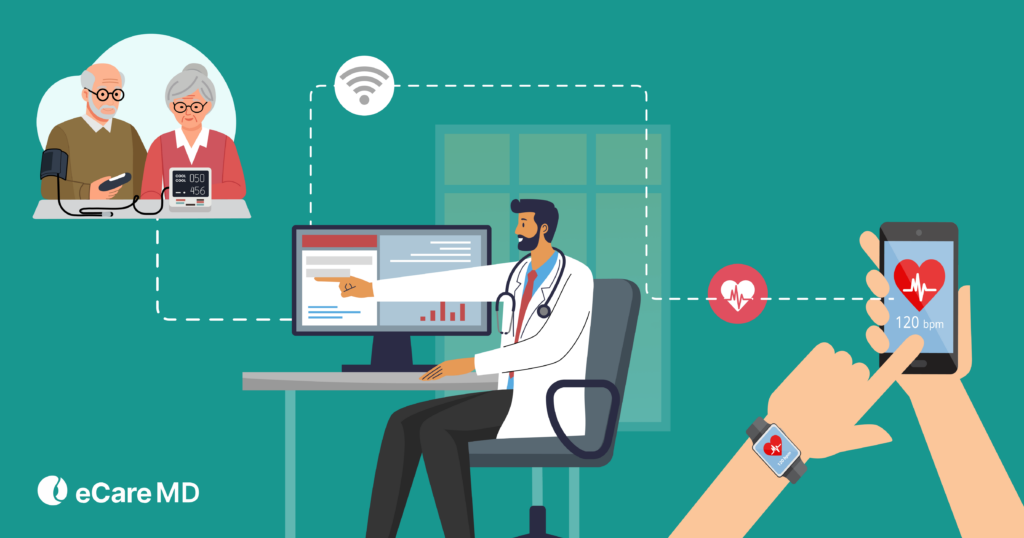
In Remote Patient Monitoring (RPM), one of the key challenges providers face is not just patient enrollment, it is maintaining consistent and reliable data flow.
Being a healthcare provider in 2026, you must be aware that RPM adoption in the U.S. has skyrocketed. In fact, RPM usage in the U.S. has increased more than 30 times, highlighting its fast-growing adoption in healthcare.
With this growing adoption, device connectivity has quietly become a critical success factor. Device connectivity can affect your patient adherence, data accuracy, and clinical outcomes. Your program runs effortlessly when connectivity works smoothly.
Without device connectivity, even well-structured workflows can start to fall apart, as missed readings, delayed updates, and data gaps disrupt care coordination.
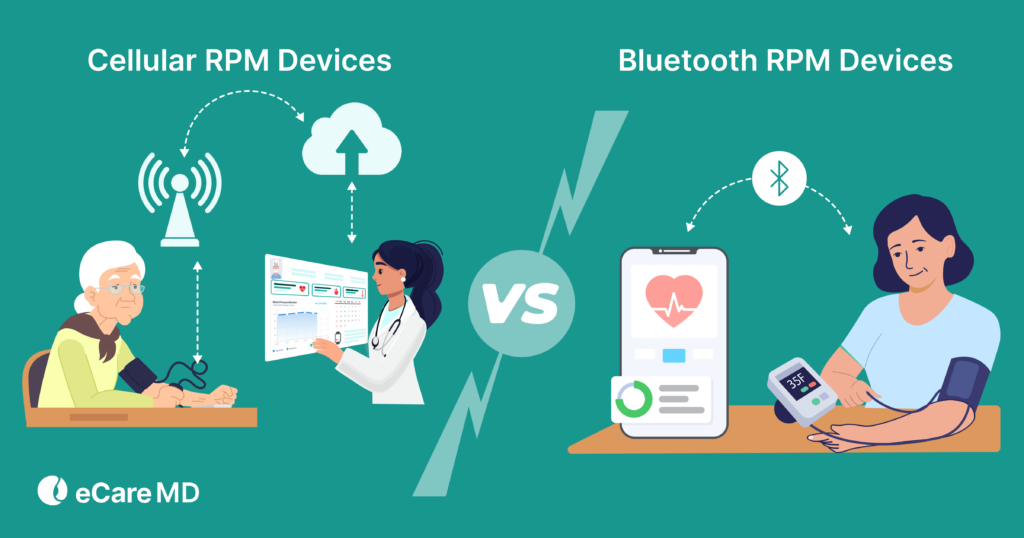
This becomes especially clear when you compare cellular vs Bluetooth RPM devices. Both approaches serve the same purpose of allowing remote monitoring, yet each comes with its own benefits and limitations. However, in real-world use, the difference between these two can significantly impact your day-to-day operations.
For many practices, small issues like failed syncing or pairing errors can quickly snowball into missed readings and added workload, disrupting RPM performance.
So, what’s really driving this gap?
The answer to this question lies in how cellular vs. Bluetooth patient monitoring devices handle connectivity and reliability in real-world settings. Choosing between these two is not just a technical decision; it shapes the scalability and efficiency of your RPM program.
Let this blog be your comprehensive guide to understanding a practical remote patient monitoring device comparison.
Pros and Cons of Cellular vs Bluetooth RPM Devices
| Factor | Cellular Devices | Bluetooth Devices |
|---|---|---|
| Ease of Use | Very simple; works out of the box | Requires pairing and app use |
| Setup | Minimal setup needed | Needs smartphone + app installation |
| Data Transmission | Automatic via built-in cellular network | App-dependent via Bluetooth sync |
| Reliability | High and consistent | Depends on the patient and phone usage |
| Patient Dependency | Very low | High |
| Data Consistency | Strong and continuous | Can have gaps or delays |
| Cost | Higher | Lower |
| Best Fit Patients | Elderly or low-tech users | Tech-savvy, engaged patients |
Cellular or Bluetooth RPM Devices — Which Is Better?
Before understanding the comparisons between cellular vs Bluetooth RPM devices, it is necessary to analyze which options can fit well with your setup. In RPM, the right choice usually relies on your patients and how your program is designed.
Let’s explore one by one:
1. Choose cellular devices if:
- You manage elderly or low-tech patients who may struggle with apps or pairing devices.
- You want automatic data transmission without relying on the patient to do anything.
- You need more consistent and reliable readings without interruptions.
Simply, if you want things to just work in the background, cellular devices are best for you. Moreover, in this case, your patients don’t need to connect to phones or manage any apps, which can reduce the chances of missed data.
2. Choose Bluetooth devices if:
- Your patients are comfortable using smartphones and basic apps.
- Your practice is more cost-focused and looking for a budget-friendly option.
- You want to include app-based engagement like reminders, tracking, or feedback.
When your patients are active participants in their overall care and don’t mind a little extra step, such as pairing or syncing data through their phone, Bluetooth devices will work best for you.
How Do Cellular RPM Devices Work?
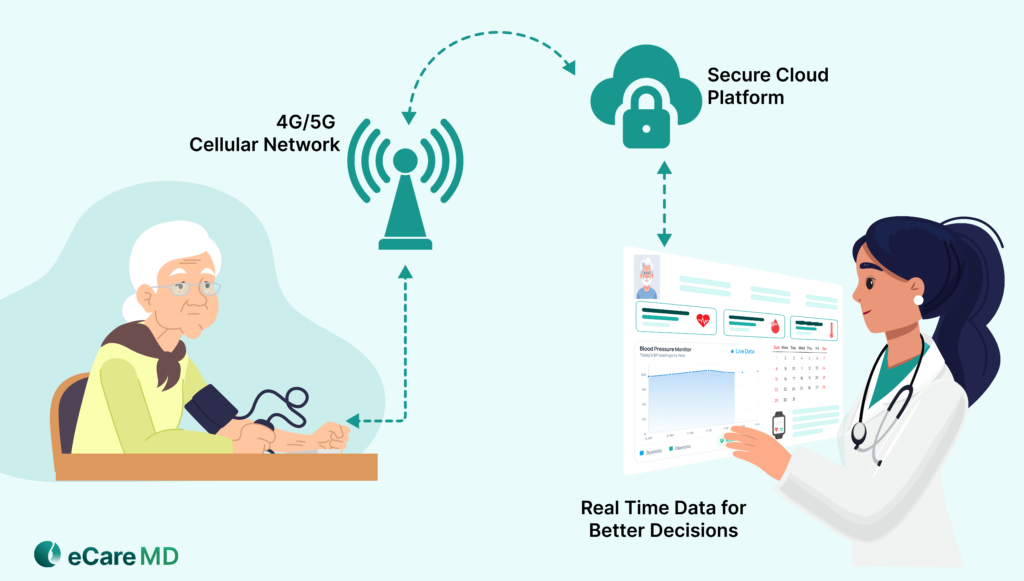
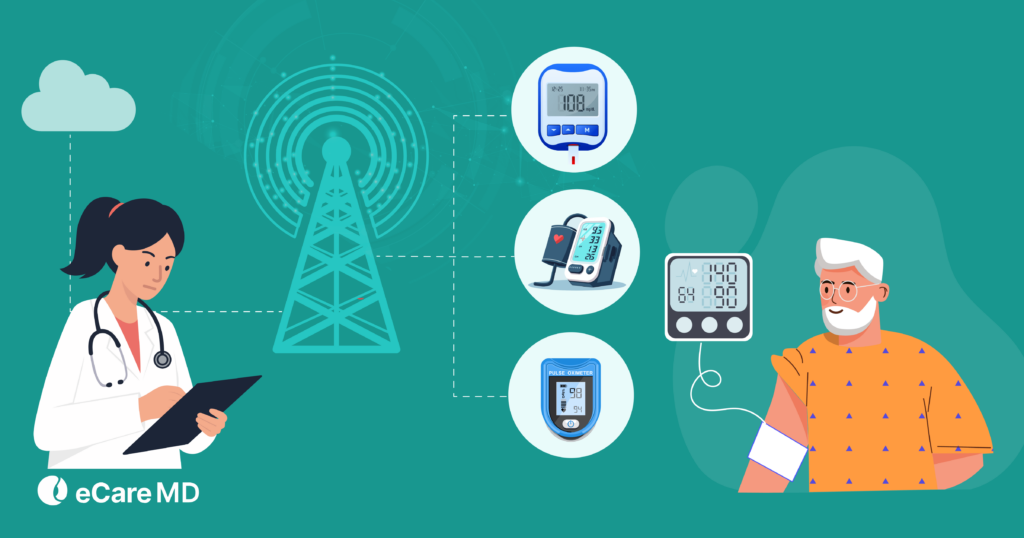
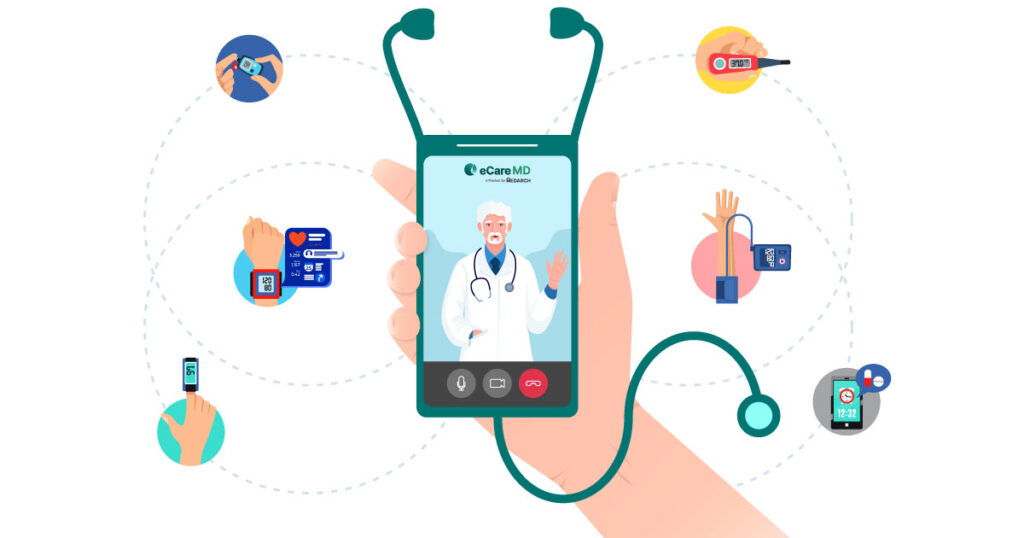
Without the requirement of a smartphone or Wi-Fi connection, cellular RPM devices are specifically designed to work independently. As these devices have a built-in SIM card, they can send patient data directly to the platform by using 4G/5G networks.
For example, once you give a device to your patient, it can automatically capture readings and transmit them. It involves no pairing, no apps, and no extra steps for your patient. By removing the middle layers, these devices make data transfer almost effortless.
1. Where cellular devices work best:
If simplicity and reliability are your top priorities, cellular RPM devices can be a perfect match for you.
Let’s explore some key factors about these devices:
- If you have elderly patients or those with low digital literacy, who may struggle with apps or smartphones.
- As everything happens automatically in the background, these devices can reduce dependency on patient action.
- Since patient data doesn’t depend on phone connectivity or manual syncing, cellular devices support more continuous monitoring.
As every coin has two sides. Even though these devices have plenty of benefits, there are some limitations too.
Here are some limitations of cellular devices:
- As compared to Bluetooth devices, these devices have higher upfront and connectivity costs.
- As these devices don’t rely on smartphones for core functionality, they offer less flexibility for app-based ecosystems.
How Do Bluetooth RPM Devices Work?
By connecting to your patient’s smartphone or tablet, Bluetooth RPM devices work exactly opposite to cellular devices. These devices capture health readings and then send that data through a mobile app, which then transmits it to the RPM platform.
Here, you might understand that Bluetooth systems rely on connected ecosystems like device + phone + app to ensure data gets through. So, the patient becomes an active link in the data transmission process.
1. Where Bluetooth devices work best:
Bluetooth devices are perfect for you if your patients are comfortable with technologies and staying engaged in their overall care.
Let’s explore some key factors about these devices:
- These devices are more cost-effective, making them an ideal choice for scaling programs.
- They offer a wide range of device options, giving providers more flexibility in setup.
- These devices are more familiar to tech-savvy patients who are already used to health apps and wearables.
- They integrate easily with mobile apps, which can support engagement features like reminders and tracking.
Now, let’s explore some limitations of cellular devices:
- Bluetooth RPM devices require regular patient interaction, such as pairing devices and syncing data.
- There is a higher risk of missed or delayed readings if patients forget or struggle with the process.
Reliability, Data Continuity & Hidden Cost of Monitoring Gaps
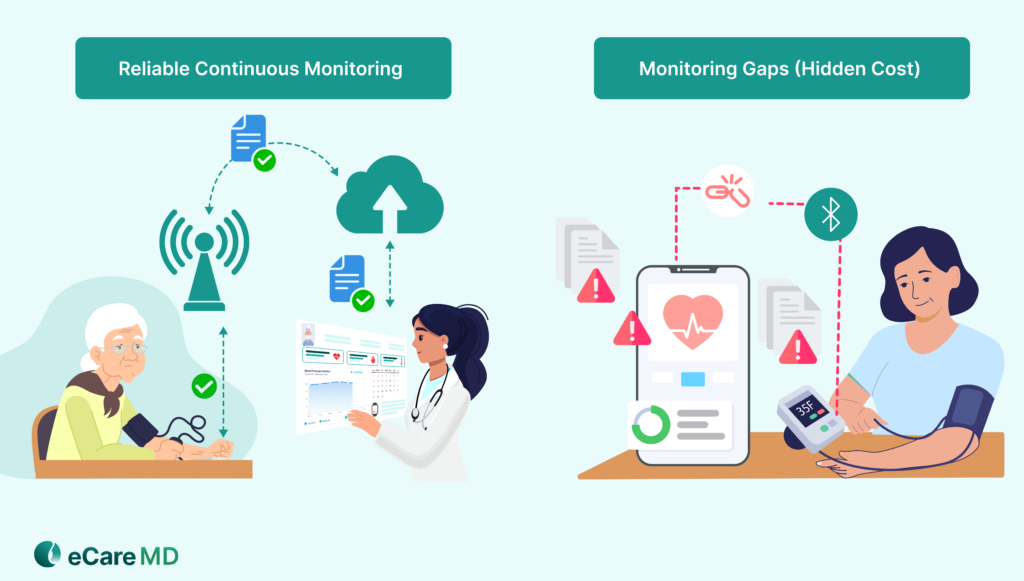
When it comes to RPM, the actual battle of cellular vs Bluetooth patient monitoring devices shows up in day-to-day reliability, not just features on paper.
1. Cellular Devices:
Cellular devices are specifically designed for consistency. Without depending on your patient’s action, these devices can provide automatic and real-time data transmission. As data flows directly through cellular networks, there are minimal monitoring gaps.
It means that, in your practice, you can get a more stable and continuous stream of your patient data. This further supports timely clinical decisions.
2. Bluetooth Devices:
On the other hand, Bluetooth devices rely heavily on your patient’s participation. Data transmission totally depends on your patient’s behavior, like device pairing and syncing through an app.
However, if your patients forget or face technical issues, it can result in sync delays or missed readings. Even one small mistake can interrupt the overall data flow.
3. Impact of Data Gaps:
At first, you can think that these are minor gaps, but over time, these small gaps can create bigger challenges:
- Delayed clinical decisions due to incomplete or late data
- Reduced monitoring effectiveness, especially for high-risk patients
- Lower patient adherence, as inconsistent feedback can reduce engagement
4. Hidden Operational Cost of Bluetooth Gaps:
Along with all clinical impact, there is also an operational side that can be overlooked:
- Increased support and troubleshooting for device or app issues
- More manual follow-ups to fill in missing data
- Overall reduced program efficiency, as staff spend time fixing gaps instead of focusing on care
However, you can improve visibility into your patient health trends on the basis of a consistent data flow. Additionally, you can reduce unnecessary monitoring disruptions, making your RPM program far more stable and scalable in the long run.
Pros and Cons of Cellular vs Bluetooth RPM Devices
Now that we’ve looked at both technologies in detail, it will be more helpful if we bring everything together in a simple side-by-side view. This makes it easier for you to understand how cellular and Bluetooth RPM devices compare across the most important factors in real-world cases.
| Factor | Cellular Devices | Bluetooth Devices |
|---|---|---|
| Ease of Use | Very simple; works out of the box | Requires pairing and app use |
| Setup | Minimal setup needed | Needs smartphone + app installation |
| Data Transmission | Automatic via built-in cellular network | App-dependent via Bluetooth sync |
| Reliability | High and consistent | Depends on the patient and phone usage |
| Patient Dependency | Very low | High |
| Data Consistency | Strong and continuous | Can have gaps or delays |
| Cost | Higher | Lower |
| Best Fit Patients | Elderly or low-tech users | Tech-savvy, engaged patients |
Clinical Scenarios: Which Device for Which Patient?
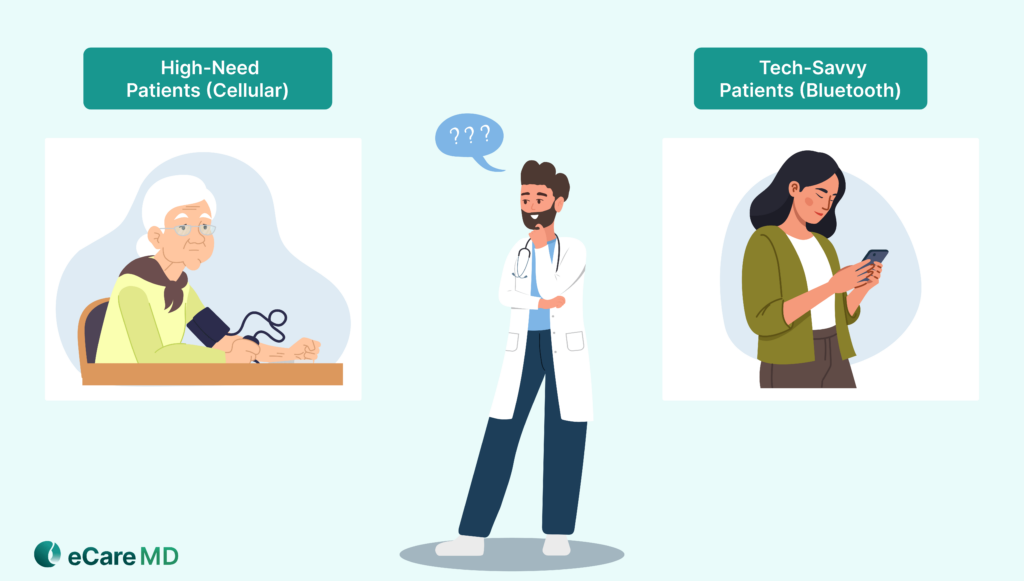
In real-world RPM programs, the selection of the right device relies heavily on your patient type and how much support they need. When you align device selection with your patients’ behavior and clinical needs, you can get more consistent and reliable results.
1. Cellular devices fit best for high-need patients:
Cellular RPM devices are ideal for elderly patients, high-risk individuals, or low digital literacy patients. As these patients struggle more with apps or device pairing, a fully automated system helps you to ensure that nothing is missed.
As mentioned earlier, these devices allow data to flow automatically, which can result in continuous monitoring where every reading matters.
2. Bluetooth devices suit engaged, tech-friendly patients:
On the other hand, Bluetooth devices are perfect for tech-savvy or lower-risk patients. These patients make Bluetooth a cost-effective option for scalable programs, as patients can manage app-based syncing easily.
3. The hybrid approach works best for most practices:
Many successful RPM programs use a mix of both devices. They assign devices on the basis of your patient’s needs instead of using a single system for each patient. High-risk patients get cellular devices as they are perfect for reliability, while engaged patients can use Bluetooth devices.
This balanced approach can help you in better adherence and smoother program performance.
Why to Choose Cellular RPM Devices in Remote Patient Monitoring
Download Free GuideConclusion
There’s no one-size-fits-all choice between cellular and Bluetooth RPM devices. The right decision depends on your patients and how your program is designed.
It mainly comes down to:
- Patient population
- Monitoring goals
- Operational priorities
In many cases, a hybrid approach works best by using cellular devices for patients who need reliable, hands-off monitoring, and Bluetooth devices for those who are more tech-comfortable.
Ultimately, the goal is to choose a connectivity strategy that ensures consistent monitoring and supports better RPM outcomes.
Click here to align your device strategy with your patient needs and RPM goals.









![The Future of Remote Patient Monitoring: CMS Innovations & Emerging Trends [2026]](/wp-content/uploads/2024/07/Blog-36-The-Future-of-Remote-Patient-Monitoring_-Trends-AI-Innovation-CMS-Updates-for-2026-1024x538.png)