Last Updated: September 9, 2026
What if you could identify a patient’s health risk before it becomes an emergency? Sounds futuristic, right?
Well, in 2026, predictive analytics in remote patient monitoring is transforming this possibility into real-world practice.
However, even with this progress, many care teams are still running behind. As remote monitoring devices generate continuous patient data, however, more data doesn’t mean better decisions. This data can just make you double work and make it harder to detect early warning signs.
In fact, according to a survey, 78.4% of wearable users were willing to share data with providers, yet only 26.5% had actually done so in the past year.
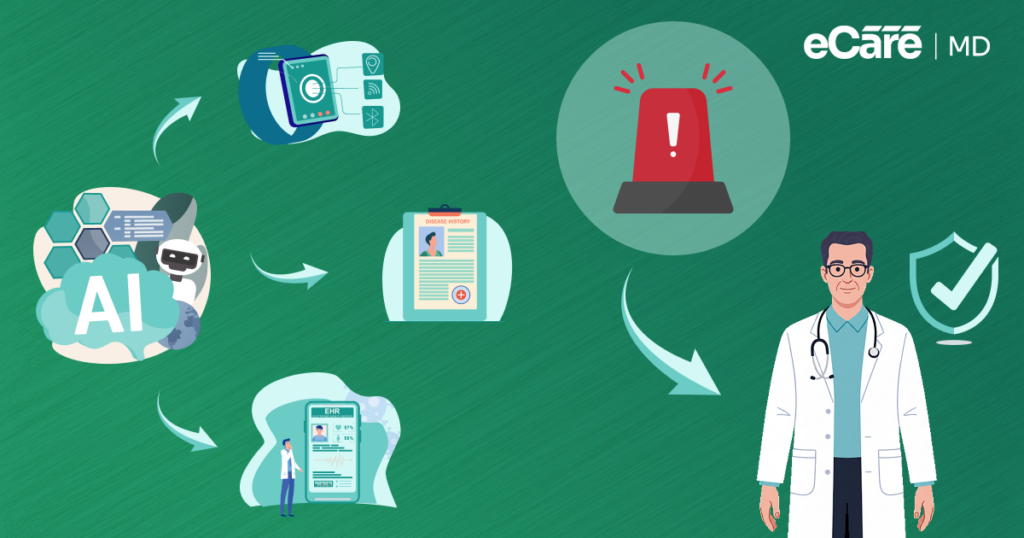
However, here AI in remote patient monitoring can change the whole equation. Predictive analytics RPM can transform consistent data into actionable insights by using machine learning. This helps you to detect patterns and intervene early before your patient’s condition worsens.
Due to this, you can act earlier rather than reacting at the last minute, enhancing remote patient monitoring outcomes and minimizing avoidable complications. By helping your care team from enabling AI-driven risk stratification in remote patient monitoring to supporting faster and more confident decisions, this proactive approach helps them to stay ahead rather than playing catch-up.
Bridging the gap between data and decision-making is not that easy. But with platforms like eCareMD, you can achieve it by turning continuous monitoring into more timely and actionable clinical decisions.
Here you might be wondering about: Exactly how predictive analytics in RPM programs can reshape care delivery?
To find the answer to your questions, let’s dive into this blog. More importantly, this blog also helps you to explore how AI improves patient outcomes in remote monitoring.
From Raw Data to AI-Driven Risk Stratification
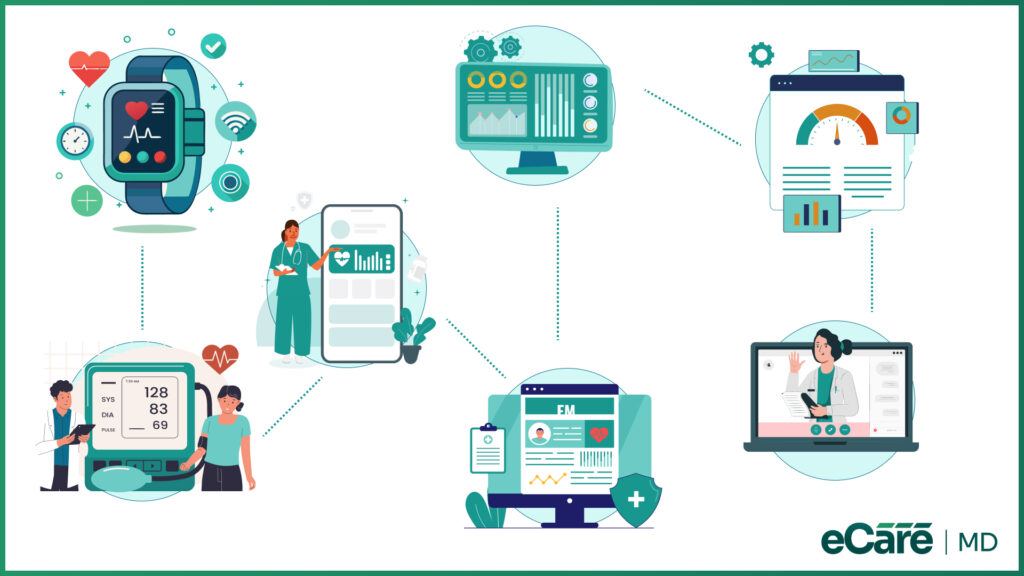
In the past, RPM depended heavily on simple threshold-based alerts. For example, you can be notified when a vital crosses a limit. In simple terms, it means reacting after the fact instead of staying ahead of it.
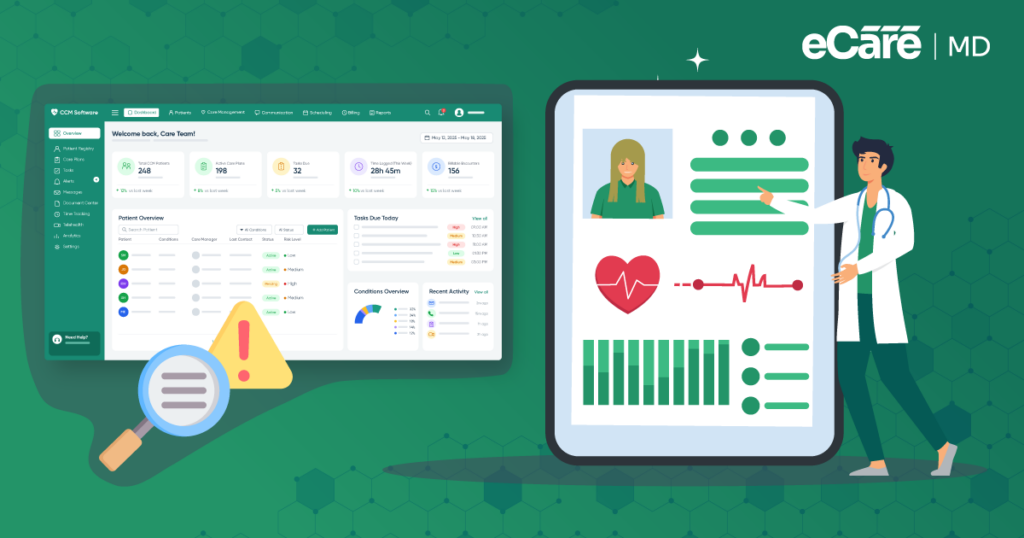
Here, imagine predictive analytics in RPM as a game changer. With AI in remote patient monitoring, you can keep your eyes on multiple variables together, rather than just focusing on single data points.
For example, you can look at your patient’s vitals, trends, and history together, creating a clearer and more complete picture of risk.
At the same time, this deeper analysis level demands a more structured approach to prioritizing patients. And that’s where AI-driven risk stratification in remote patient monitoring jumps in. Grouping patients into different categories, like rising-risk, high-risk, or stable, helps your care team to prioritize patients who need more attention.
Along with all these, equally important is machine learning in RPM, which allows real-time pattern recognition. As you may already be aware, you cannot ignore small changes like gradual weight gain or fluctuations in blood pressure. These types of changes can be early warning signs.
In fact,research also indicates that RPM allows early detection of risk, helping you to significantly reduce acute events and enhance intervention timing. This research highlights how your care team can succeed in using predictive analytics to reduce hospital readmissions and enhance overall remote patient monitoring outcomes.
Moving forward, predictive analytics supports population-level care management. This approach assists you in allocating resources more efficiently and focusing on high-risk patients.
Using Predictive Analytics to Reduce Hospital Readmissions and Improve Outcomes
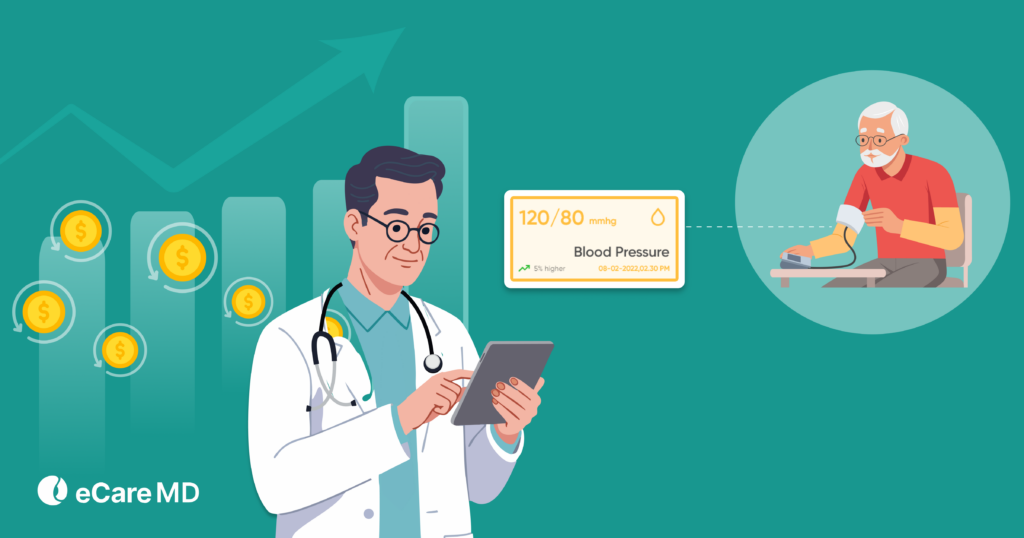
Hospital readmission is one of the key challenges in chronic care management. But, to eliminate it, predictive analytics in remote patient monitoring programs acts as an “early warning system”, turning continuous data into actionable insights.
For instance, rather than waiting for an emergency, your care teams can identify warning signs and easily reach out to patients in time. This will help you to reduce avoidable hospital visits and enhance health outcomes.
But how does this hold up in real-world healthcare scenarios?
But here’s where things get interesting.”
When applied in real-world clinical scenarios, predictive analytics goes beyond theory:
| Risk Area | Risk Indicators | Clinical Action | Outcome Impact |
|---|---|---|---|
| Diabetic Ketoacidosis (DKA) | Rising glucose trends, irregular insulin patterns | Early patient outreach, medication adjustment | Prevents emergency events and hospitalizations |
| Hypertensive Crisis | Blood pressure variability, sustained elevation patterns | Timely intervention, medication review | Reduces risk of stroke and acute complications |
| Heart Failure | Gradual weight gain, fluid retention indicators | Diuretic adjustment, care team intervention | Lowers risk of readmissions |
| COPD Exacerbation | Changes in oxygen levels, respiratory patterns | Early treatment and monitoring | Prevents acute flare-ups and ER visits |
Beyond improving clinical outcomes, predictive analytics also delivers measurable operational and financial value. You can also deliver more efficient and patient-centric care by avoiding hospitalization and minimizing unnecessary care utilization.
AI in Remote Patient Monitoring: Improving Clinical Workflows & Reducing Alert Fatigue
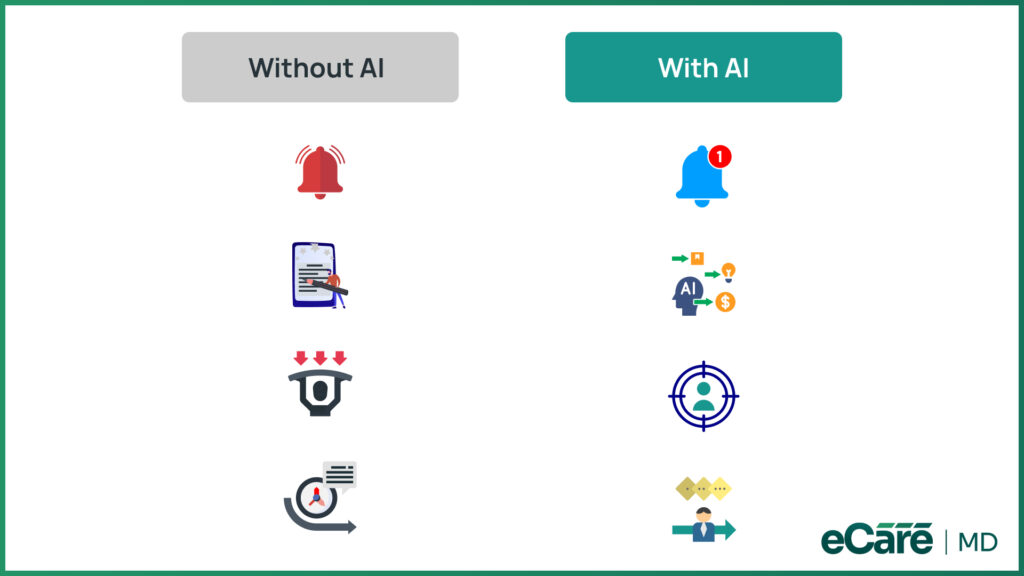
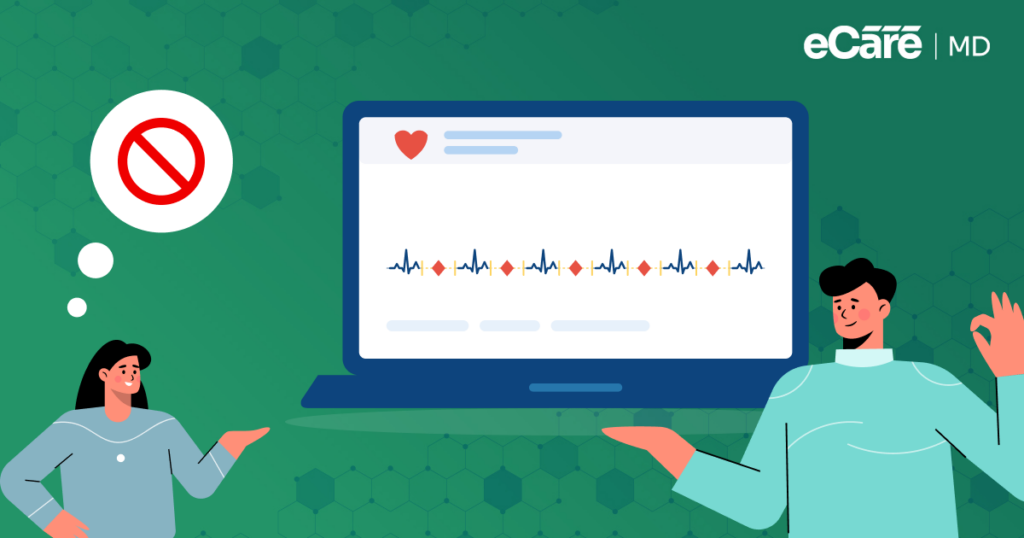
One of the biggest challenges clinicians face in RPM is too many alerts. It becomes really hard for your care team to highlight what actually needs attention when everything is flagged. Over time, this noise can slow down your team, leading to alert fatigue.
With AI in remote patient monitoring , you can see a real difference. AI filters out data that is not clinically important, while highlighting what actually matters rather than showing every small change. Ultimately, this approach helps your care team to prioritize better.
The cherry on top is AI-driven prioritization. With this, your high-risk patients can get attention first, and stable patients continue to be monitored in the background. It helps your care team to manage care more efficiently without feeling overwhelmed.
Here you might be wondering about: Can all these insights fit into existing workflows?
Well, the answer is yes. With EHR integration, you can easily access predictive insights without jumping between systems. This helps you to make clinical decisions faster and more seamlessly. Moreover, with this, your patients also stay more engaged. With timely alerts and feedback, your patients stay on track while creating a more connected care experience.
At the end, all these things come down to three things: reliable data, insights clinicians can trust, and systems that keep getting better.
The Business & Clinical Impact of Predictive Analytics in RPM
As the healthcare industry is experiencing a huge shift toward value-based care, outcomes and efficiency go hand in hand. And this is where predictive analytics in RPM starts to show its real clinical as well as financial impact. By allowing you to move from reactive care to proactive intervention, it helps to create a ripple effect across not only patient outcomes but also operational performance.
Let’s explore how this impact plays out in real-world scenarios:
1. Supports value-based care through better outcomes and lower costs:
With early risk detection and timely intervention, you can avoid complications. This helps you to improve patient outcomes and reduce unnecessary costs, which is an important goal in value-based care models.
2. Reduces emergency visits and avoidable hospital admissions:
The ability to flag risks before they turn into critical ones is one of the key advantages of predictive analytics. This helps your care team to react earlier, while significantly reducing hospital readmissions and minimizing avoidable ER visits.
3. Improves MIPS scores and overall quality performance:
You can easily meet quality benchmarks with more continuous monitoring and timely care delivery. Better patient management can contribute more to strong MIPS scores and enhance performance across key metrics.
4. Strengthens long-term chronic care management strategies:
As you may already know, chronic conditions management needs consistency and foresight. You can gain deeper insights into your patients’ trends with AI in remote patient monitoring and machine learning in RPM. This allows for more structured and effective long-term care plans.
5. Demonstrates measurable impact through outcome-driven care:
Most importantly, predictive analytics makes results more visible. You can clearly track improvements in remote patient monitoring outcomes, such as lower hospitalization rates or better patient engagement. This makes it easier to prove clinical as well as financial value.
The Future of Predictive Analytics in Remote Patient Monitoring
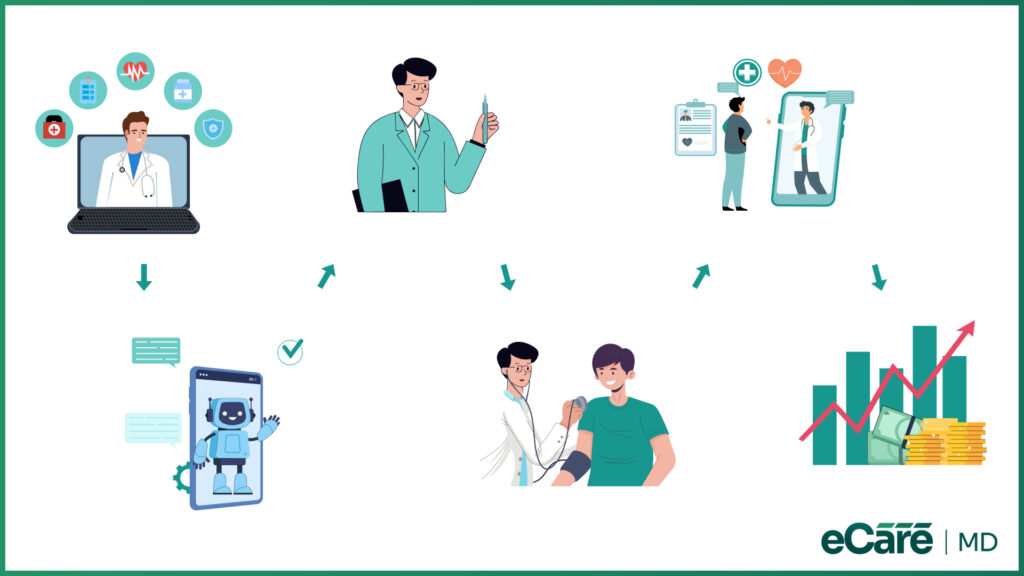
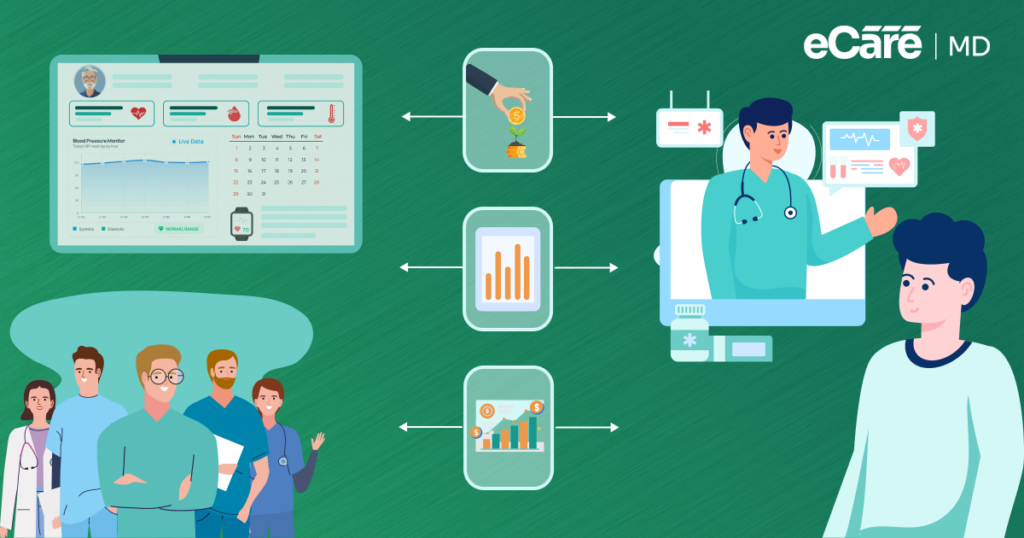
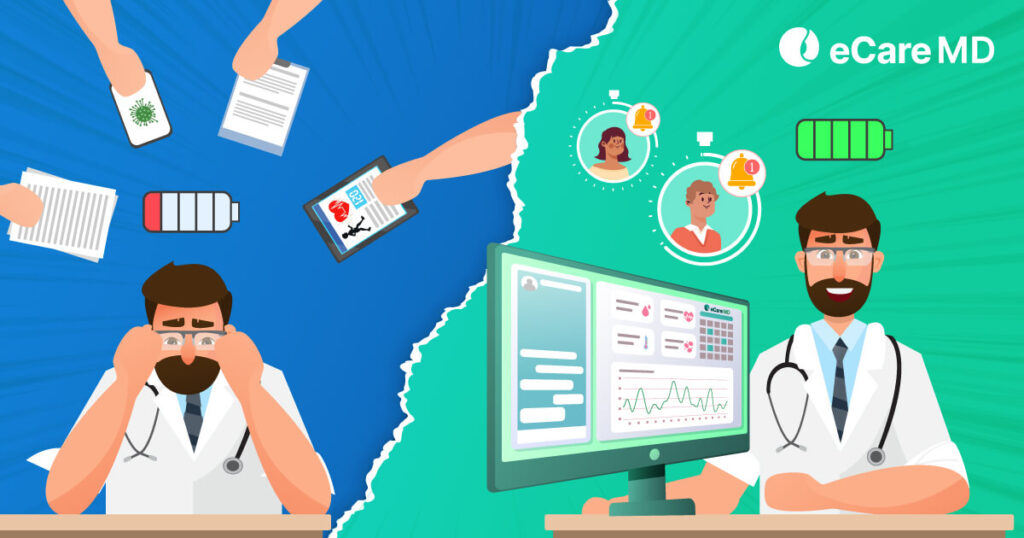
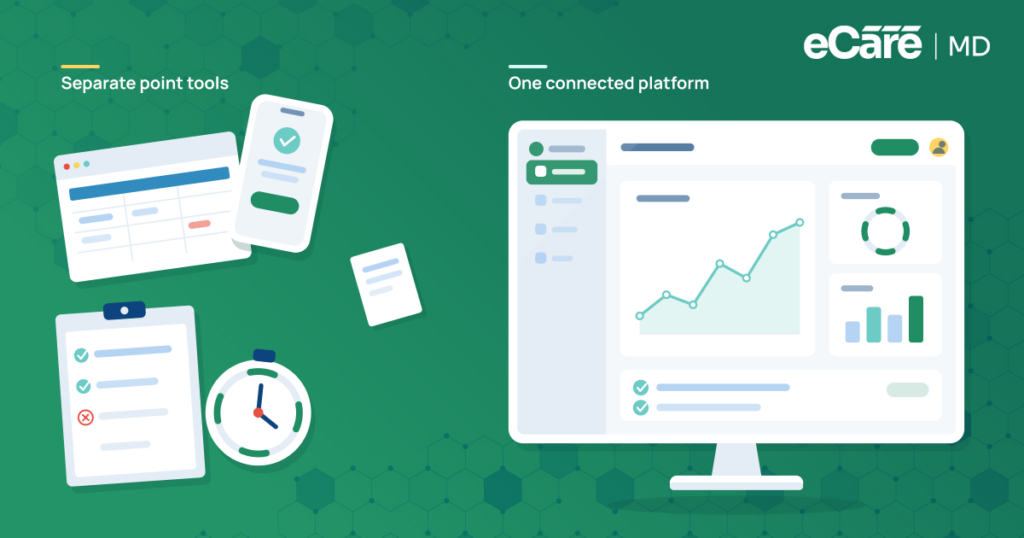
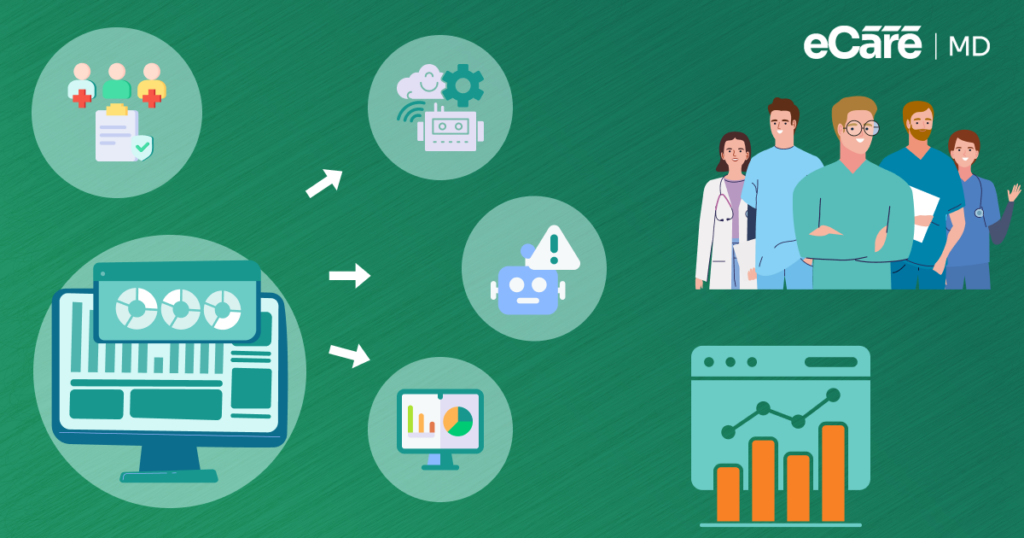
A side-by-side comparison diagram showing how eCare MD uses AI to streamline alerts, prioritize critical patient data, and reduce clinician alert fatigue.
If you are thinking that the current proactive shift is a big step, it’s only the beginning. What is actually coming next is even more transformative. Predictive analytics is setting the stage for a completely new way of delivering care.
1. From insights to real-time clinical decision support:
AI in remote patient monitoring helps you receive real-time recommendations, which further help you make faster and more informed decisions.
2. Deeper integration with wearables and continuous monitoring:
Wearable devices are now becoming more advanced, and due to this, data also becomes more continuous and precise. This enables machine learning in RPM to detect the smallest changes in your patient’s health. This makes monitoring more accurate and timely.
3. Expansion into population health management:
Predictive analytics helps you to focus on your patients and will scale to entire populations. With this, you can easily identify trends, manage risks across patient groups, and allocate resources more effectively.
4. A shift toward preventive and personalized care:
Perhaps the biggest change is the move toward fully preventive healthcare. Instead of treating illness, you can focus on preventing it altogether, delivering care that is tailored to each patient’s unique needs.
Conclusion
Remote patient monitoring is no longer just about collecting data; it’s about turning that data into action. With predictive analytics in remote patient monitoring, care is shifting from reactive to proactive and outcome-driven.
Acting as the intelligence layer, AI in remote patient monitoring and machine learning in RPM help clinicians identify risks early, make faster decisions, and improve overall efficiency. This not only enhances care delivery but also leads to better remote patient monitoring outcomes.
Platforms like eCareMD are helping bring this shift to life, enabling providers to move toward a more proactive and scalable care model. Because in today’s healthcare, staying ahead makes all the difference.
Implementation Checklist for RPM Program with Predictive Analytics
Download nowFrequently Asked Question’s
It improves outcomes by enabling early intervention. By analyzing trends and detecting subtle changes in patient data, predictive analytics helps clinicians act before conditions worsen. This leads to fewer complications, better disease management, and overall improved remote patient monitoring outcomes.
AI-driven risk stratification in remote patient monitoring groups patients based on their risk levels—such as high-risk, rising-risk, or stable. By analyzing multiple data points together, it helps care teams quickly identify which patients need immediate attention, ensuring timely and focused care.
Yes, it can. By identifying early warning signs and enabling timely interventions, predictive analytics helps prevent conditions from escalating. This plays a key role in using predictive analytics to reduce hospital readmissions and avoid unnecessary emergency visits.
Reactive monitoring focuses on responding after a problem occurs, such as when a patient’s vitals cross a critical threshold. Proactive monitoring, powered by predictive analytics, identifies risks in advance and allows clinicians to intervene earlier, preventing complications before they arise.
Machine learning in RPM filters out non-critical data and highlights only the most important alerts. This reduces unnecessary notifications and helps clinicians focus on high-risk patients, improving efficiency and minimizing alert fatigue.
Predictive analytics supports value-based care by improving outcomes while reducing costs. Early interventions lower hospitalizations and complications, which leads to better quality scores and financial performance, ultimately improving return on investment (ROI) for healthcare providers.
Accurate predictions depend on reliable data. High-quality, clean, and consistent data ensures that AI models can correctly identify patterns and risks. Poor data quality can lead to incorrect insights, which may impact clinical decisions and patient care.
![The Future of Remote Patient Monitoring: CMS Innovations & Emerging Trends [2026]](/wp-content/uploads/2024/07/Blog-36-The-Future-of-Remote-Patient-Monitoring_-Trends-AI-Innovation-CMS-Updates-for-2026-1024x538.png)