Last Updated: September 30, 2026
A care manager finishes a CCM call, updates the patient’s care plan, and moves to the next task. The work may be complete, but the documentation still needs to show what happened, when it happened, and who handled it.
When those details are spread across EHRs, spreadsheets, and separate tracking tools, keeping CCM documentation accurate can become difficult. That matters when a practice needs to demonstrate its work during a review or audit.
CCM audit readiness is not simply about storing patient records. Documentation should be clear, complete, timely, and easy to retrieve, with enough detail to connect each activity to the care provided.
As CCM programs grow, structured technology can help teams organize these workflows and keep documentation in one place. Practices evaluating these platforms may also weigh features, workflow needs, and chronic care management software pricing before making a decision.
This guide covers key CCM documentation requirements, documentation standards, everyday best practices, and practical steps for preparing for a CCM audit.
What Is CCM Documentation and Why Does It Matter?
The care manager who documented that CCM call is not simply checking off a task. That note becomes part of the patient’s ongoing care story. The next team member can see what was discussed, what changed in the care plan, and what needs attention during the next interaction.
Over time, these individual records create a continuous picture of the patient’s care. That is the central role of CCM documentation. It captures care activities, patient interactions, updates, follow-ups, and other work completed as part of a chronic care management program.
When these details are recorded consistently, the entire care team has a clearer view of what has already happened and what should happen next.
Good documentation helps teams:
- Maintain continuity of care by keeping important information available across interactions.
- Coordinate care by giving team members visibility into completed tasks and care-plan updates.
- Track patient progress by creating a record of changes, follow-ups, and ongoing needs.
- Strengthen accountability by showing who performed an activity and what was completed.
- Prepare for audits by making relevant records easier to review and retrieve.
The connection is straightforward: better documentation creates stronger audit readiness. When records are complete, organized, and easy to follow, a practice has a much clearer way to demonstrate the work behind its CCM program. When documentation is inconsistent or scattered, even routine audit preparation can become a scramble.
What Are the Core CCM Documentation Requirements?
A care manager may remember a patient’s situation from the last conversation, but another team member may not have that same context. That is why a strong record needs more than a brief note saying that a follow-up was completed. The details should give the care team enough information to understand what happened and what comes next.
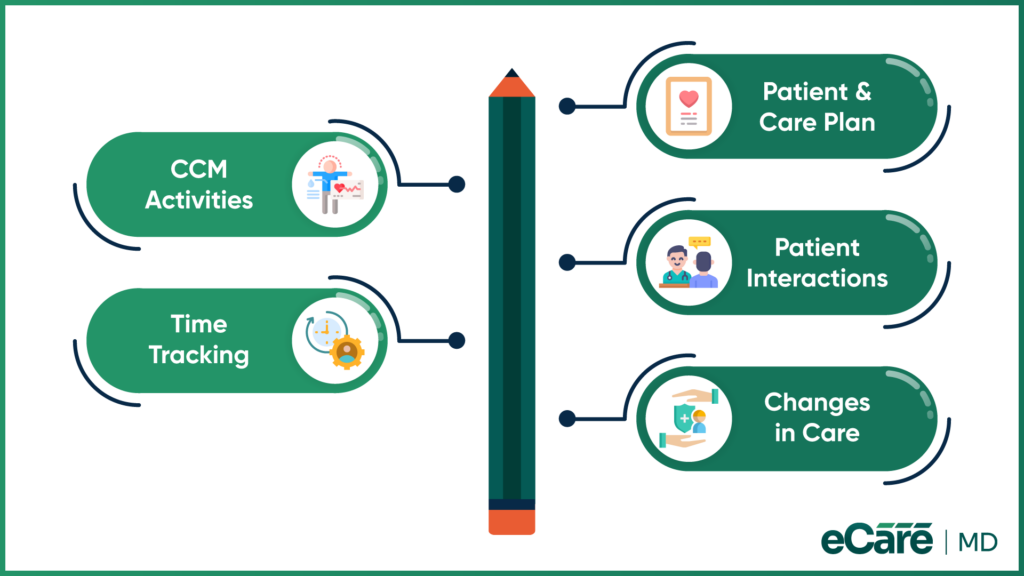
These CCM documentation requirements generally center on five areas:
- Patient and care plan details: Document relevant patient information, individualized goals, care-plan details, and meaningful updates as the patient’s needs change.
- CCM services and activities: Record interventions, follow-ups, care coordination, and other activities completed for the patient.
- Patient interaction logs: Capture relevant outreach, patient responses, concerns, and follow-up communications so the record reflects what took place.
- Time and service activity tracking: Keep accurate records of applicable service time alongside the activities performed during that time.
- Changes in care: Document meaningful changes in patient needs, interventions, goals, or the direction of the care plan.
The common thread is simple: the record should tell the story of the care. Someone reviewing it should be able to follow the patient’s needs, the actions taken, and how care evolved over time.
That level of clarity not only supports day-to-day coordination but also makes documentation easier to evaluate when audit preparation begins.
CCM Documentation Standards: What Makes Records Audit-Ready?
Imagine a reviewer opening a patient record and trying to follow the care provided over several months. The notes are there, but some were entered much later, a few do not clearly identify who completed the activity, and important details are difficult to locate.
Nothing may be missing at first glance, yet the record still leaves room for doubt. That is why CCM documentation standards go beyond simply having records on file.
The quality of the documentation matters just as much. Strong CCM audit documentation should make the care provided clear, traceable, and easy to verify.
Key qualities include:
- Accuracy: Entries should reflect what actually happened. Documentation should not contain unsupported details or information added later to make an activity appear more substantial.
- Contemporaneous entry: Records should be created close to the time the service or activity occurs, while the details are still fresh.
- Audit trail and traceability: Documentation should clearly show what was done, when it happened, and who performed the activity.
- Authorization and accountability: Staff roles and responsibilities should be clear, with appropriate attribution and controlled access to records.
- Accessibility: Authorized reviewers should be able to find and verify relevant information without digging through disconnected records.
Put simply, audit-ready documentation should leave little room for guesswork. A reviewer should be able to follow the record and see a clear trail from the patient’s needs to the activities performed. That clarity is what turns documentation from a collection of notes into evidence of an organized CCM process.
CCM Documentation Best Practices for Audit Readiness
The difference between good documentation and inconsistent documentation often comes down to what happens during an ordinary workday. A care manager finishes a patient call and immediately records the activity. Another team member updates the care plan after a change in the patient’s needs. Because these steps happen as part of the workflow, there is less to remember or reconstruct later.
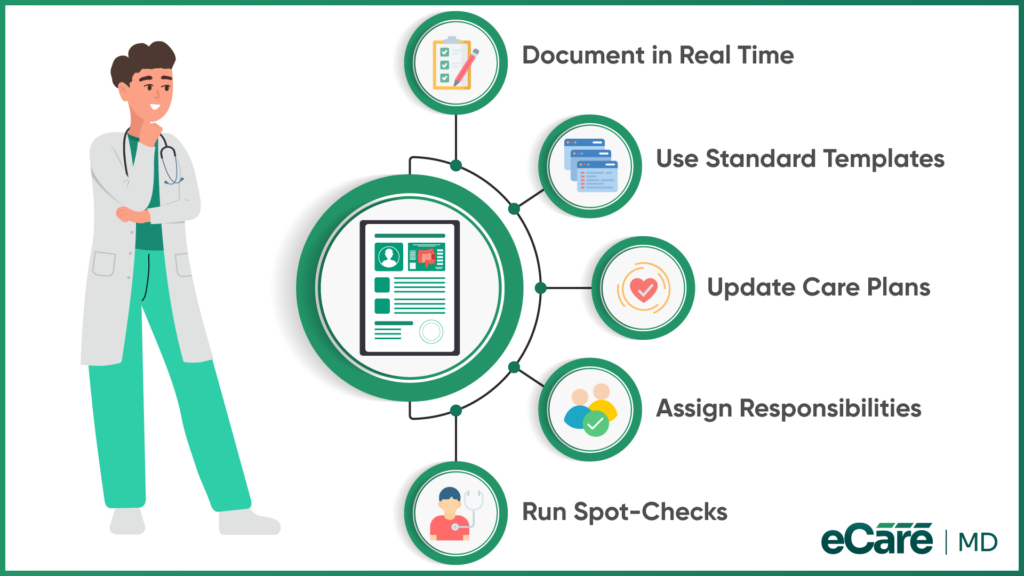
These everyday habits form the foundation of CCM documentation best practices for audit readiness.
1. Log activities in real time.
Recording an activity soon after it happens helps capture accurate details while they are still fresh. Waiting until the end of the day—or longer—can turn a simple task into a memory exercise.
2. Use standardized templates.
A consistent structure gives every care-team member the same framework for documenting important information. It also makes records easier to review and compare without forcing staff to reinvent their notes each time.
3. Keep care plan updates structured.
When a patient’s needs, goals, or interventions change, those updates should follow a consistent workflow. This makes it easier to see how care has evolved rather than leaving changes buried in separate notes.
4. Define role-based responsibilities.
Everyone should know what they are responsible for logging, updating, and reviewing. Clear ownership reduces the chance that important information falls through the cracks.
5. Run routine spot-checks.
Small checks during normal operations can catch missing details, inconsistent entries, or workflow gaps before they become bigger problems. The goal is not to create another layer of bureaucracy, but to keep documentation quality on track.
When these practices become part of the daily routine, audit readiness becomes less of a last-minute project. The records are being kept in good shape all along, which makes the formal preparation process much easier.
Pre-Audit Readiness Checklist for CCM Documentation
By this point, the CCM team has built good documentation habits. But before an external review, it helps to step back and look at the records through a reviewer’s eyes. A short mock review can reveal gaps that are easy to miss during a busy workday.
This four-step process can help strengthen CCM audit readiness and show whether chronic care management documentation for audits is complete, traceable, and consistent.
1. Sample CCM Records
Start with a representative cross-section of patient records rather than reviewing everything at once. Read each record as a complete story. Can you understand the patient’s needs, the activities performed, and how the care progressed? If important parts of that story are missing, note where the gaps occur.
2. Verify Timestamps and Attribution
Next, check the dates, times, activity records, and staff attribution. Look for entries that are missing, inconsistent, unclear, or difficult to connect to a specific team member. These details help establish when an activity occurred and who performed it.
3. Validate Care Plan Alignment
Review whether the documented activities connect with the patient’s care-plan goals and updates. A record may contain plenty of notes, but those notes should still make sense alongside the patient’s documented needs. Any disconnect is worth investigating.
4. Resolve Process Gaps
Finally, look at what caused the gaps. If staff repeatedly miss the same type of information, the problem may be the workflow rather than the individual entry. Fix the underlying process instead of creating unsupported retrospective documentation.
The goal is not to prepare records only when an audit is around the corner. CCM audit readiness works best as an ongoing posture, with the same documentation habits and checks built into everyday operations. That way, when a formal review does arrive, the team is not scrambling to put the pieces together.
How eCareMD Supports Audit-Ready CCM Documentation
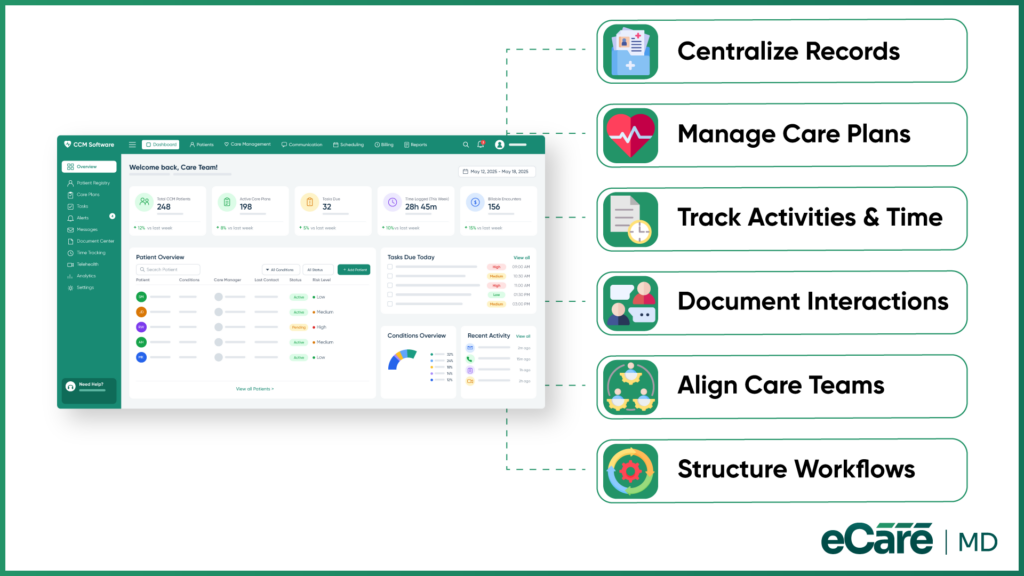
The mock review may have shown the team where documentation gets difficult: information is spread across different places, care-plan updates are easy to miss, or staff spends too much time tracking activities manually. This is where the right technology can help turn good documentation practices into a more consistent workflow.
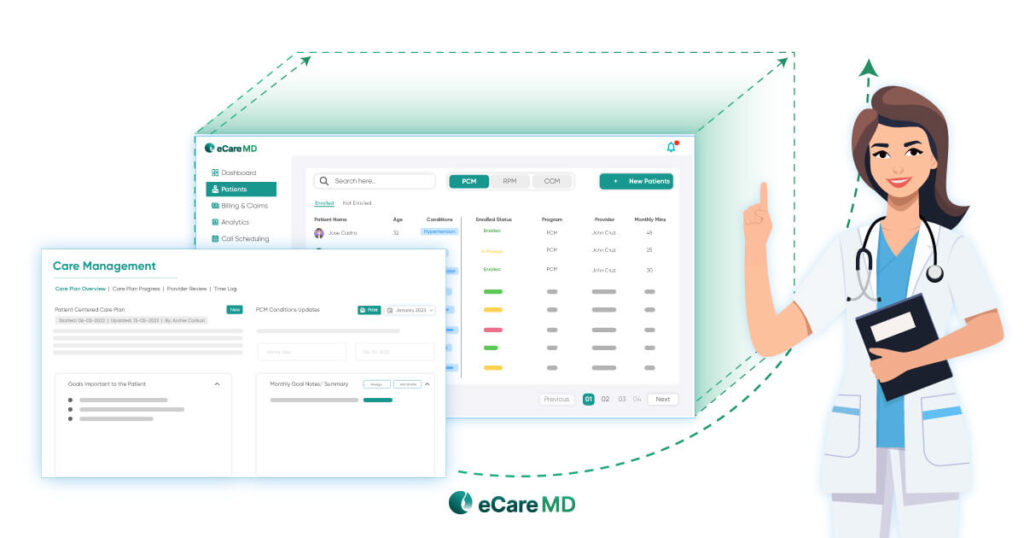
eCareMD supports CCM teams by bringing key care-management information and activities into a structured environment. It can serve as part of a broader patient care management software approach, helping teams keep documentation connected to the work they perform.
- Centralized record storage: Keep care plans, interaction records, and CCM activity information organized in one accessible environment.
- Care plan management: Give care teams access to individualized care-plan information and support ongoing updates as patient needs change.
- Activity and time tracking: Help teams consistently record CCM activities and applicable service-time information.
- Patient interaction records: Maintain visibility into relevant patient interactions and follow-up activities, so important details are easier to reference.
- Care-team alignment: Help team members work from consistent, up-to-date patient information instead of relying on disconnected records.
- Structured workflows: Support repeatable processes for creating, updating, and maintaining CCM documentation.
Technology can make the process more organized, but it does not replace good documentation practices. The quality of the final record still depends on how the care team uses the system and follows its documentation workflows.
When the right processes and technology work together, maintaining clear records becomes part of everyday CCM operations rather than a task saved for audit season.
Simplify Value-Based CCM Streamline connected CCM workflows with eCareMD.
Conclusion
Good CCM documentation does more than fill a patient record. It creates a clear trail of care that supports continuity, accountability, transparency, and CCM audit readiness. When every activity does not have to be pieced together at the last minute, the entire review process becomes easier to manage.
The strongest approach is built step by step: capture the information that matters, maintain clear documentation standards, make good habits part of everyday workflows, and use structured pre-audit checks to catch gaps early. Technology can then help keep those processes organized and consistent.
With eCareMD, CCM teams have a digital foundation for managing care plans, activities, patient interactions, time tracking, and other documentation workflows in one structured environment. The platform does not replace the team’s responsibility for maintaining accurate records, but it can make that responsibility easier to manage.
If your practice is looking to bring greater structure to its CCM workflow, explore how eCareMD can support your documentation and care-management processes through patient care management software.
Frequently Asked Question’s
CCM documentation is the ongoing record of care activities, patient interactions, care-plan updates, follow-ups, and services provided through a Chronic Care Management program. It helps care teams track patient progress, coordinate care, demonstrate accountability, and provide a clear record of the work performed.
Core CCM documentation should capture relevant patient and care-plan details, services and activities performed, patient interactions, applicable service-time information, and meaningful changes in care. The record should provide enough context for the care team to understand what happened and how the patient’s care evolved.
Audit-ready CCM documentation should be accurate, timely, complete, traceable, and easy for authorized reviewers to access. Records should clearly show what activity occurred, when it occurred, and who performed it. Consistent documentation also makes it easier to identify and address gaps before a formal review.
Best practices include documenting activities in real time, using standardized templates, keeping care-plan updates structured, defining staff responsibilities, and performing routine spot-checks. These habits help teams maintain consistent records throughout the CCM workflow instead of trying to reconstruct missing details when an audit approaches.
CCM audit documentation should provide a clear record of the patient’s care activities, interactions, care-plan information, applicable service time, staff attribution, and meaningful care changes. The documentation should allow a reviewer to understand what was performed, when it occurred, who performed it, and how it relates to the patient’s care.
There is no single look-back period that applies to every Medicare audit. The period can depend on the type of review and the contractor or program involved. For example, CMS has used a three-year timeframe for certain Medicare Recovery Audit reviews, while other audit programs may use different periods.
Patient care management software can organize care plans, patient interactions, activities, and service-time information within structured workflows. This can make relevant records easier to locate and review, while helping teams maintain consistent documentation practices. However, software supports the process; it does not replace the team’s responsibility for accurate documentation.
eCareMD supports structured CCM workflows by helping teams organize care plans, patient interactions, activities, and applicable service-time information. It can help care teams work from consistent information and maintain documentation as part of their daily workflow. Audit readiness still depends on how the practice uses the platform and maintains its processes.











![The Future of Remote Patient Monitoring: CMS Innovations & Emerging Trends [2026]](/wp-content/uploads/2024/07/Blog-36-The-Future-of-Remote-Patient-Monitoring_-Trends-AI-Innovation-CMS-Updates-for-2026-1024x538.png)