Last Updated: September 21, 2026
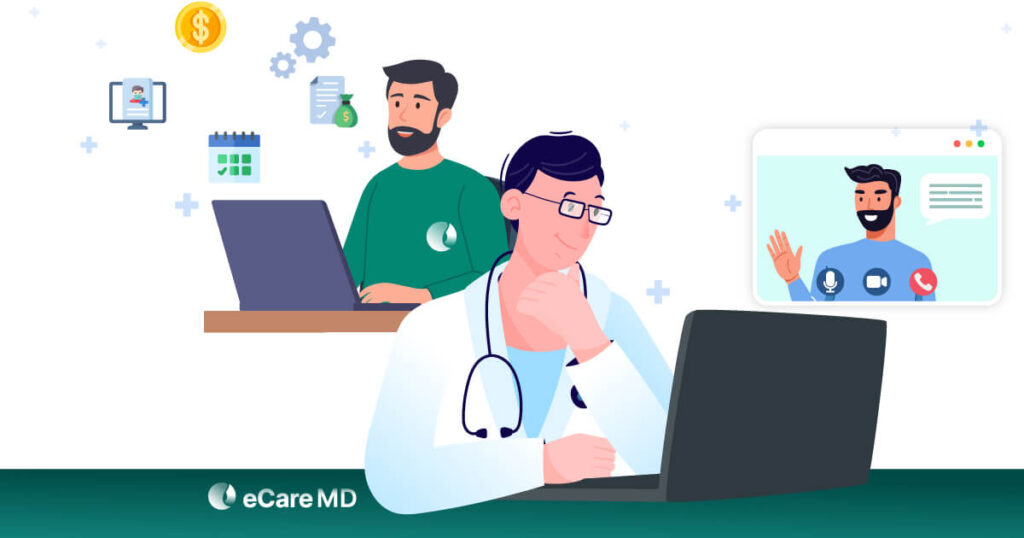
Picture that your patient finishes a routine visit with his care team and heads home with a clear plan. After that, he starts to take the medications, follow the care instructions, and then comes back again for his next appointment.
Until then, everything seems good. However, after two weeks, his symptoms started to change. He needs help, but his next in-person visit is still weeks away. This is one of the major gaps that can be filled with telehealth for chronic care management.
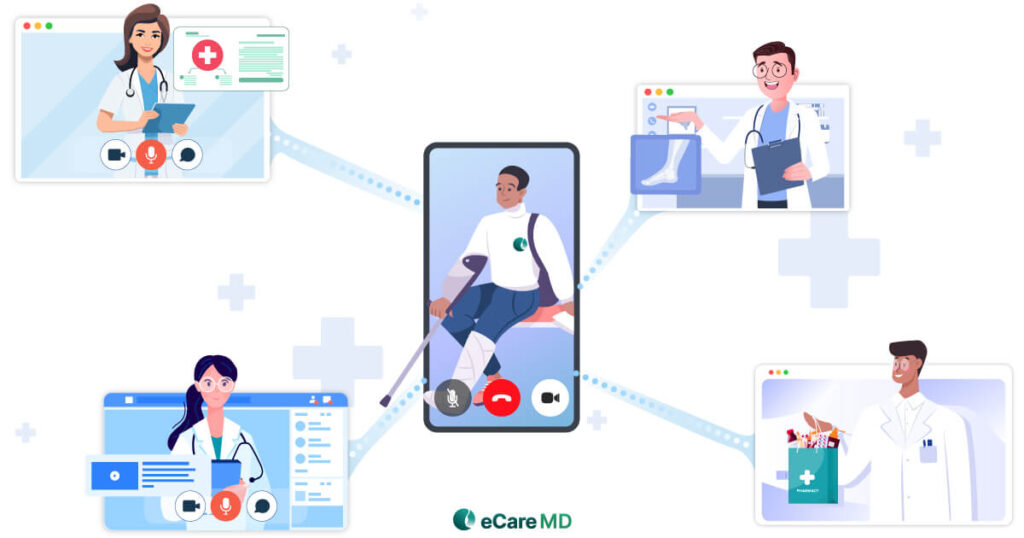
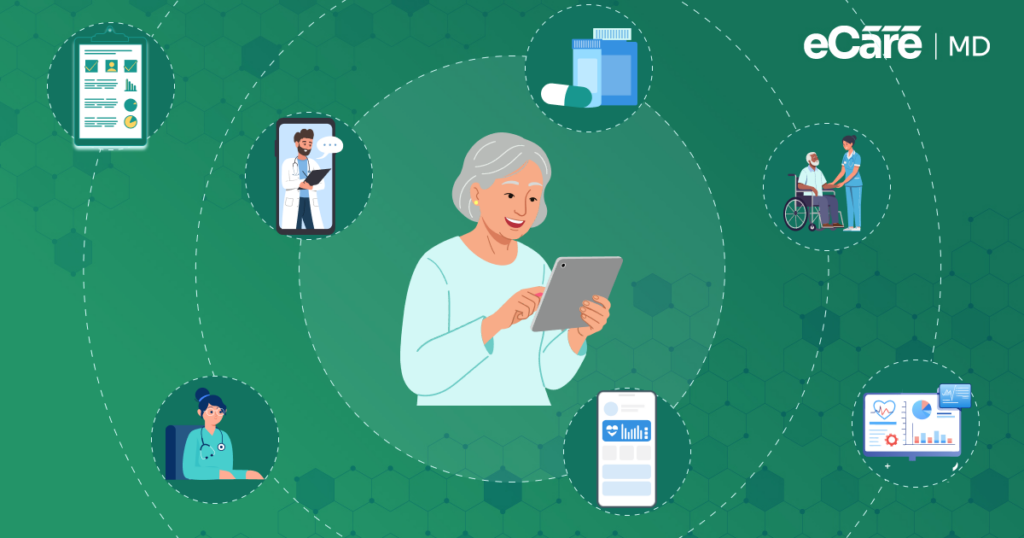
Rather than waiting for the next office visit, telehealth allows your care team to connect with your patients virtually while checking on their progress, answering questions, and keeping care moving between appointments.
And for your chronic care management patients, these regular touchpoints can make ongoing care feel less like a series of appointments and more like continuous support. However, for a CCM program, telehealth is not just about adding video visits. It should also work alongside care plans, patient communication, monitoring, and follow-ups.
By connecting through the right chronic care management tools, virtual interactions become part of your everyday CCM workflow instead of another disconnected task for your care team.
Let’s have a look at how telehealth in chronic care management supports ongoing patient care, where virtual care in chronic disease management fits into a CCM program, and the benefits of telehealth in chronic care management. We’ll also explore how eCareMD helps care teams bring these virtual interactions into a more connected CCM workflow.
Understanding Telehealth in Chronic Care Management
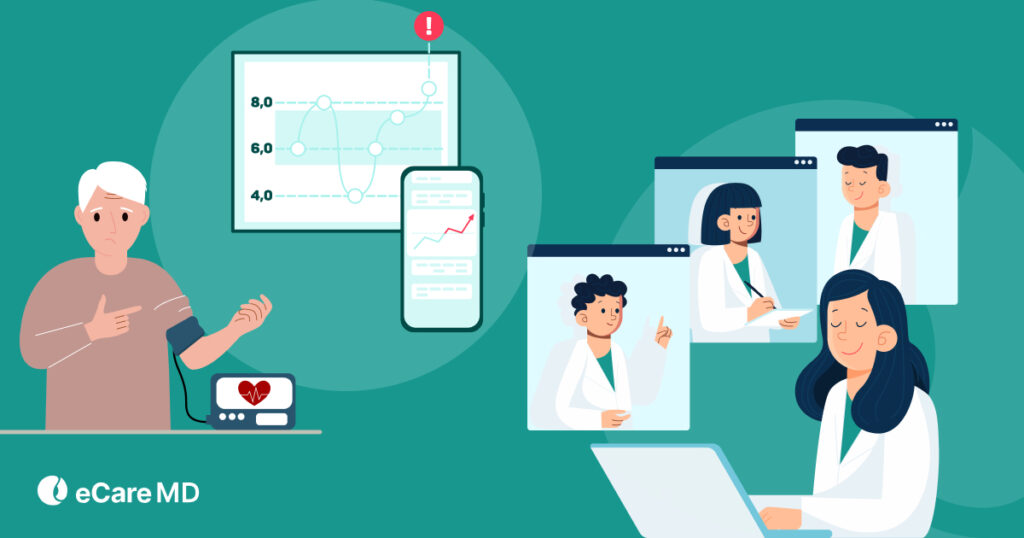
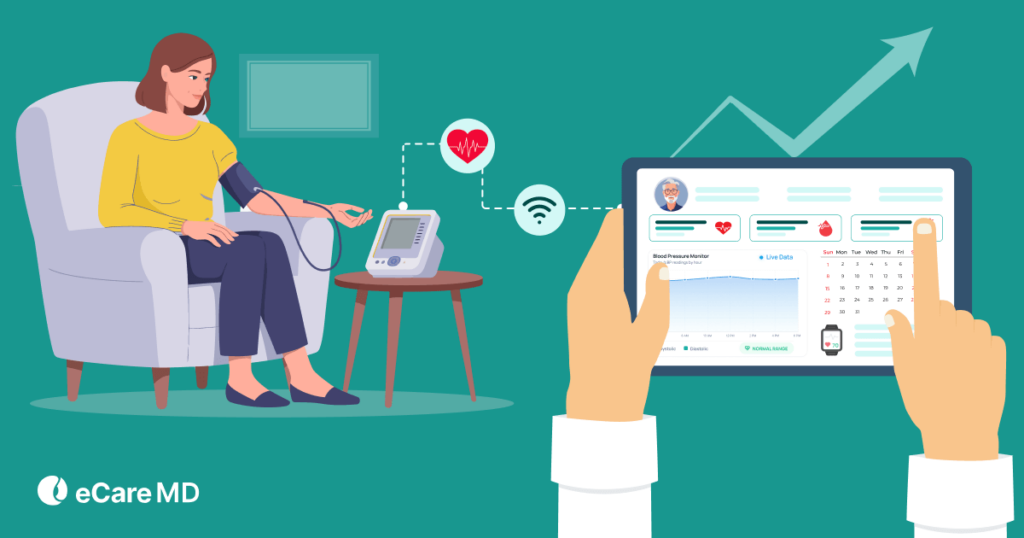
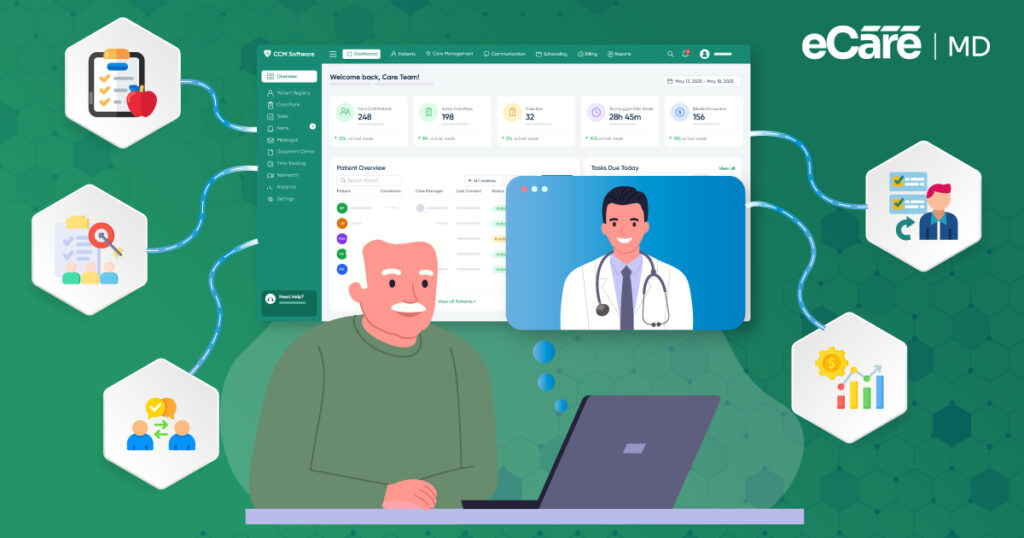
Your care team decides that your patient does not require another trip to the clinic just yet. Instead, they simply arrange a virtual check-in. During the call, they discuss the patient’s concerns, review the care plan, and decide what needs to happen next. Even though it is a small interaction, it can keep your patient connected to the care team between office visits.
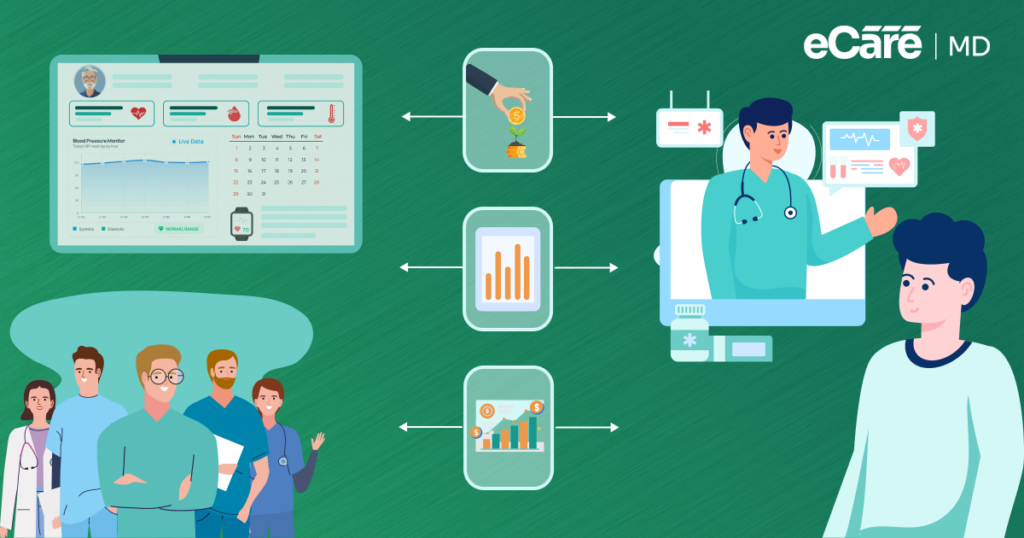
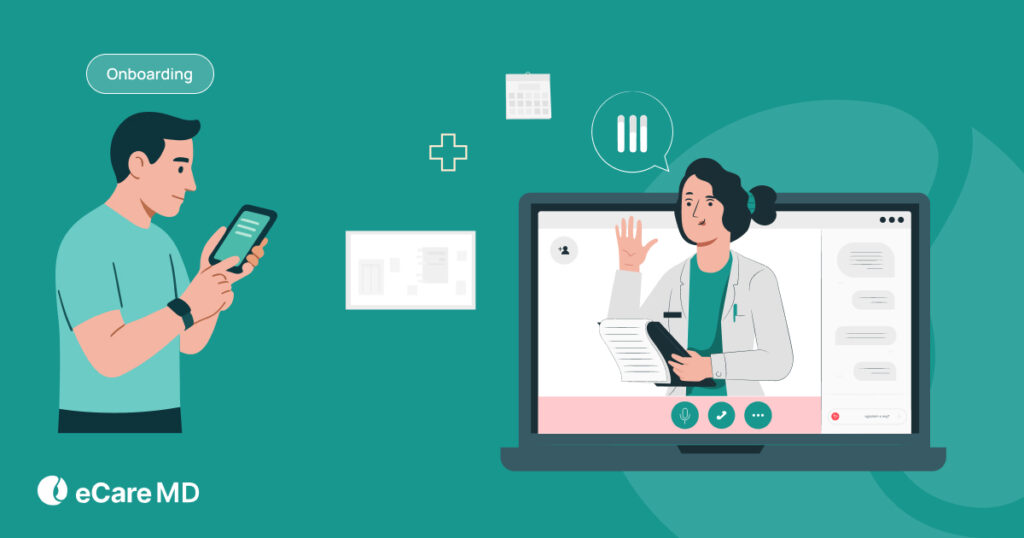
This is exactly where telehealth in chronic care management starts to fit in. Instead of replacing in-person care, telehealth allows you to add another way to communicate with your patients, follow up on their progress, and keep care moving between scheduled visits.
Even so, virtual care is the same as a standalone telehealth appointment. A regular telehealth visit may focus just on one immediate concern. On the other hand, CCM takes a longer view with ongoing communication, care coordination, follow-ups, and support built around your patient’s chronic conditions.
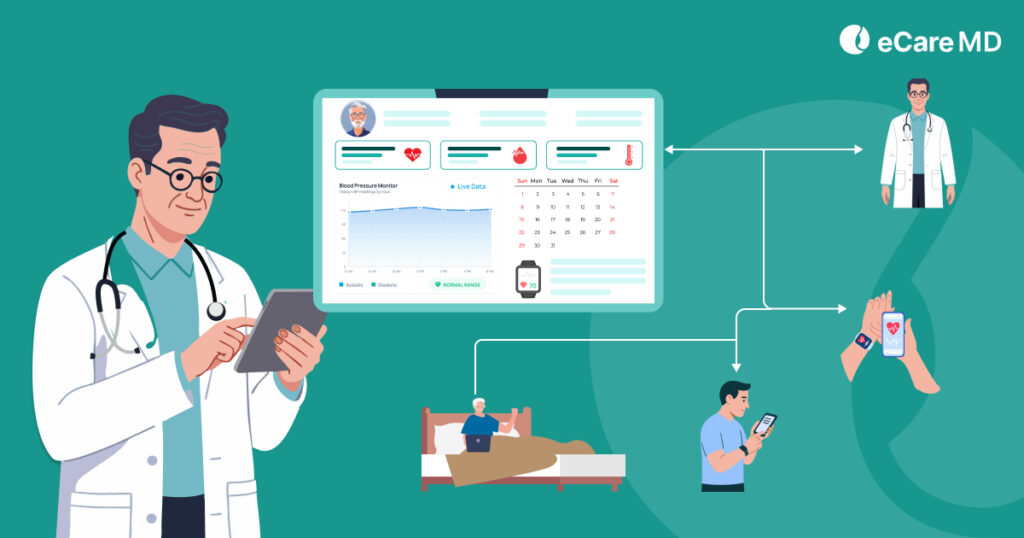
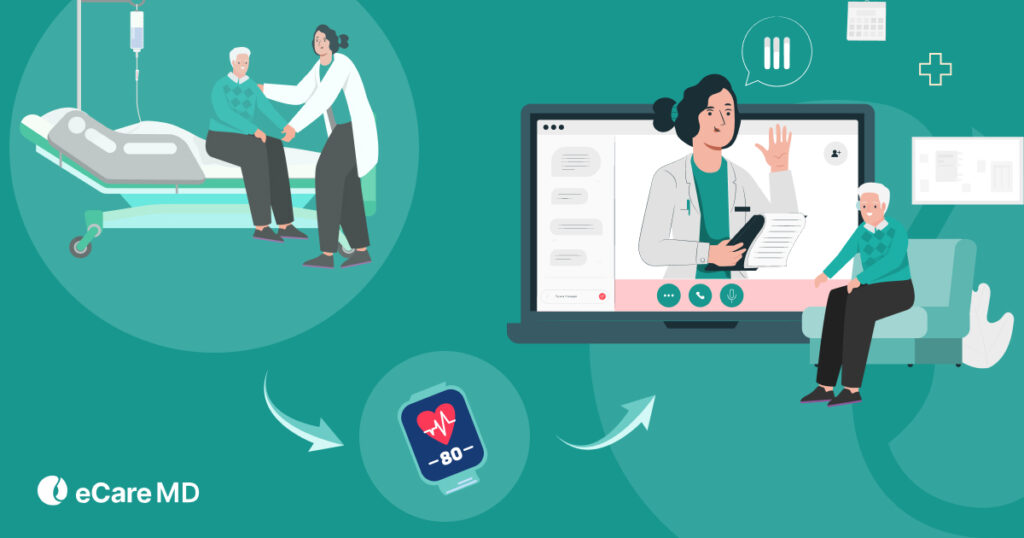
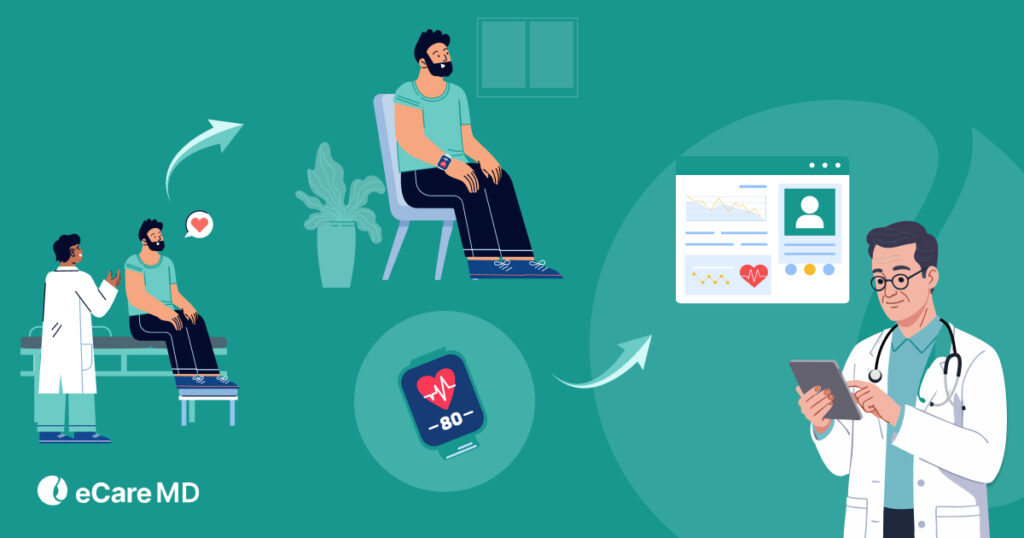
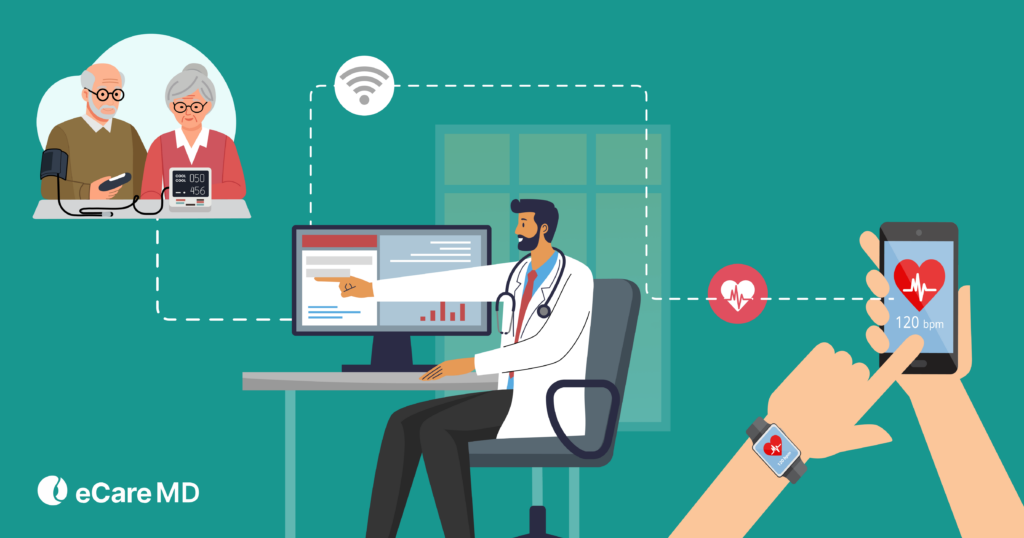
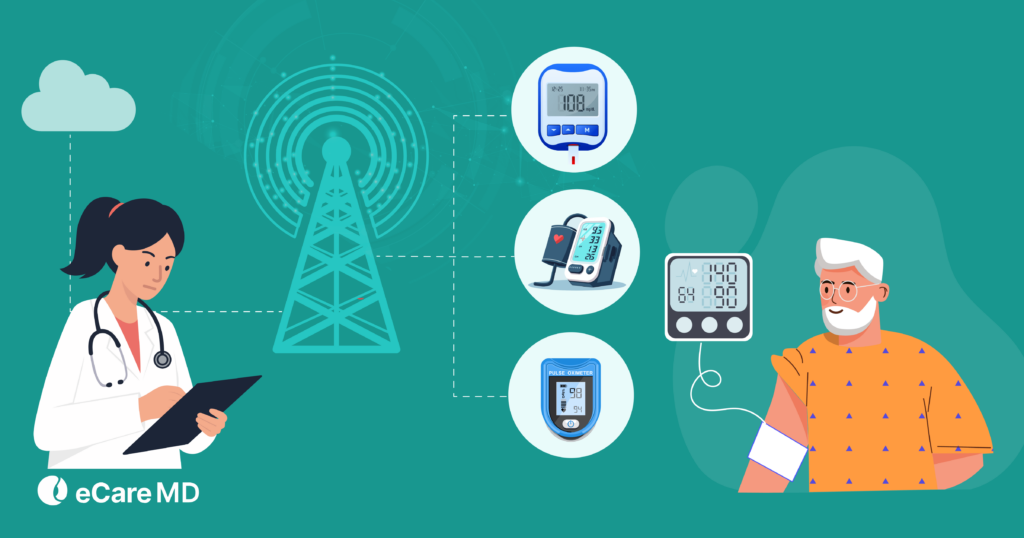
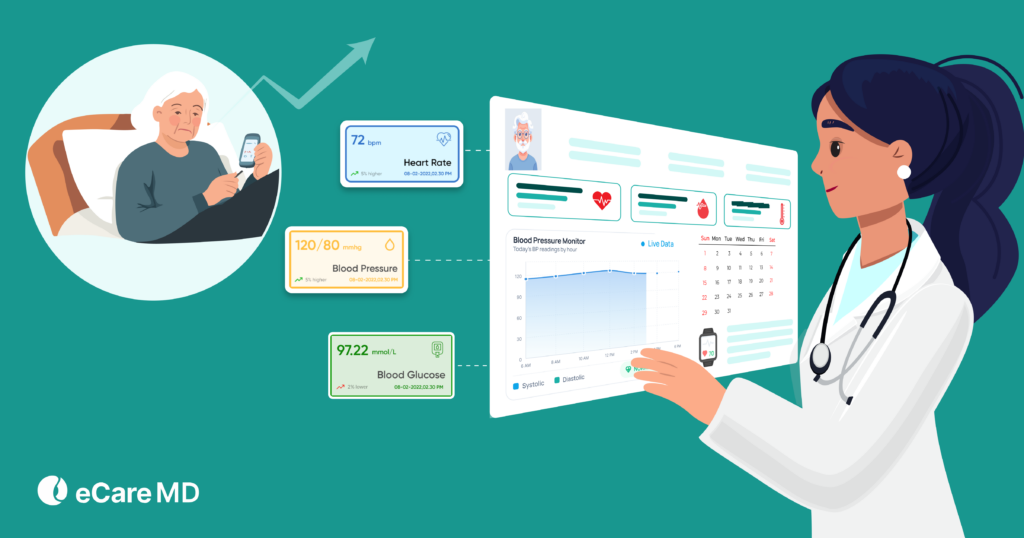
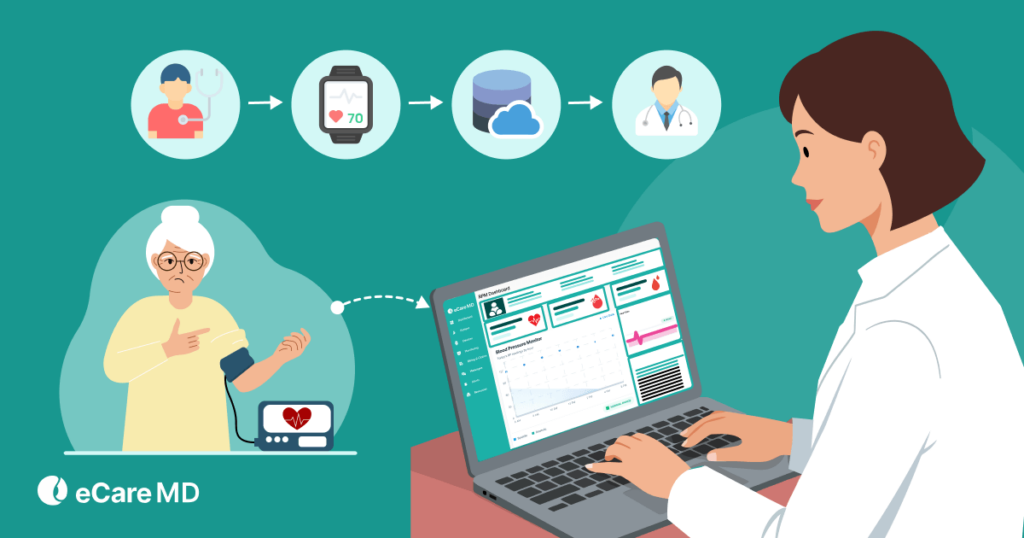
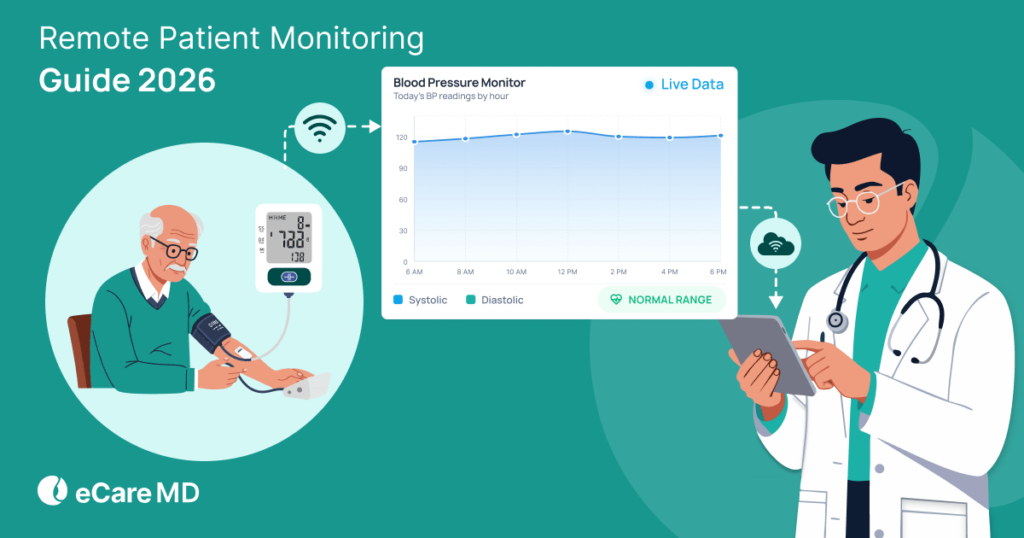
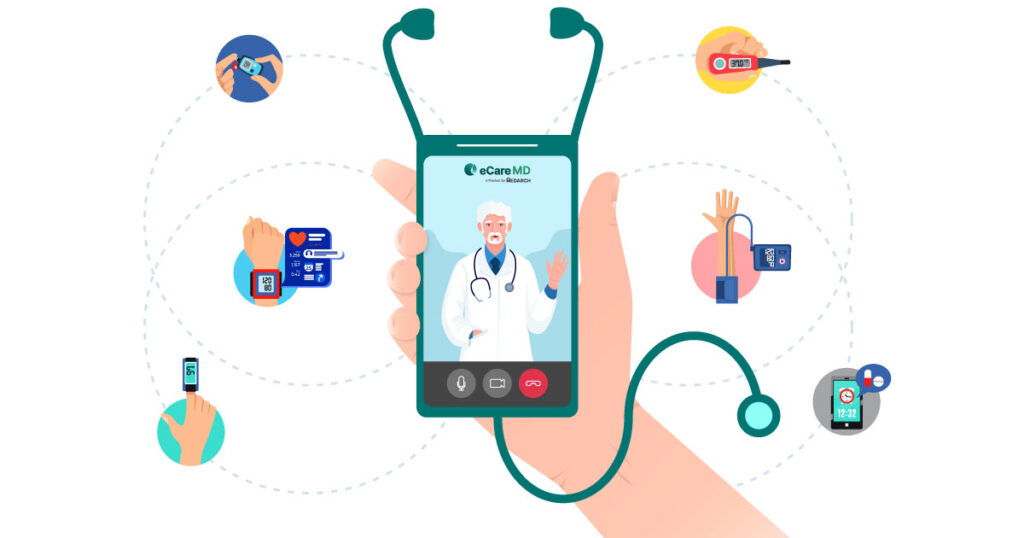
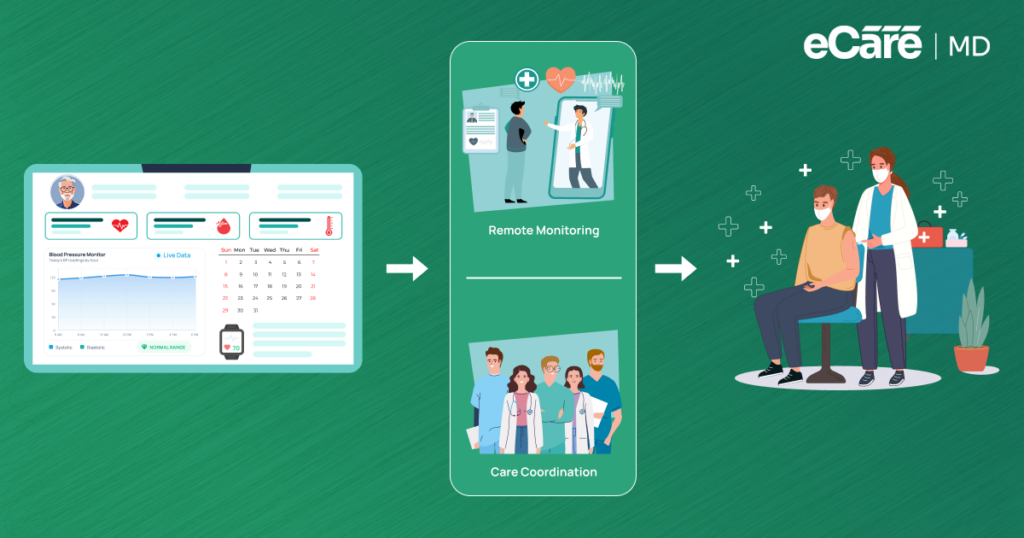
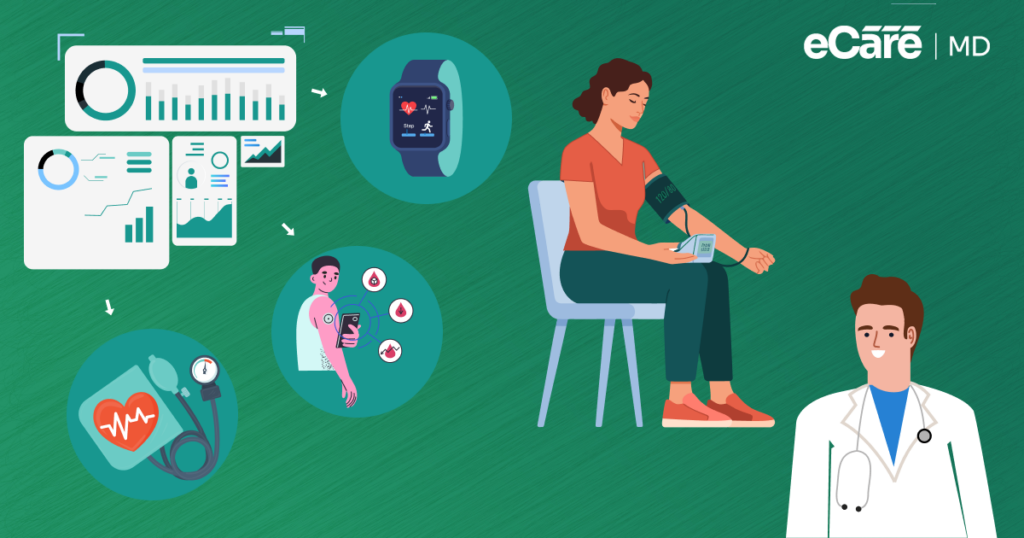
RPM can also become one of the major parts of it, but it actually serves a different purpose. RPM collects health data via connected devices, while telehealth gives your patient and care team a smarter way to communicate directly. For example, a concerning heart rate reading from RPM can lead to a virtual conversation with the care team.
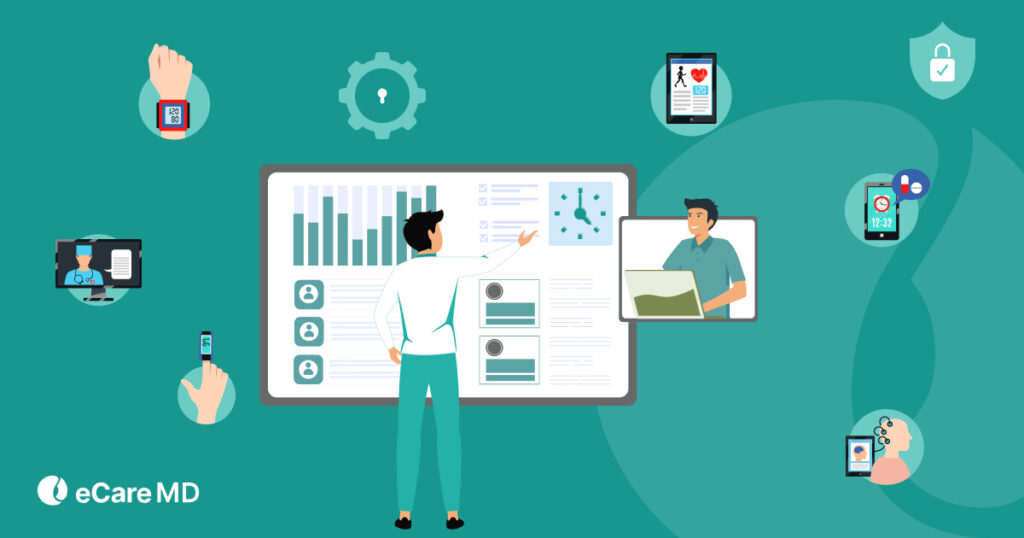
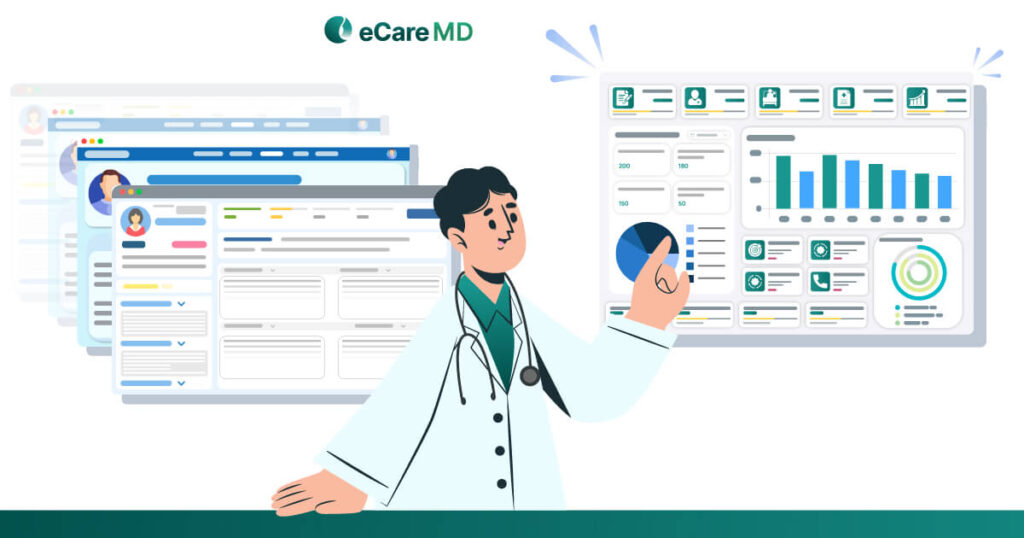
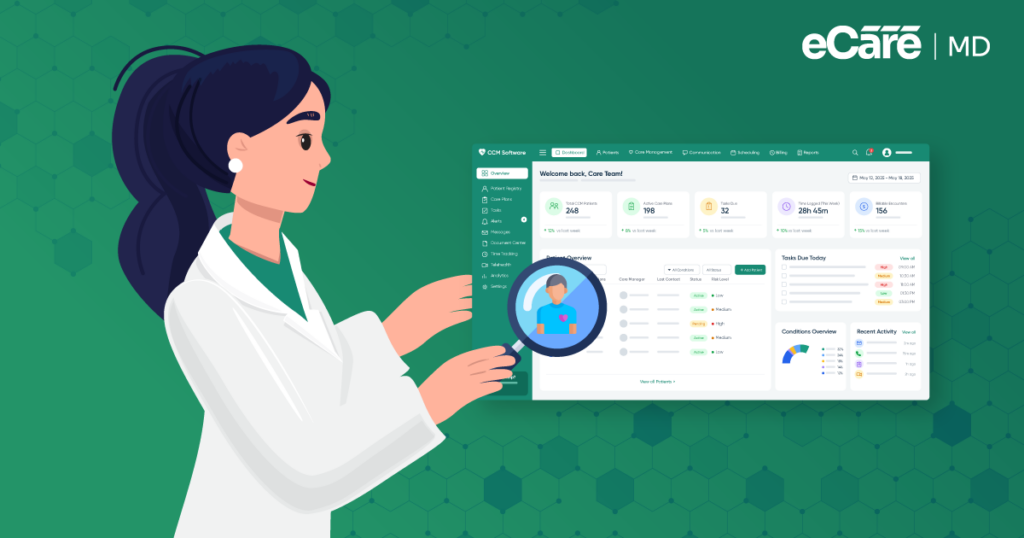
Furthermore, as all these interactions increase, it becomes difficult to keep track of every conversation, care plan, and follow-up. A care management platform can bring all these activities together, while chronic care management tools help your teams organize and document the work behind virtual CCM.
Bringing Virtual Care Into the CCM Workflow
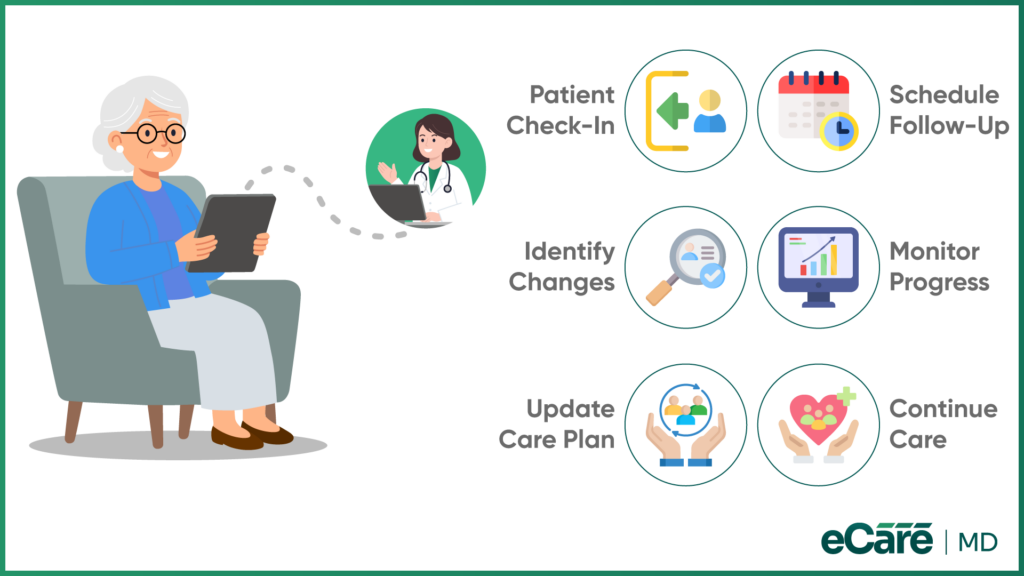
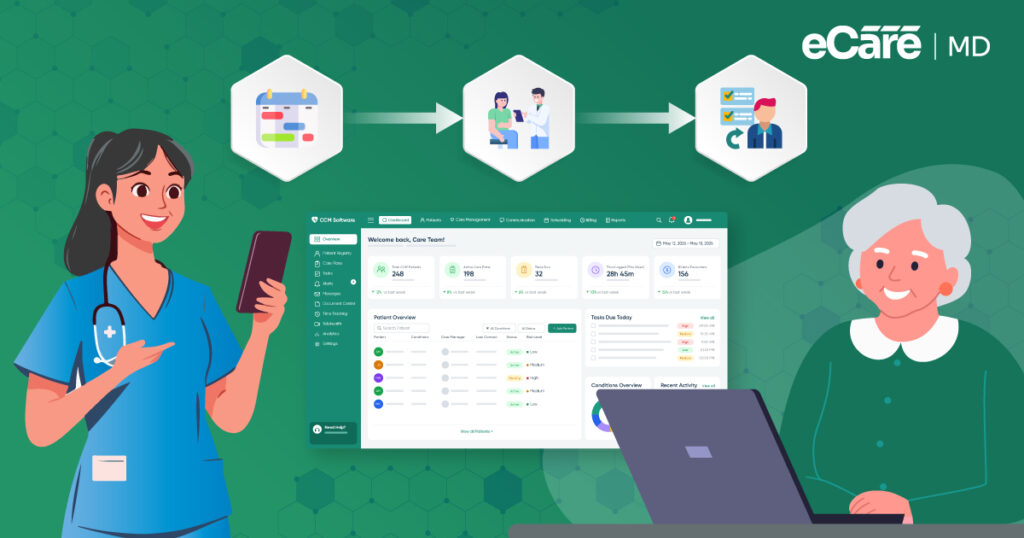
Here, one important thing to remember is that the virtual check-in never ends when the call is over. After speaking with your patient, the care team may become aware that the care plan requires a small adjustment. Perhaps a follow-up is required sooner, a medication concern needs to be addressed, or your patient requires more support to manage symptoms at home.
Rather than starting the process from zero, your care team can simply update the care plan remotely and schedule the next follow-up. After a few days, another quick check-in helps to confirm whether things are improving or not. Moreover, if your patient has a new question in between, the care team also has the opportunity to step in before the next in-person visit.
This is how telehealth supports chronic care management and becomes practical in your everyday care. Virtual interactions can become part of the routine and not a separate service that sits outside the CCM workflow. With this, it becomes easier for your care team to do regular check-ins, follow-ups, care-plan updates, and conversations around ongoing symptoms or concerns.
The patient can still come into your clinic whenever an in-person visit is required. But the care journey does not have to pause every time they leave. Virtual and in-person interactions can work together, giving the care team more opportunities to stay connected and giving patients a consistent point of contact throughout their care.
Where Telehealth Adds Value to CCM
Now, the care team has made virtual check-ins part of your patient’s routine. Rather than waiting for their next in-person visit, they can now stay connected, follow up on progress, and respond when something changes.
For your patients, this means that care does not feel like a series of isolated appointments, while for your care team it creates more opportunities for understanding what is actually happening in between visits.
| Where telehealth adds value | How it helps CCM |
|---|---|
| Improving access and continuity | Patients can connect with their care team without always needing to travel to the clinic, helping maintain communication between in-person visits. |
| Supporting consistent follow-up | Virtual check-ins can make routine follow-ups easier to schedule and maintain. |
| Identifying changing care needs earlier | Regular conversations can help care teams notice new concerns, changes in symptoms, or difficulties with the care plan sooner. |
| Helping address care gaps | Virtual interactions can provide another opportunity to follow up when a patient misses an appointment or needs additional support. |
| Supporting patient participation and retention | Easier communication can help patients stay involved in their care and connected with the care team. |
| Reducing unnecessary in-person burden when appropriate | Some routine conversations and follow-ups may be handled virtually when an in-person visit is not necessary. |
| Improving care-team efficiency | Integrating virtual interactions into the CCM workflow can help teams organize follow-ups and patient communication more efficiently. |
All these everyday advantages highlight why the benefits of telehealth in chronic care management move beyond simply offering video visits. The real value actually lies in giving your care team smarter ways to stay connected and keeping your patients’ broader care journey moving forward.
When virtual and in-person interactions work together, your team is more likely to spend less time waiting and more time responding to your patient’s ongoing requirements.
Connect Telehealth With CCM Connect virtual care and CCM workflows
How eCareMD Supports Virtual CCM
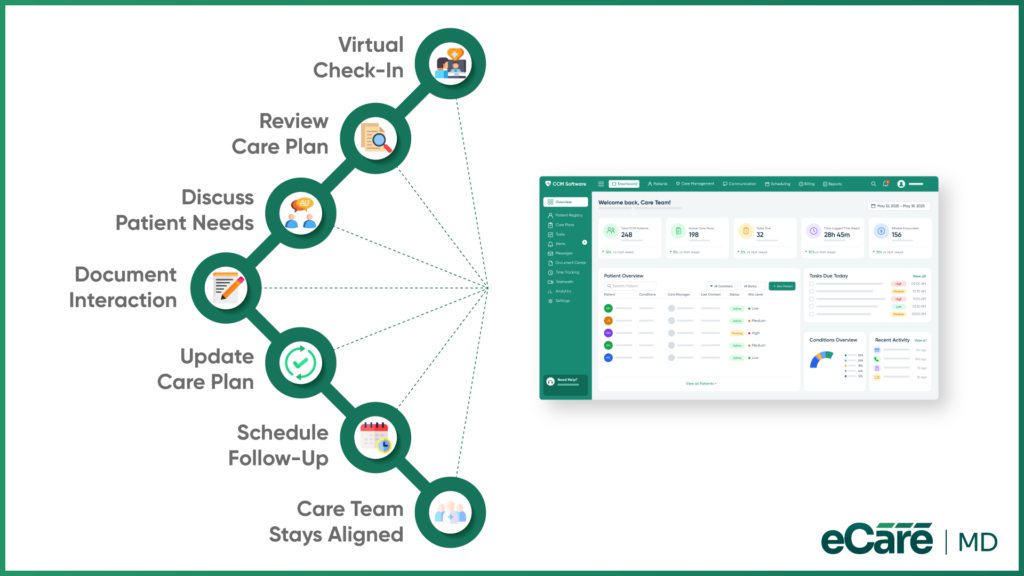
When your care team starts to use virtual check-ins for staying connected with the patient between office visits, they also need those conversations to fit into the rest of the CCM workflow.
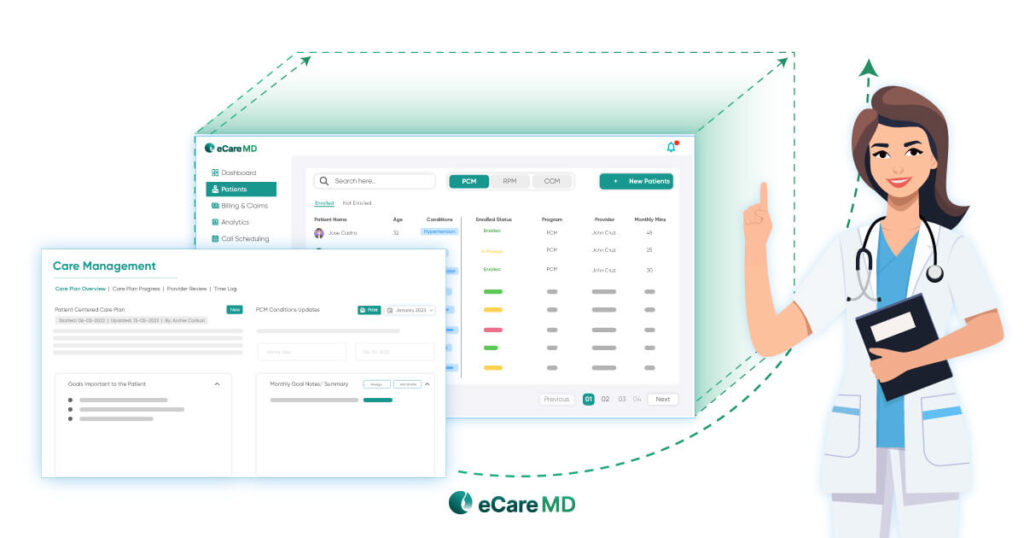
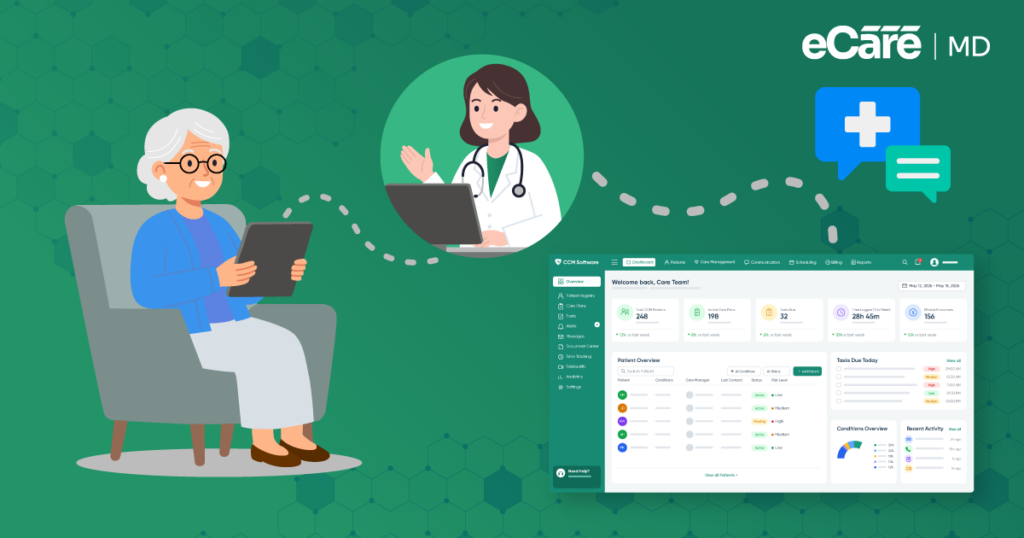
With eCareMD, virtual patient interactions can stay connected to the patient’s care plan and ongoing care activities, rather than becoming separate tasks. During a virtual interaction, the care team can refer to the patient’s care plan, discuss current needs, and document the activity afterward.
This gives the team a clearer record of what was discussed and what may need to happen next. Communication and care activity can also be tracked within the broader CCM workflow, helping prevent important follow-ups from getting lost.
The same connection supports care-team coordination. When multiple team members are involved, keeping virtual interactions and related care activities connected helps everyone stay aligned on the patient’s ongoing needs.
In this way, eCareMD helps make virtual care part of the CCM workflow, not another process sitting on the side. The conversation with the patient, care plan, documentation, communication, and follow-up can remain connected as care continues.
Conclusion
A patient’s chronic care journey does not end when an in-person visit is over. Telehealth can extend that connection, giving CCM teams another way to follow up, address ongoing needs, and stay in touch with patients between visits. For patients, this can make it easier to remain involved in their care without every interaction requiring a trip to the clinic.
For care teams, the value goes beyond convenience. When virtual check-ins, care-plan updates, communication, and follow-ups remain connected, teams can maintain continuity while keeping everyday CCM work more organized.
A care management platform like eCareMD can support this connected approach by bringing virtual CCM activities into the broader care workflow. Ultimately, telehealth does not need to replace in-person care to add value.
It can work alongside it, creating more consistent touchpoints throughout the patient’s care journey. When virtual care becomes part of the larger CCM process, both patients and care teams have a more connected way to keep care moving forward.
Frequently Asked Question’s
Yes, eligible CCM work performed virtually can contribute to the monthly CCM time requirement when it meets the applicable service and documentation requirements. For standard CCM, CMS describes a minimum of 20 minutes of clinical staff time per calendar month for the relevant services.
Not necessarily. The equipment needed depends on how the virtual CCM service is delivered. A patient may be able to participate through a phone, computer, or other compatible device. If the program also includes Remote Patient Monitoring, connected medical devices may be required to collect and transmit health data.
Patients must provide informed consent to receive CCM services before the services are billed. CMS allows CCM consent to be provided verbally or in writing, with the consent documented in the medical record. Generally, consent is obtained once unless the patient changes billing practitioners.
Care teams should document the relevant CCM activities in the patient’s medical record, including the work performed and information needed to support the service. For time-based CCM services, the applicable time must also be tracked and supported by the documentation.
Yes. Telehealth can complement in-person care rather than replace it. A CCM program can use virtual interactions for appropriate follow-ups and communication while continuing to use in-person visits when they are clinically necessary. CMS also requires an initiating visit for certain new CCM patients or patients who have not been seen by the billing practitioner within the previous year.
It can help practices use virtual interactions for appropriate follow-ups and communication, potentially reducing the need for some unnecessary in-person interactions. However, cost savings are not guaranteed, and the financial impact depends on the patient’s needs, care model, technology, and how the program is implemented.


![The Future of Remote Patient Monitoring: CMS Innovations & Emerging Trends [2026]](/wp-content/uploads/2024/07/Blog-36-The-Future-of-Remote-Patient-Monitoring_-Trends-AI-Innovation-CMS-Updates-for-2026-1024x538.png)