Last Updated: August 25, 2026
A practice can provide excellent chronic care and still leave money on the table. The difference often comes down to what happens after the care is delivered, how services are tracked, documented, coded, and ultimately billed.
For eligible Medicare patients with two or more chronic conditions, Chronic Care Management (CCM) can create a recurring revenue opportunity while supporting ongoing care between office visits.
However, CCM reimbursement does not happen by simply enrolling a patient and providing care. CCM CPT codes, documented time, care activities, patient eligibility, and billing requirements all need to line up. When even one piece falls out of place, eligible services can be missed, claims can be delayed, or revenue can slip through the cracks.
This is where accurate tracking becomes more than an administrative task. Practices need a clear view of who is eligible, what services were provided, how much time was spent, and whether the documentation supports the code being billed.
With the right process in place, chronic care management billing becomes easier to manage and gives practices a clearer picture of the revenue their CCM program can generate.
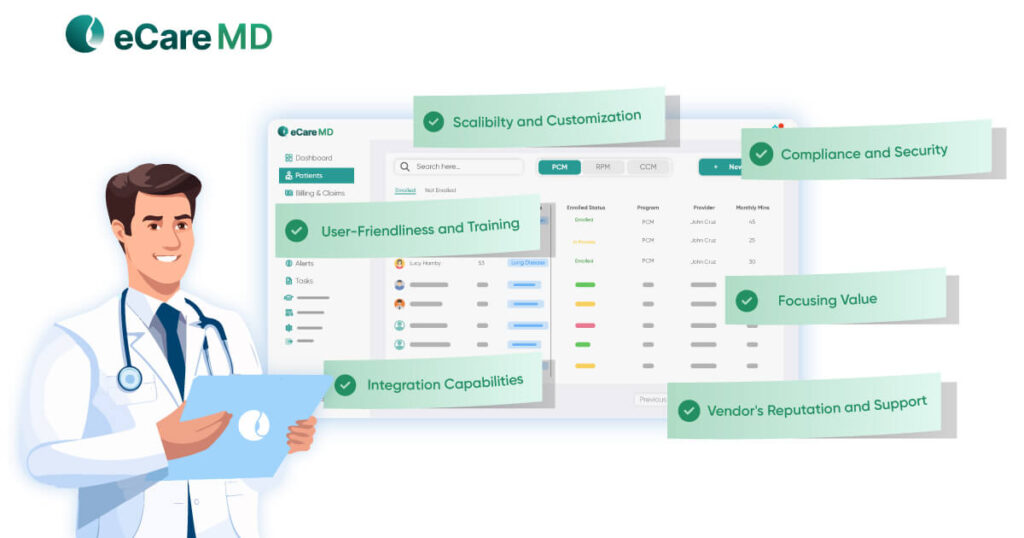
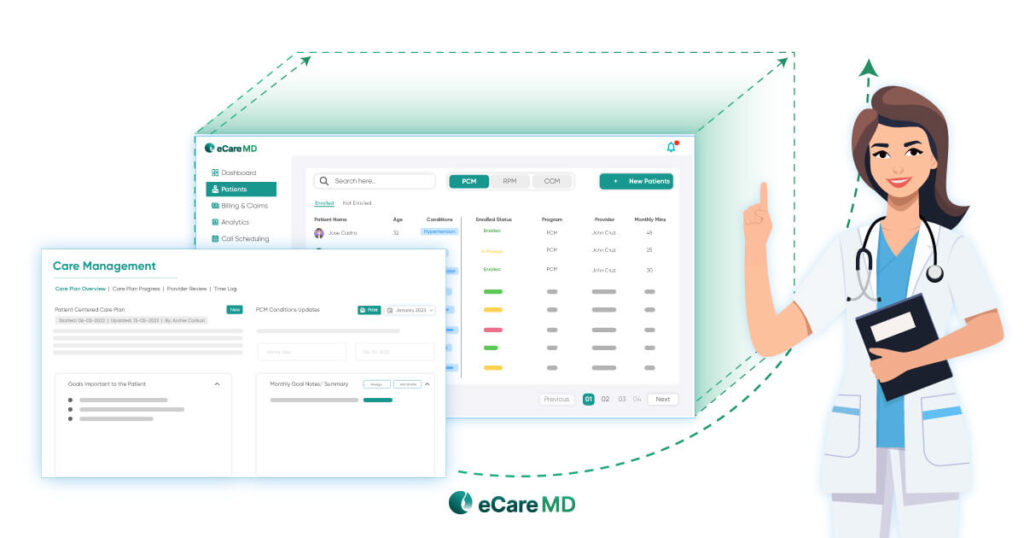
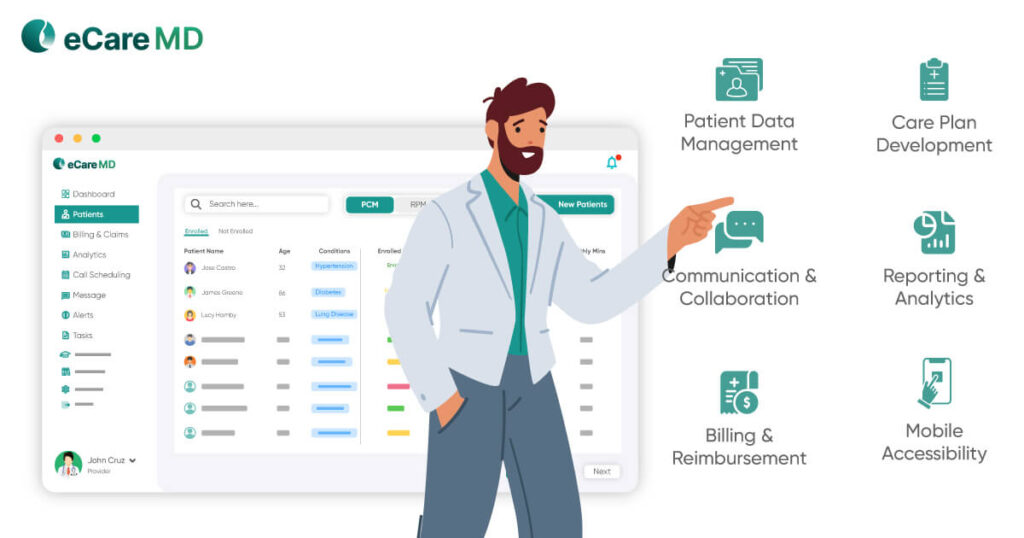
Technology can help connect these moving parts. A patient care management software solution can bring patient enrollment, care activities, time tracking, documentation, and billing workflows into one place, reducing the need to piece together information from multiple systems.
Let’s break down the CCM CPT codes, explain how chronic care management billing works, look at the connection between documentation and reimbursement, and explore practical ways practices can maximize CCM reimbursement while tracking the performance and ROI of a CCM program.
How Does Chronic Care Management Billing Work?

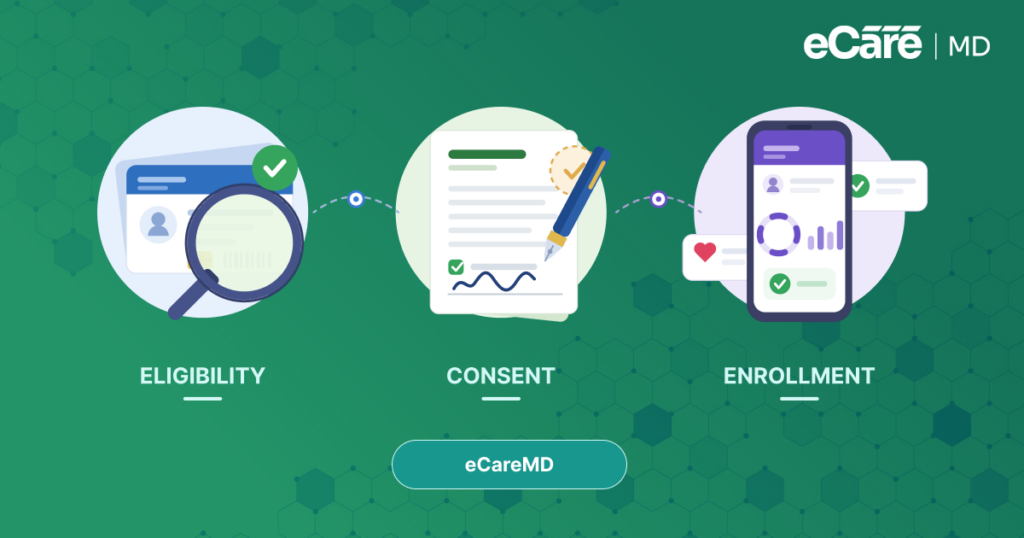
CCM billing follows a sequence. Before a practice can submit a claim, it needs to establish that the patient qualifies, complete the required setup, provide and track eligible services, and make sure the documentation supports the code being billed. In other words, getting paid for CCM is less about one billing action and more about keeping several pieces of the process in sync.
Here’s how the process typically moves from patient eligibility to claim submission:
1. Patient Eligibility & Initiating Visit
The process starts with the patient. Before CCM services begin, the practice should confirm that the patient meets the applicable eligibility requirements. For Medicare CCM, this generally includes having multiple chronic conditions expected to last at least 12 months, or until the patient’s death, and conditions that place the patient at significant risk of death, acute exacerbation, or functional decline.
An initiating visit may also be required before CCM services begin, depending on the patient’s circumstances and the applicable Medicare requirements. The key is to complete the required starting point before moving into ongoing monthly CCM services. Establishing eligibility and completing the necessary initial requirements gives the practice a solid foundation for everything that follows.
2. Patient Consent
Once eligibility is established, the next piece is patient consent. The practice must obtain and document the required consent before billing CCM services. This is also the point where the patient should understand what CCM involves, how the service will be provided, and that applicable cost-sharing may apply.
Consent is more than a formality. Proper documentation creates a record that the patient agreed to receive CCM and understood the service. Without that foundation, the practice can run into problems when it is time to support a claim.
3. Comprehensive Care Plan
With eligibility and consent in place, the focus shifts from getting the patient into the program to defining how that patient will be managed. A comprehensive care plan should be established before ongoing CCM services are provided.
The plan should reflect the patient’s chronic conditions, treatment goals, medications, care needs, and the providers or resources involved in managing those needs. It should also support ongoing coordination rather than serve as a document that simply gets created and filed away.
This is where CCM begins to move from a billing opportunity to a structured care process. The care plan gives the team a roadmap for the work that will take place throughout the month.
4. CCM Service Delivery & Time Tracking
Now the ongoing work begins. CCM services are primarily non-face-to-face and may include activities such as care coordination, medication management, communication with other healthcare professionals, and support related to the patient’s chronic conditions.
As these activities take place throughout the calendar month, applicable service time needs to be tracked accurately. This matters because time is directly connected to the CCM CPT codes used for billing.
A few minutes here and there can quickly become difficult to reconstruct when the month is over, especially when multiple staff members are involved. That is why recording qualifying activities as they happen is far more reliable than trying to piece together a month’s worth of work at the end. Accurate time tracking also helps the practice connect the services delivered with the documentation needed to support the eventual claim.
5. CPT Code Selection & Claim Submission
The final step brings everything together. The practice reviews the services provided and the documented time, determines the applicable CCM CPT codes, and makes sure the selected code is supported by the patient’s record.
Once the documentation and coding are aligned, the claim can be submitted according to applicable Medicare and payer requirements. This final step may look straightforward, but it depends on everything that came before it. If eligibility was not confirmed, consent was not documented, care activities were not properly recorded, or time was not tracked accurately, the billing process can hit a roadblock.
That is why CCM billing works best as a connected workflow rather than a series of separate administrative tasks. Patient eligibility leads to consent, consent supports the care plan, the care plan guides monthly services, tracked services support CPT code selection, and accurate coding leads to a stronger claim. When each link is in place, practices are in a much better position to capture the reimbursement they have legitimately earned.
What Are the CPT Codes for Chronic Care Management?
So, what are the CPT codes for chronic care management? The answer depends on the type of CCM service, the provider delivering it, the complexity of the patient’s needs, and the amount of qualifying time spent during the month.
The core codes used for CCM include 99490, 99439, 99491, 99437, 99487, and 99489. Together, they cover non-complex CCM, practitioner-directed CCM, and complex CCM services.
| CPT Code | General Purpose & Time Requirement | 2026 National Average |
|---|---|---|
| 99490 | Non-complex CCM; first 20 minutes of clinical staff time | ~$66 |
| 99439 | Add-on for each additional 20 minutes of non-complex CCM time | ~$50 |
| 99491 | Practitioner-directed CCM; first 30 minutes of personal time | ~$89 |
| 99437 | Add-on for each additional 30 minutes of practitioner time | ~$63 |
| 99487 | Complex CCM; first 60 minutes of clinical staff time with moderate-to-high complexity medical decision-making | ~$144 |
| 99489 | Add-on for each additional 30 minutes of complex CCM time | ~$78 |
The core codes used for CCM include 99490, 99439, 99491, 99437, 99487, and 99489. Together, they cover non-complex CCM, practitioner-directed CCM, and complex CCM services.
The easiest way to understand these codes is to group them by service type. 99490 and 99439 apply to non-complex CCM provided through clinical staff, while 99491 and 99437 apply when the physician or other qualified healthcare professional personally provides the required time. For more complex cases, 99487 and 99489 apply when the additional complexity and medical decision-making requirements are met.
The base and add-on codes also work as a pair. A base code covers the initial required time, while an add-on code can be reported when additional qualifying time is provided and documented. That makes accurate time tracking essential, not only for choosing the right CCM CPT codes, but also for supporting the claim.
Because CMS payment amounts and billing requirements can change, always verify the current Medicare Physician Fee Schedule and applicable payer guidance before submitting CCM claims.
Proven CCM Billing Strategies
Schedule a CallWhat Documentation Supports CCM Billing?

Choosing the right CCM CPT codes is only half the billing equation. The other half is having clear documentation that shows what was done, when it was done, and why the service was billable. If a claim ever needs to be reviewed, practices should be able to trace the billed service back to the patient’s CCM record without having to piece together information from scattered notes and spreadsheets.
Four areas deserve particular attention: patient consent, the comprehensive care plan, CCM activities, and time records.
- Patient Consent
Before billing CCM services, the practice must obtain and document the required patient consent. The record should show when consent was obtained and maintain that information with the patient’s CCM documentation.
Keeping consent easy to find matters. A document that technically exists but is buried somewhere in an unrelated system does little to make the billing workflow easier.
- Comprehensive Care Plan
The patient’s care plan should remain current and reflect their chronic conditions, goals, and planned interventions. As care needs change, the plan should change with them.
More importantly, the CCM services documented throughout the month should connect back to that plan. This creates a clear thread between what the patient needs, what the care team does, and what the practice ultimately bills.
- CCM Activities
Every qualifying CCM activity should be documented with enough detail to show what took place. This can include care coordination, patient communication, medication-related work, and other eligible clinical activities.
Recording the date, type, and relevant details of each activity helps create a traceable record instead of leaving the practice to rely on memory when the billing cycle comes around.
- Time Records
Time tracking is another piece that cannot fall through the cracks. Applicable CCM service time should be recorded as activities occur and connected to the corresponding documentation.
Trying to reconstruct minutes at the end of the month can turn a straightforward process into a guessing game. Accurate records make it easier to determine whether the documented work supports the selected code and submitted claim.
This is where CMS-compliant CCM documentation software can make a practical difference. Instead of keeping consent records, care plans, activity notes, and time records in different places, technology can organize them within the same CCM workflow. A patient care management software platform can further centralize documentation and time tracking, giving care teams a clearer record of the work completed throughout the month.
For example, eCareMD, developed by Medarch Inc., brings CCM workflows together to help practices organize patient information, care activities, documentation, and time tracking in one place. When the paperwork and the care workflow move in the same direction, supporting CCM billing becomes far less of a paper chase.
How Can Practices Maximize CCM Reimbursement?
More CCM patients do not automatically mean more reimbursement. Practices first need to make sure they are capturing the eligible services they are already providing. Small gaps in time tracking, documentation, coding, or claims management can add up over the course of a year.
Here are four practical areas to focus on:
- Capture Every Qualifying Minute
CCM work can happen throughout the month, from coordinating with another provider to following up with a patient. Record qualifying CCM time as the work happens rather than trying to reconstruct it later. Consistent time capture helps practices avoid overlooking billable services.
- Keep Documentation Connected
Every billed service should have documentation to support it. Clear records of patient communication, care coordination, and other qualifying activities make it easier to demonstrate that the reported service was actually provided.
- Select the Right CPT Code
The code should reflect the service provided, applicable time requirements, and the patient’s level of care complexity. Matching the documented work to the appropriate CCM CPT codes helps prevent both underbilling and unsupported claims.
- Monitor Claims for Recurring Issues
Reimbursement can also improve when practices look beyond individual claims. Track denials, rejected claims, coding errors, and other recurring billing issues to identify patterns. Fixing the root cause can prevent the same revenue loss from repeating month after month.
In short, the goal is not simply to bill more. It is to capture, document, code, and submit every eligible CCM service accurately. When those four pieces work together, practices have a stronger foundation for maximizing the reimbursement their CCM program can legitimately generate.
What Should Practices Know About CCM Software Cost?
Technology can make CCM workflows easier to manage, but CCM software cost is only one part of the overall investment in running a CCM program. The right question is not simply how much the software costs, but whether it fits the practice’s patient volume, staffing model, and workflow.
The total investment can include more than a monthly or annual subscription. Practices may also need to account for implementation, integrations, training, support, and ongoing operational costs. A lower-priced platform may not be the better value if it requires extensive manual work or does not connect well with the systems the practice already uses.
Program size matters, too. A small practice managing a limited CCM population may have different needs than a larger organization coordinating care for hundreds or thousands of patients. Before choosing a platform, practices should compare the expected cost with the time it can save, the administrative workload it can reduce, and its ability to support accurate billing and documentation.
Ultimately, CCM software should be evaluated as part of the program’s overall workflow, not as an isolated technology expense. The goal is to find a solution that provides enough functionality to support the program without paying for complexity the practice does not need.
What Is the ROI of a CCM Program?
Once a practice understands what it is spending on CCM, the next step is to determine what it is getting in return. The ROI of a CCM program compares the value generated by the program with the costs required to operate it.
Reimbursement is an important part of that equation, but it is not the whole story. Practices should also consider how efficiently staff can manage patients, how many eligible patients the program can support, and what they spend on technology, staffing, and other operational resources.
For example, a CCM platform that reduces manual tracking may allow the same team to manage a larger patient population without adding the same amount of administrative work. That improved efficiency can contribute to the program’s overall return, alongside the reimbursement generated from eligible services.
ROI should also be reviewed over the entire program lifecycle, rather than based on a single month. As patient enrollment grows, workflows improve, staffing needs change, and technology costs evolve, the financial picture can change as well. Reviewing these factors regularly gives practices a more realistic view of whether their CCM program is delivering sustainable value.
Which CCM Program KPIs Should Practices Track?
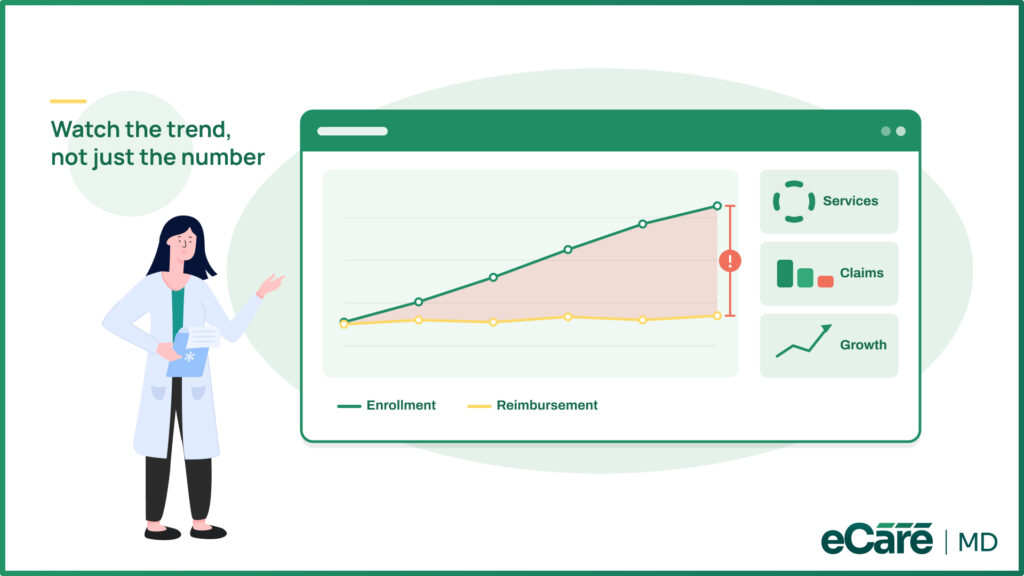
A CCM program can look healthy on the surface while small workflow problems quietly affect its performance. That is why practices should monitor both operational and financial CCM program KPIs, rather than looking at reimbursement alone.
A useful KPI dashboard can include:
- Patient enrollment: How many eligible patients are enrolled and how that number changes over time.
- Completed CCM services: Whether enrolled patients are consistently receiving qualifying services.
- Reimbursement: How much revenue the program generates and whether reimbursement is trending upward or downward.
- Claims performance: Claims submitted, paid, denied, or rejected, along with recurring reasons for billing issues.
- Program growth: Changes in patient volume, service activity, and overall program performance over time.
The real value comes from watching the trends, not just the numbers. For instance, rising enrollment with flat reimbursement could point to missed billable services or documentation gaps. Similarly, a growing number of claims paired with increasing denials may signal a coding or billing workflow problem.
By regularly reviewing these CCM program KPIs, practices can spot gaps earlier, understand what is working, and make informed adjustments before small issues turn into ongoing revenue leakage.
Conclusion
A successful CCM program is not built around billing alone. CCM CPT codes, accurate documentation, time tracking, and claim submission all work together to determine whether a practice can capture the reimbursement it is eligible for. Keeping these workflows accurate and consistent each month helps reduce missed services, billing errors, and unnecessary revenue leakage.
At the same time, practices need to look at the bigger financial picture. Reimbursement should be considered alongside staffing efficiency, software investment, patient volume, and the ROI of a CCM program. Tracking CCM program KPIs can also show where enrollment, service delivery, claims, or reimbursement may be falling short.
This is why reviewing the complete financial lifecycle of CCM matters. The right technology can make that process easier by connecting documentation, time tracking, and billing workflows. A CMS-compliant CCM documentation software solution can help practices keep these records organized while giving teams better visibility into program performance.
When care delivery, documentation, billing, and financial tracking move together, CCM becomes more than another administrative task. It becomes a structured program that can support better care coordination while creating a more sustainable source of reimbursement for the practice.
Frequently Asked Question’s
The core CPT codes for CCM are 99490, 99439, 99491, 99437, 99487, and 99489. CPT 99490 covers the first 20 minutes of non-complex CCM clinical staff time, while 99439 covers each additional 20 minutes. CPT 99491 covers the first 30 minutes of practitioner-directed CCM, with 99437 used for each additional 30 minutes. For complex CCM, 99487 covers the first 60 minutes of clinical staff time, while 99489 covers each additional 30 minutes.
CCM billing generally moves through several stages: confirming patient eligibility, completing an initiating visit when required, obtaining and documenting patient consent, establishing a comprehensive care plan, providing qualifying CCM services, tracking applicable time, selecting the appropriate CPT code, and submitting the claim. Accurate documentation and time tracking are essential because the services and time reported must support the code billed.
The main difference is who personally provides the qualifying time. CPT 99490 covers the first 20 minutes of CCM clinical staff time directed by a physician or other qualified healthcare professional. CPT 99491 covers the first 30 minutes of CCM time personally provided by the billing physician or other qualified healthcare professional. Clinical staff time does not count toward the 99491 time threshold.
Practices should maintain documentation supporting patient consent, the comprehensive care plan, qualifying CCM activities, and applicable service time. Records should show what services were provided and when, while connecting documented activities and time to the claim. Keeping these records complete and traceable helps support the services reported for billing.
Practices can improve reimbursement by consistently capturing qualifying CCM time, documenting services as they occur, selecting the CPT code that matches the services provided, and monitoring claims for denials or recurring billing errors. The goal is not to bill more services, but to avoid losing reimbursement for eligible services that were already provided.
Practices should look beyond the subscription price. Consider implementation, integrations, training, support, ongoing operational expenses, patient volume, and the amount of manual work the software can eliminate. The right solution should fit the practice’s CCM workflow and provide value relative to the size and needs of the program.
Practices can compare the total financial and operational returns generated by CCM with the costs of running the program. This can include CCM reimbursement, staffing costs, technology expenses, patient volume, and efficiency gains. Reviewing these figures over time gives a more accurate picture of the program’s ROI than looking at a single month’s results.
Useful CCM KPIs include patient enrollment, completed services, qualifying time captured, reimbursement, claims submitted and paid, denial rates, and overall program growth. Tracking these metrics over time can help practices identify problems such as declining enrollment, missed services, documentation gaps, or increasing claim denials.
For new patients or patients who have not been seen by the billing practitioner within the previous year, CCM must generally be initiated during a comprehensive face-to-face E/M visit, annual wellness visit (AWV), or initial preventive physical exam (IPPE). The initiating visit is separate from CCM services and may be billed separately. CMS also notes that the practitioner must discuss CCM with the patient during the visit for it to qualify as the initiating visit.
Yes. CCM is a monthly service, provided the patient continues to meet the applicable requirements and the practice provides and documents the qualifying services and required time for that calendar month. The practice must continue meeting applicable billing requirements each month rather than assuming that enrollment alone supports recurring claims.
If the practice does not meet the applicable minimum time requirement for a time-based CCM code during the calendar month, it generally cannot bill that code for the month. Practices should not round up or estimate time to reach a threshold. Accurate time records help determine whether the service qualifies for billing.
Practices can reduce errors by verifying patient eligibility, documenting consent, maintaining an up-to-date care plan, recording CCM activities and time as they occur, and matching the documented work to the correct CPT code. Regularly reviewing denied or rejected claims can also help identify recurring workflow problems and prevent them from happening again.
Medicare reimbursement varies by CPT code, locality, provider circumstances, and other applicable payment factors. For 2026, practices should use the CMS Physician Fee Schedule and applicable locality-specific payment data rather than relying on a single national figure. CMS’s PFS Look-Up Tool provides payment information for individual procedure codes and localities.




























![The Future of Remote Patient Monitoring: CMS Innovations & Emerging Trends [2026]](/wp-content/uploads/2024/07/Blog-36-The-Future-of-Remote-Patient-Monitoring_-Trends-AI-Innovation-CMS-Updates-for-2026-1024x538.png)