Last Updated: September 30, 2026
A care team may know which patient needs a follow-up today. But what about the 200 other patients on its chronic care panel? Some may be meeting their goals, while others are missing follow-ups, showing changes in their condition, or quietly falling through the cracks. Looking at each patient only when an issue appears makes those patterns difficult to see.
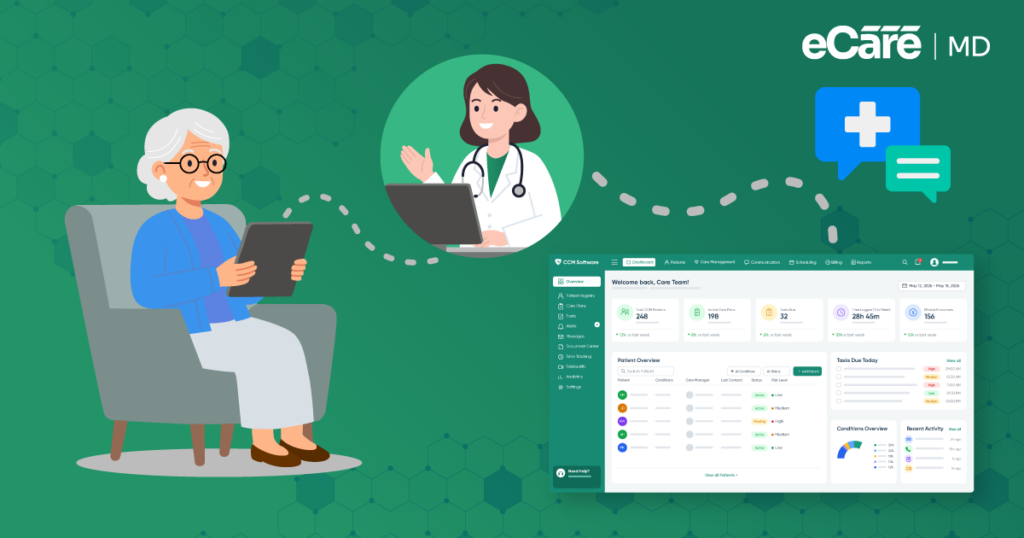
This is where population health management CCM takes a different approach. Instead of waiting for the next encounter, teams can use Chronic Care Management (CCM) to continuously identify patient needs, coordinate care, close gaps, and track progress across the entire population.
As the patient panel grows, however, keeping that information organized becomes harder to do manually. Technology provides the foundation for scaling these workflows, from identifying care needs to tracking interventions and maintaining documentation.
For practices exploring these capabilities, CMS-compliant CCM documentation software can help bring structured tracking and documentation into the broader population-health workflow.
This guide explores population health strategies for chronic care, how CCM supports better outcomes, the role of software, and how eCareMD brings these pieces together.
What Is Population Health Management in CCM?
A care team looking at its patient list may notice one patient who missed a follow-up and another whose care plan needs an update. But when the team steps back and looks at the entire panel, a bigger picture can emerge.
Several patients may have similar gaps, high-risk patients may need more frequent outreach, and some groups may be progressing well. That broader view is the starting point for population health management.
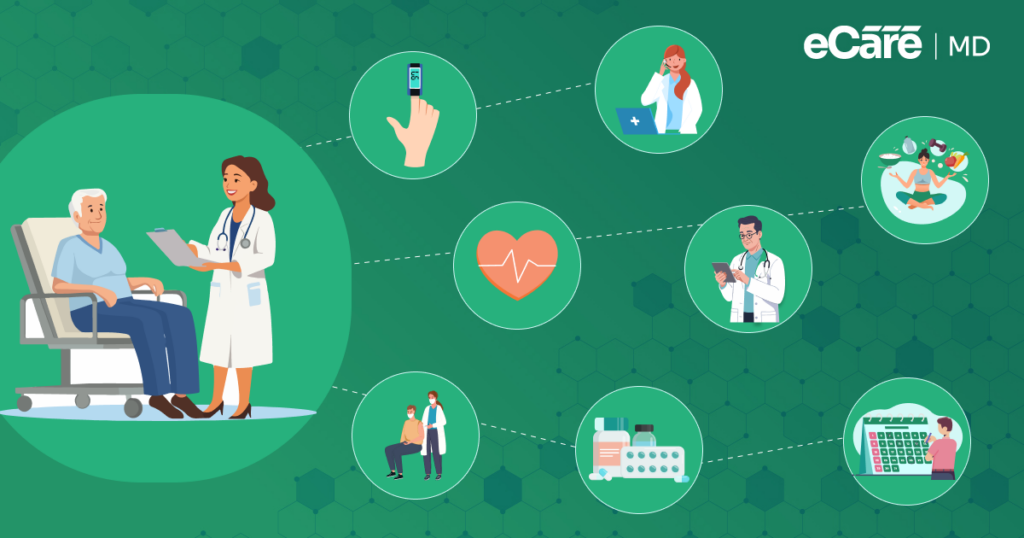
Population health management CCM means using a structured approach to manage the needs and outcomes of a defined patient population rather than focusing only on individual encounters. In CCM, teams can continuously engage patients, coordinate care, identify gaps, and track progress across the population.
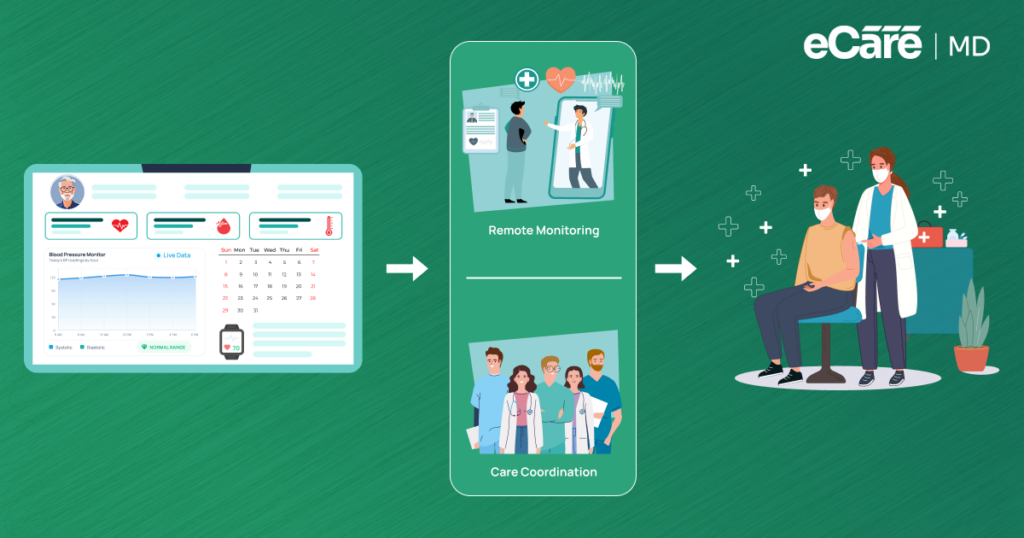
The workflow typically connects four activities:
- Ongoing engagement and monitoring: Keep track of patient needs and changes over time.
- Care-team coordination: Keep the right team members informed so care does not happen in silos.
- Targeted outreach: Prioritize patients based on their needs, risk levels, or identified care gaps.
- Population and program tracking: Monitor patterns and overall program performance to see where attention is needed.
The relationship between the two is important. Population health management establishes the bigger priorities, where the population has gaps and which groups need attention. CCM then provides the framework for acting on those priorities at the patient level through ongoing interventions and care coordination.
When those two levels work together, teams can move beyond reacting to problems and start addressing patterns earlier. That shift can create a more consistent approach to chronic care and lay the groundwork for better population health outcomes.
Core Population Health Management Strategies for Chronic Care
Once the care team sees the bigger picture, the next step is deciding where to focus. Some patients may have higher risks, others may have missed preventive care, and recently discharged patients may need quick follow-up. A unified approach helps teams act on these differences instead of treating every patient the same.
These population health management strategies for chronic care can help:
- Risk and Need Identification: Segment patients based on condition severity, risk, social needs, and care gaps. This helps teams prioritize patients who need greater attention.
- Preventive Care and Gap Closure: Identify missed screenings, follow-ups, and other preventive needs across the population, then use structured outreach to address them. This is a key part of chronic disease population health management.
- Post-Discharge Transitions: Patients can easily lose momentum after leaving the hospital. Timely follow-up and coordinated care help teams identify issues early and maintain continuity.
- Longitudinal Progress Monitoring: Track patient status over time and watch for changes in needs or population-level trends. These insights can help teams adjust priorities as the population evolves.
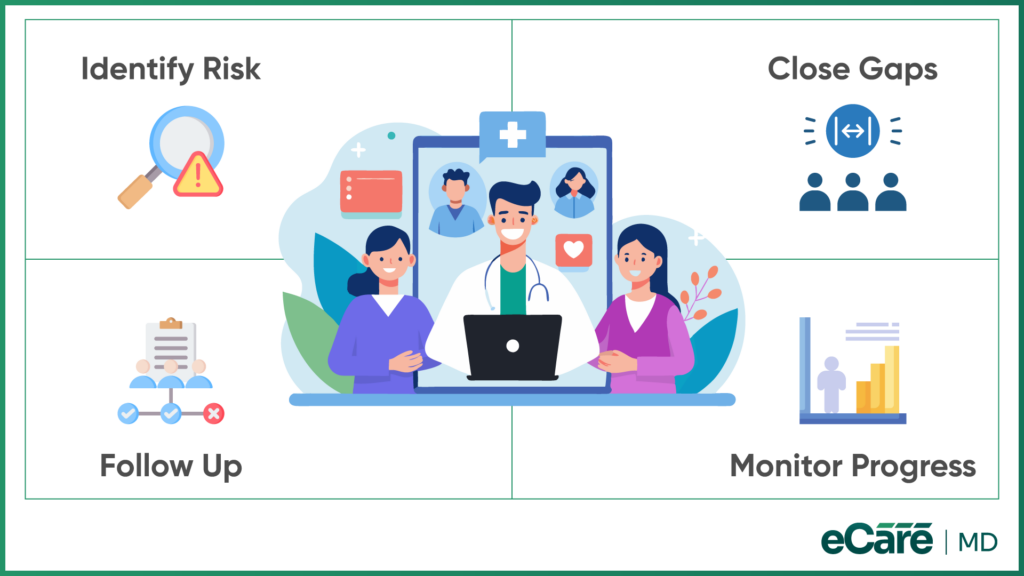
Together, these strategies create a simple cycle: identify, intervene, follow up, and monitor. That is what makes population health management in chronic care proactive rather than reactive.
How CCM Software Improves Population Health Outcomes
Seeing the gaps across a patient population is one thing; keeping up with them is another. As the panel grows, care teams can quickly lose track of follow-ups, recurring tasks, and changes in patient needs. This is where population health management software can turn a strategy into a repeatable workflow.
Here’s how CCM software can support and improve population health outcomes:
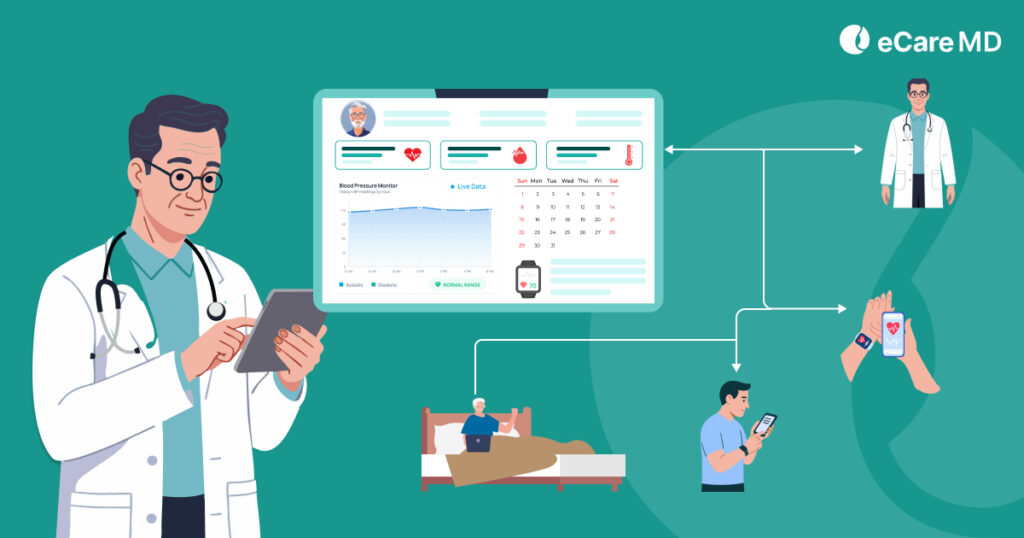
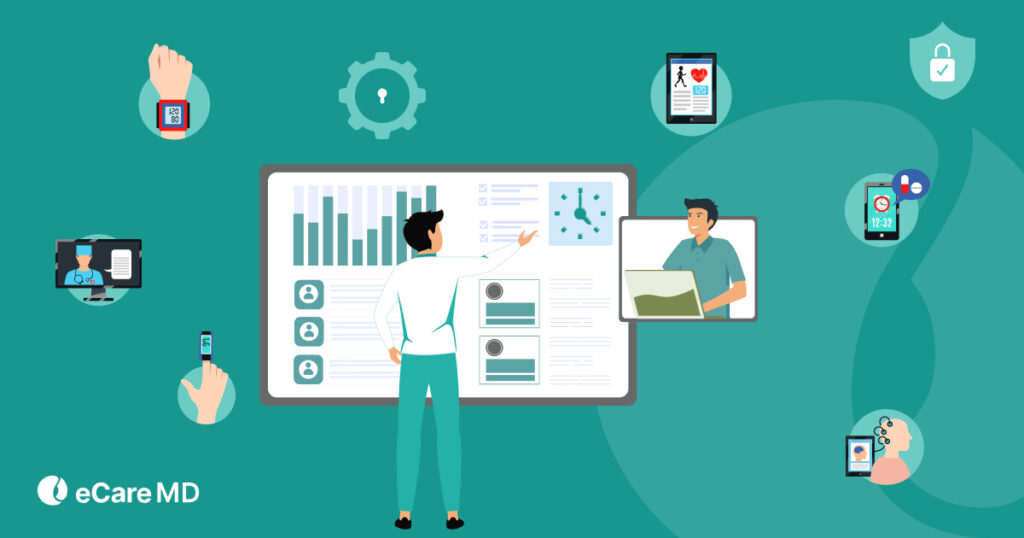
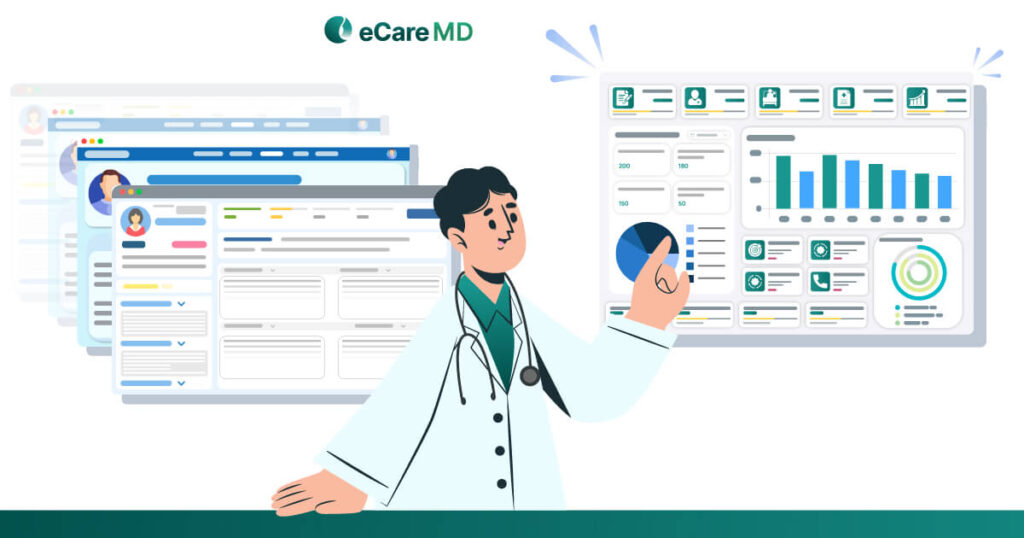
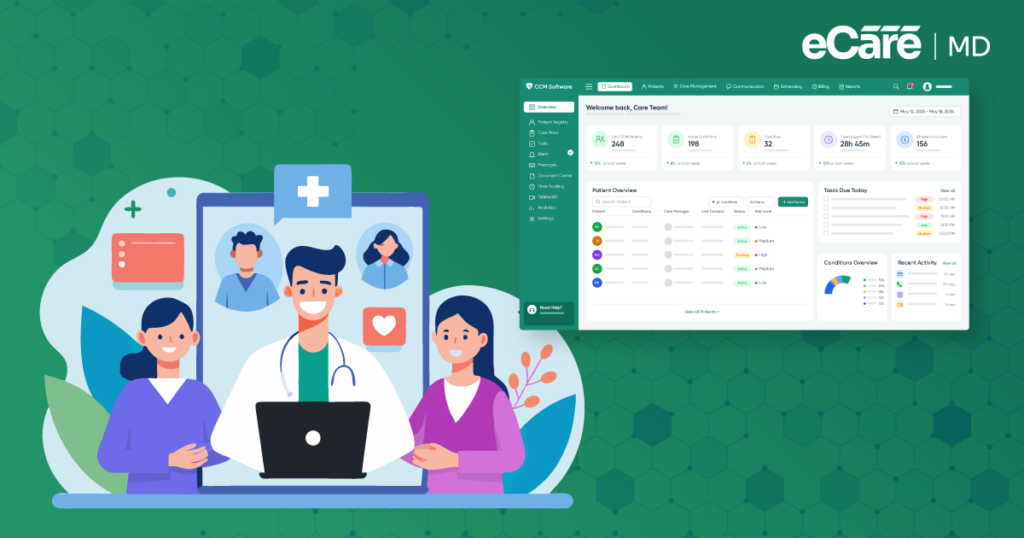
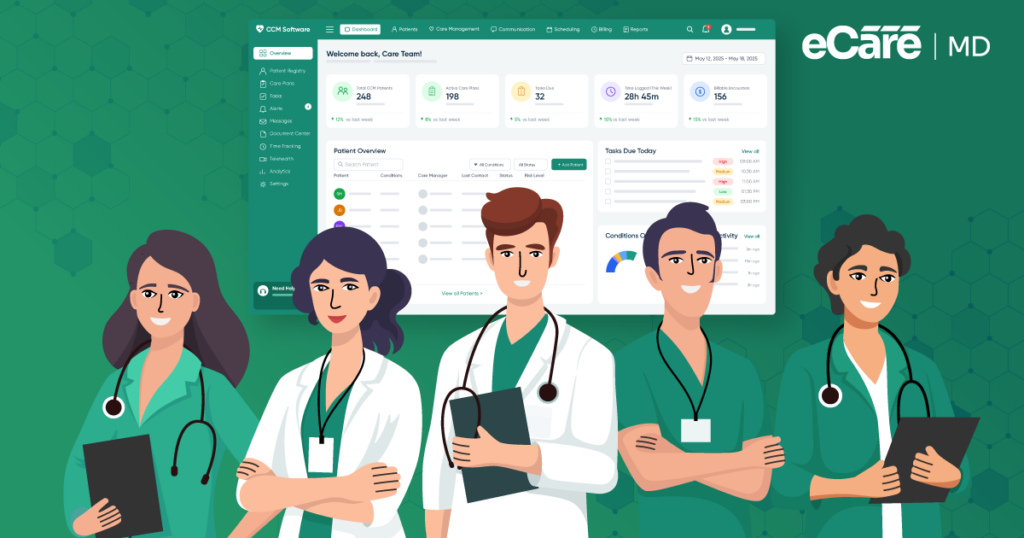
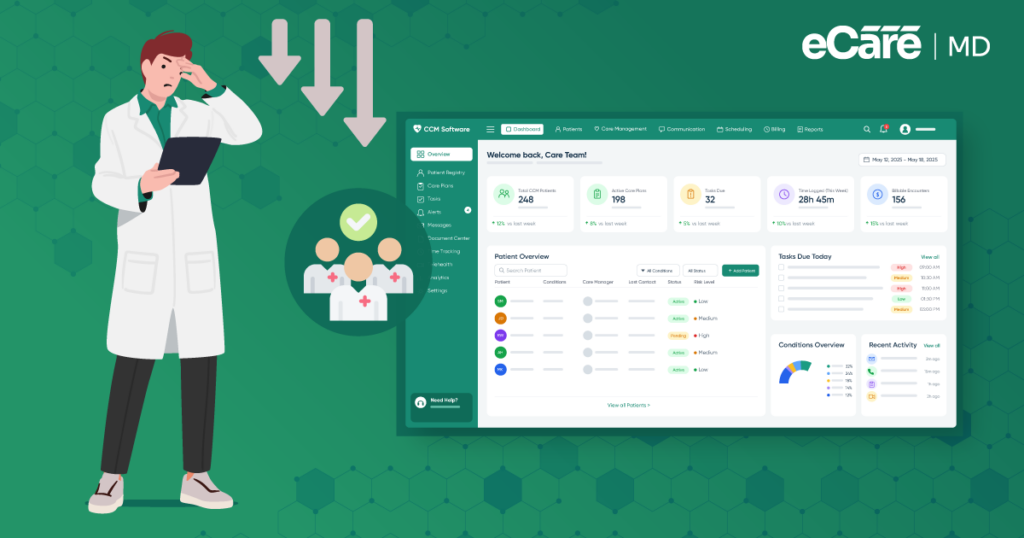
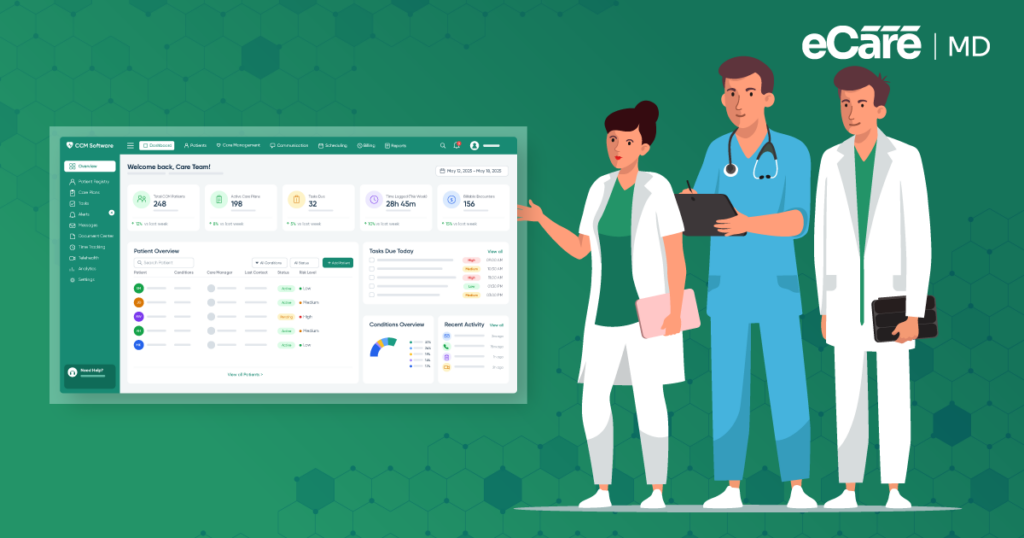
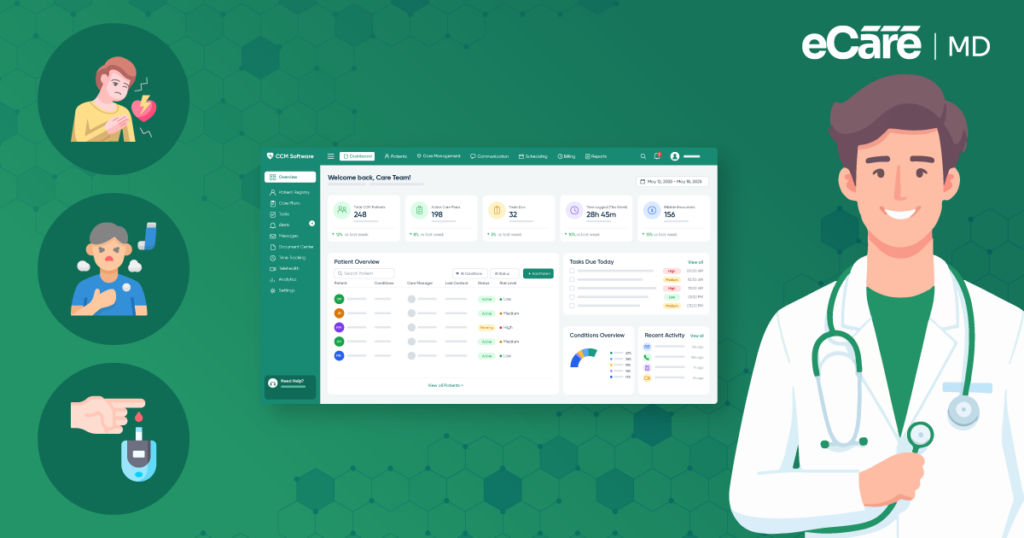
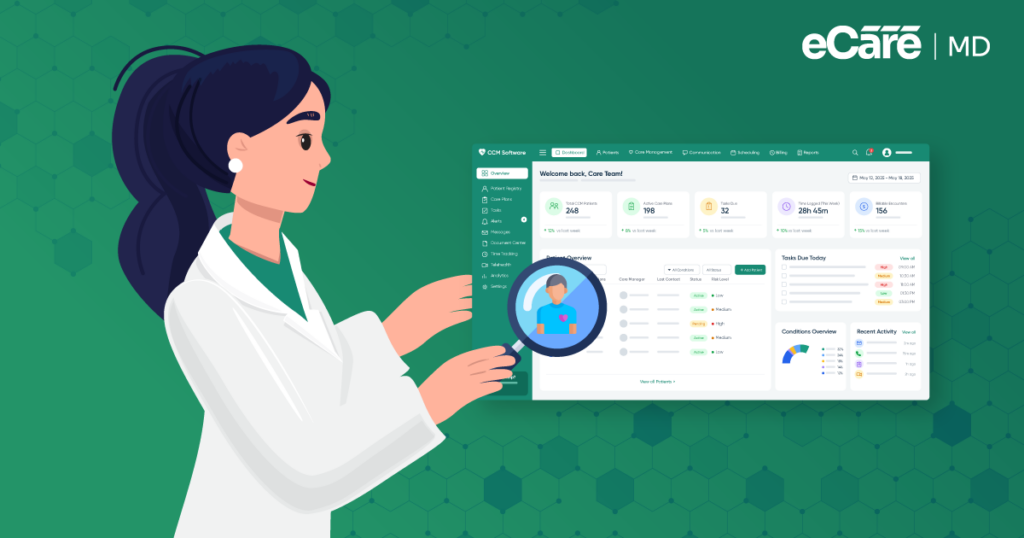
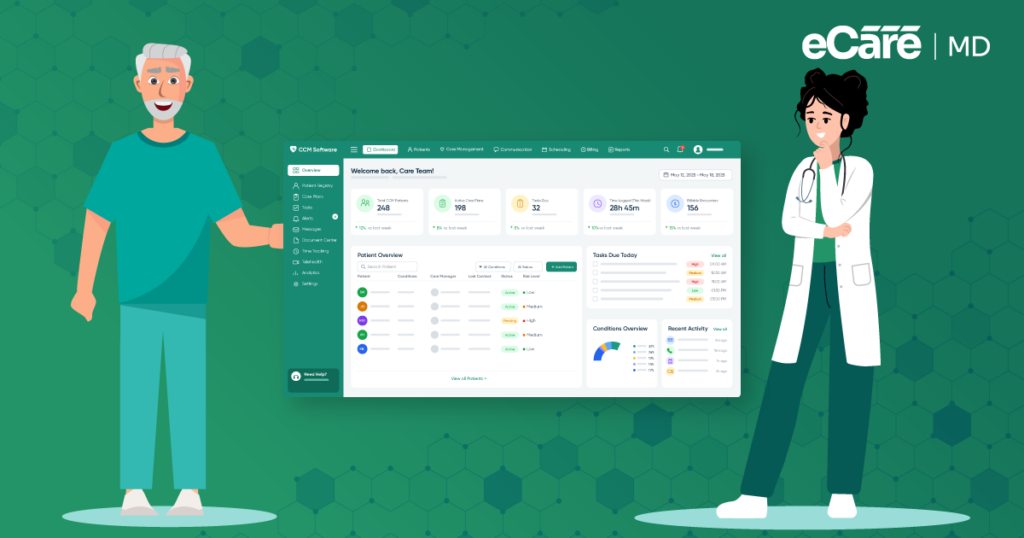
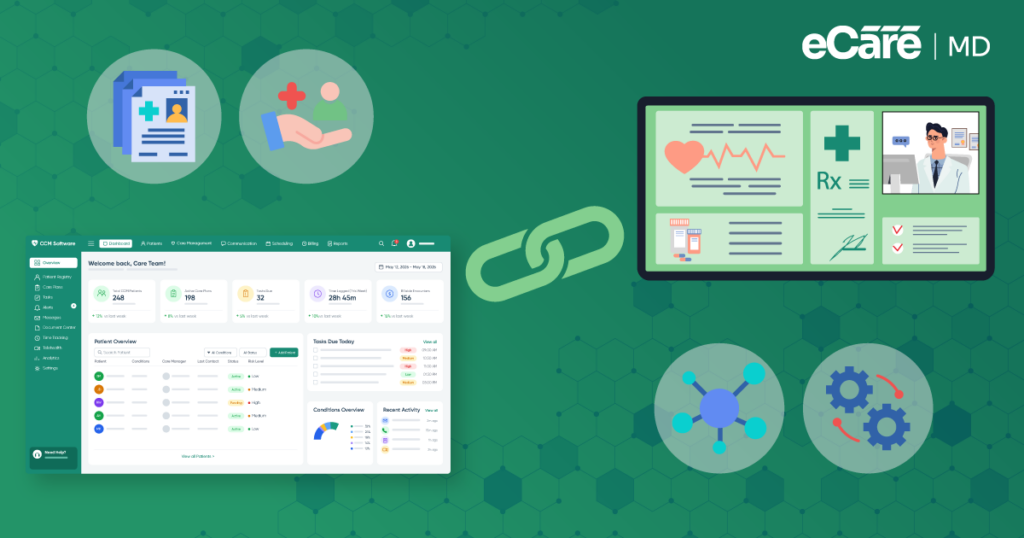
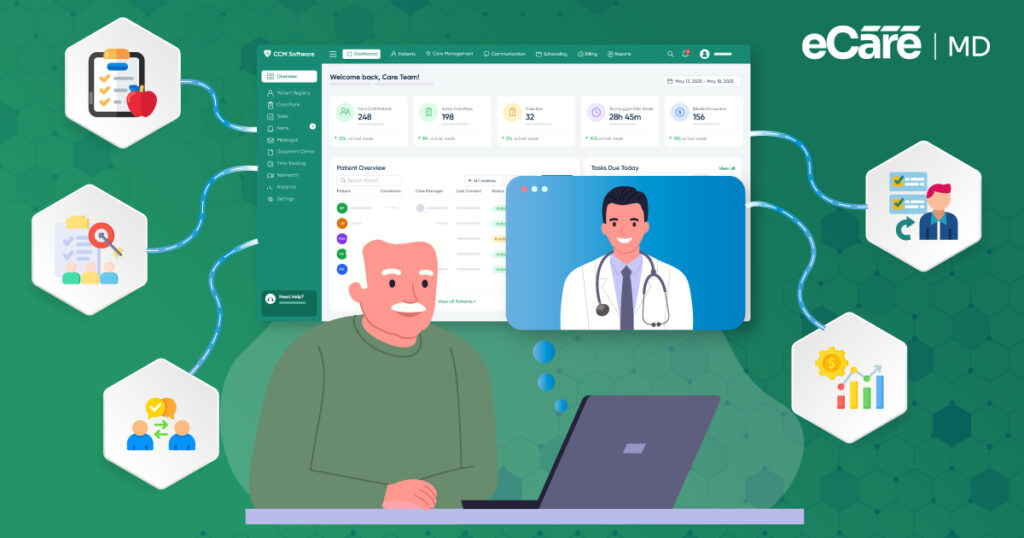
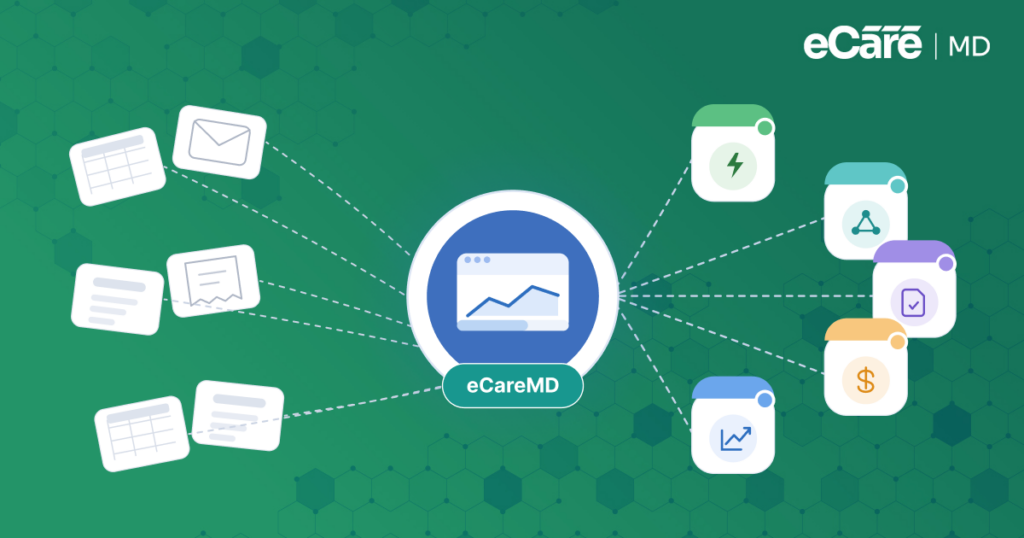
- Centralized Panel Visibility: Bring relevant patient information, interaction history, care activities, and key metrics into a more unified view. This gives teams better visibility across larger patient populations.
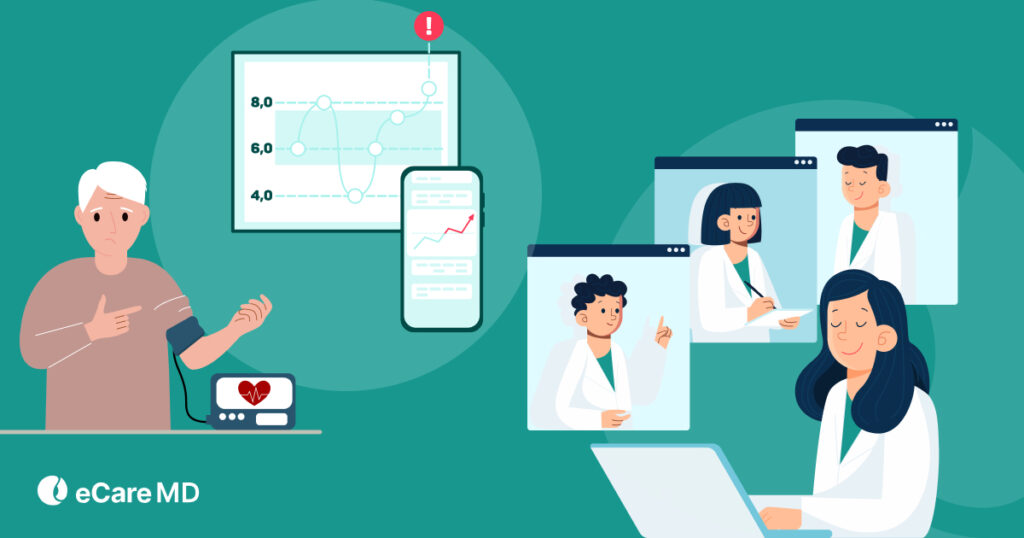
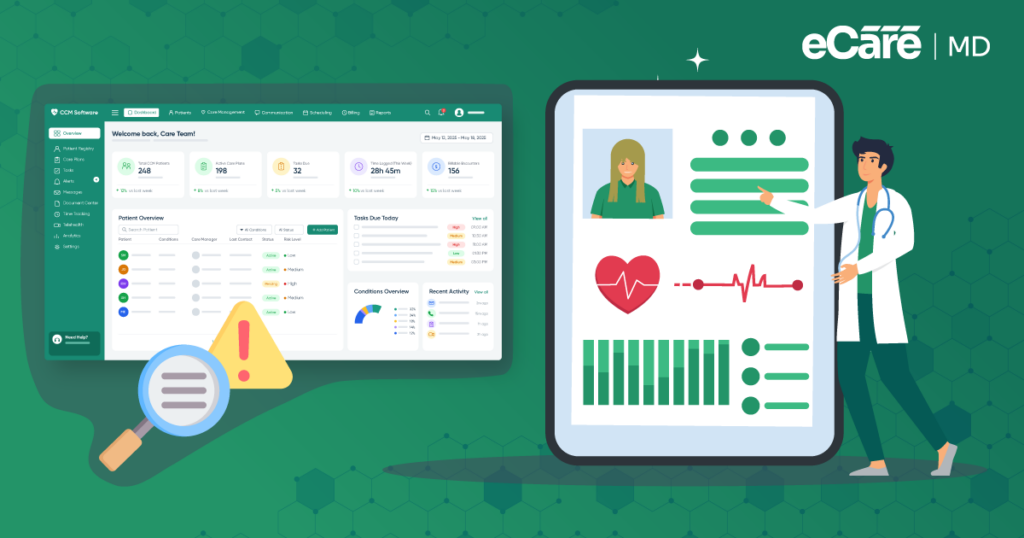
- Care Gap Detection: Help identify potential gaps, such as overdue follow-ups or incomplete activities. The software supports identification, while care teams use their clinical judgment to decide what action is appropriate.
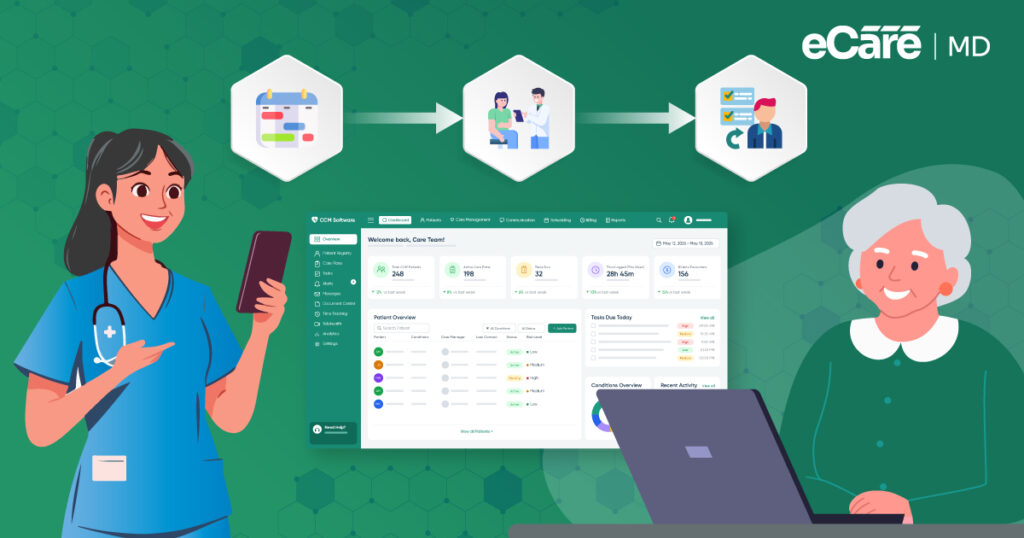
- Proactive Panel Orchestration: Organize recurring tasks, follow-ups, escalations, and patient communications so teams can manage larger panels more consistently.
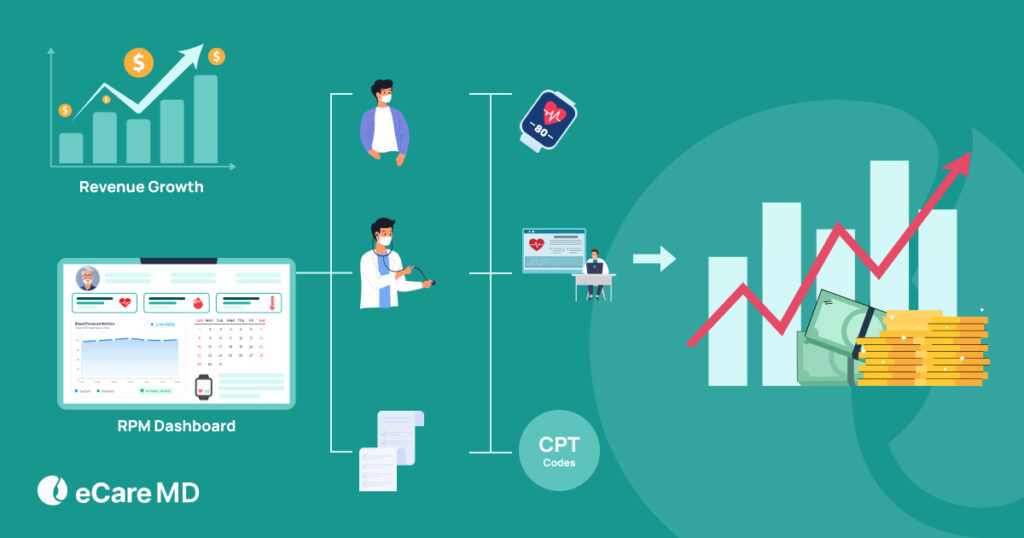
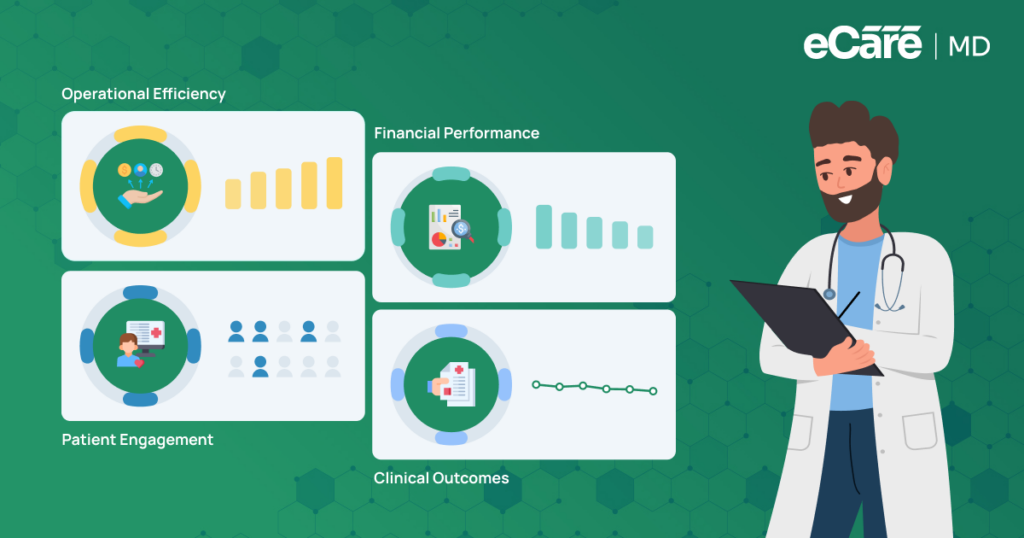
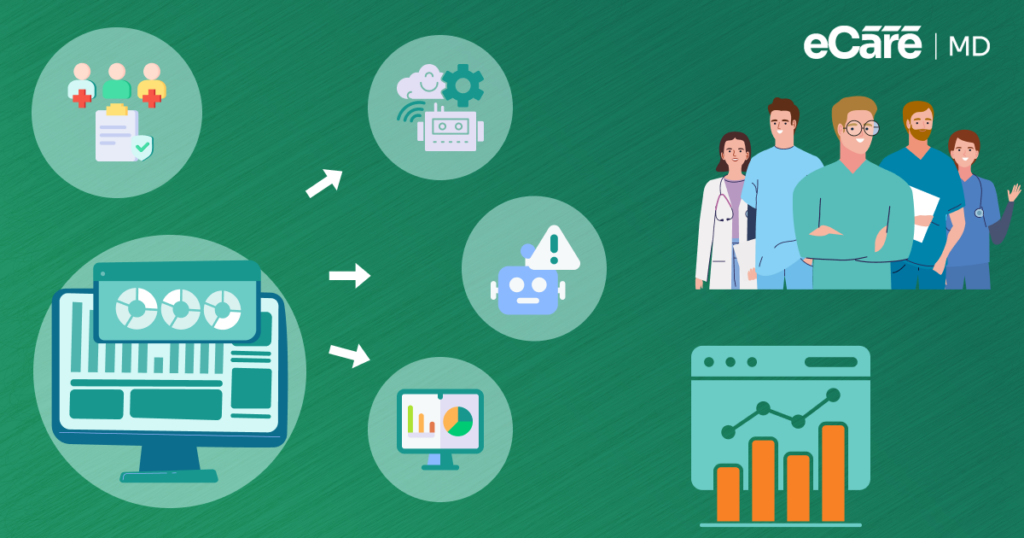
- Population-Level Insights: Aggregate data and analytics can reveal trends across the population and show how the CCM program is performing. Teams can then use those insights to refine care-management priorities.
When these capabilities work together, CCM population health outcomes become easier to monitor and improve. Instead of relying on scattered information and memory, teams have a more structured way to identify needs, coordinate action, and track what changes over time.
How to Increase Patient Engagement in your CCM Software
Download nowBridging Population Insights and Individualized CCM Care
A trend across a patient population can point the care team in the right direction, but it cannot tell every patient’s story. Two patients may have the same chronic condition yet need very different levels of support. Population insights should therefore guide care decisions, not replace individualized care.
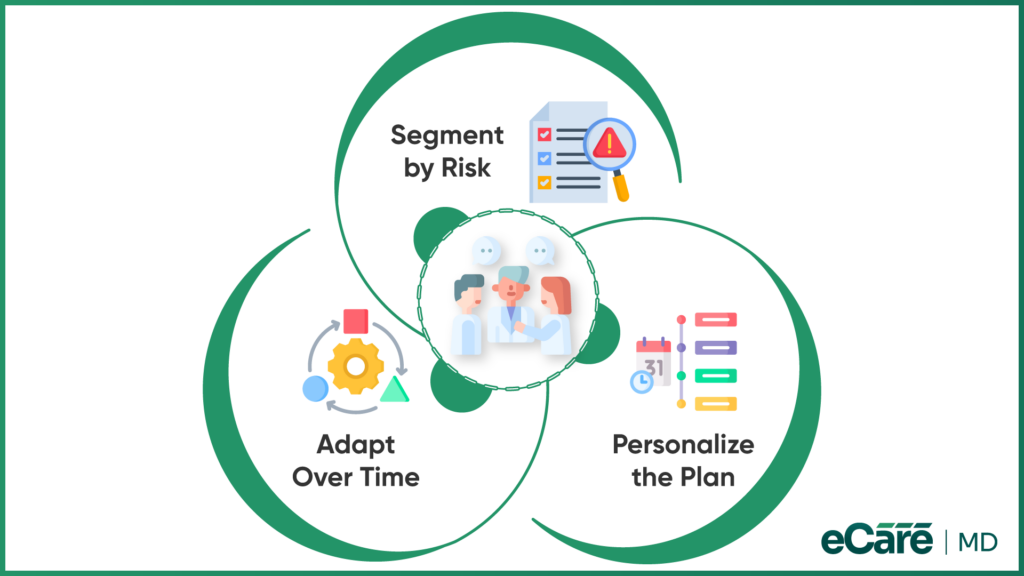
- Risk-Based Segmentation: Group patients according to their individual acuity, needs, and level of risk. This helps teams determine who may need closer monitoring or more frequent support.
- Tailored Care Planning: Population-level gaps can help highlight areas that deserve attention, while individual patient information shapes the goals and interventions.
- Dynamic Adaptation: Patient needs do not stay the same. As conditions, risks, or circumstances change, care priorities can be adjusted accordingly.
The real value comes from connecting both views: population insights help teams know where to focus, while individualized CCM care determines how to respond. This balance allows CCM programs to remain proactive without losing sight of the patient behind the data.
Scaling Population Health Workflows With eCareMD
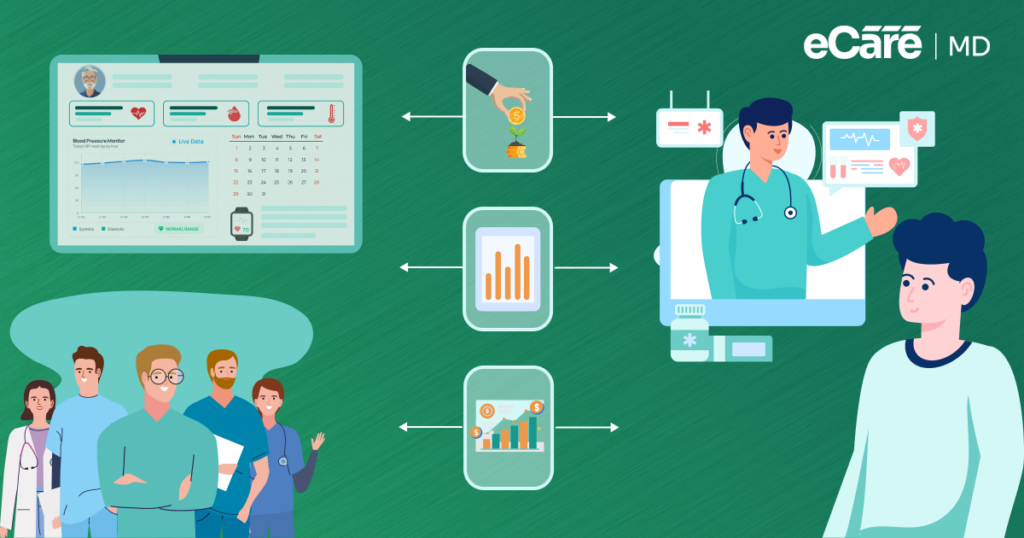
As a CCM patient panel grows, the challenge is no longer simply knowing what needs to be done. It is keeping the entire team moving in the same direction. More patients mean more outreach, follow-ups, care-plan reviews, and responsibilities to coordinate. This is where eCareMD can serve as an operational foundation for scaling population-level CCM workflows.
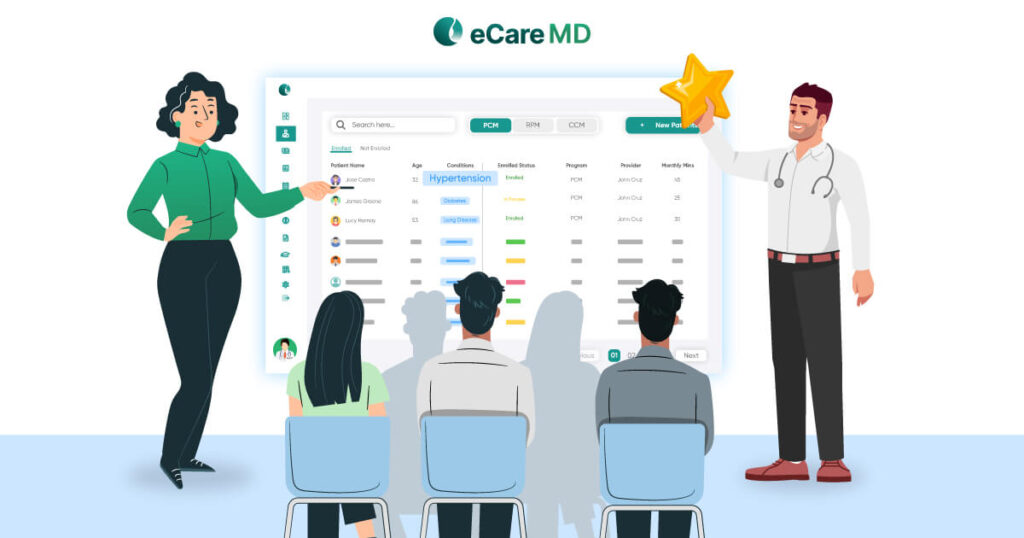
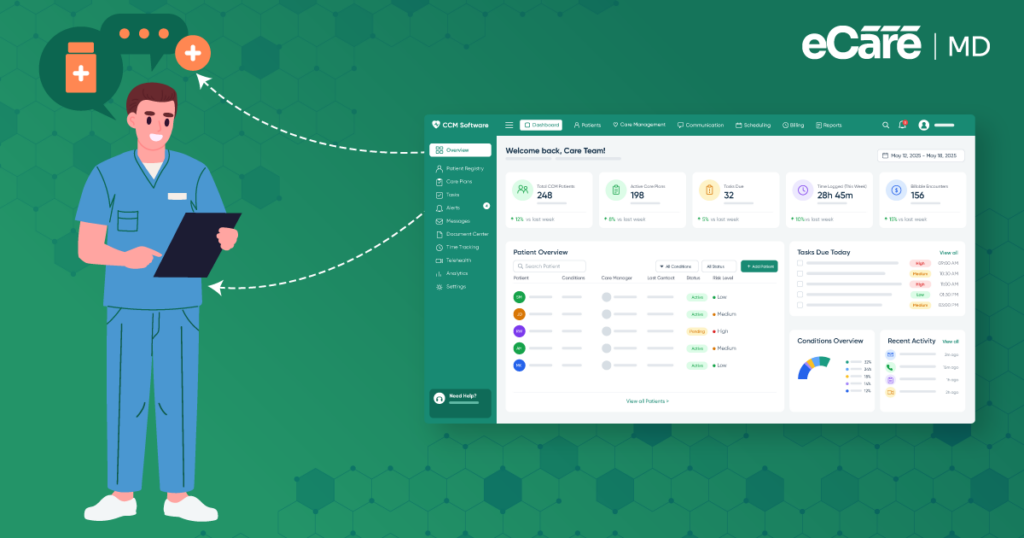
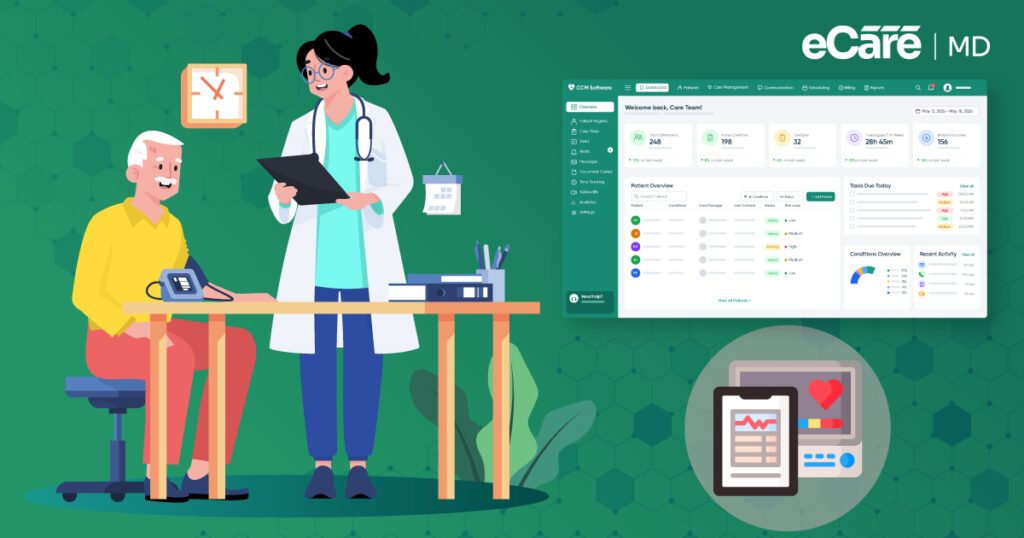
With centralized panel management, care teams can organize and oversee larger CCM patient populations while keeping relevant patient and care-management information easier to manage. Instead of relying on disconnected processes, teams can have a more structured way to keep track of the work across their growing panel.
eCareMD can also support standardized recurring workflows for outreach, care-plan reviews, follow-ups, and task management. This helps teams maintain consistency as their workload increases.
At the same time, visibility into care activities and responsibilities can help care managers and providers stay aligned on what has been completed and what still needs attention.
As the population grows, the underlying technology becomes increasingly important. A structured care management application can give practices the infrastructure needed to support expanding patient panels and care-management activities without adding unnecessary complexity to everyday workflows.
The goal is not to replace clinical judgment or guarantee a specific clinical, financial, or utilization outcome. Instead, eCareMD can provide the operational structure that helps practices manage population-level CCM work more consistently as their programs grow.
Conclusion
Managing chronic care across a population requires more than knowing which patients need attention. Teams need a clear view of the bigger picture and a structured way to turn those insights into individual patient care. That is where CCM population health becomes practical.
The process can be summed up simply: Identify Needs → Stratify Risk → Execute Proactive Workflows → Track Insights → Personalize Care. With the right population health management software, teams can organize these steps, maintain consistency across larger patient panels, and adjust priorities as patient needs change.
eCareMD supports this approach by providing a structured technology foundation for managing population-level CCM workflows while keeping patient-level care connected. It can help teams organize patient information, coordinate activities, and maintain repeatable workflows as their programs grow.
If your practice is ready to bring greater structure to population-based chronic care, explore how eCareMD can support your workflows through a care management application.
Top 5 Ways CCM Software Can Boost Your Population Health Strategy
Frequently Asked Question’s
Population health management in CCM focuses on managing the health needs of an entire patient population rather than addressing issues only during individual visits. It combines patient monitoring, risk identification, care coordination, targeted outreach, and ongoing follow-up to help care teams manage chronic conditions more proactively.
CCM provides a structured framework for ongoing patient engagement, care coordination, care-plan management, and follow-up. When applied across a patient population, these activities help teams identify care gaps, prioritize patients who need attention, and track progress over time while keeping individual patient needs at the center.
Chronic disease population health management can help practices identify high-risk patients, address care gaps, improve follow-up, and coordinate care more consistently. It also provides a broader view of population trends, allowing care teams to focus resources where they may have the greatest impact.
CCM software can organize patient information, care activities, follow-ups, and population-level data in a more structured workflow. This helps care teams identify potential gaps, manage recurring tasks, monitor patient progress, and respond to changing needs more consistently across larger patient populations.
Population health management strategies help teams organize patients according to factors such as condition severity, care gaps, risk levels, and individual needs. This segmentation makes it easier to identify patients who may require closer monitoring or more frequent outreach and allocate care-management resources accordingly.
Population health software can help care teams organize post-discharge follow-ups, monitor care activities, and coordinate communication after hospitalization. By making these workflows more structured, teams can identify patients who need timely attention and support continuity of care. Software supports the process but does not guarantee reduced readmissions.
Clinical analytics can bring together information from patient records, care activities, and program performance to reveal patterns across a population. Care teams can use these insights to identify trends, recognize potential gaps, evaluate workflows, and adjust population-level priorities while relying on clinical judgment for patient-specific decisions.
eCareMD provides a structured platform for managing CCM activities across growing patient populations. It can help teams organize patient information, recurring tasks, follow-ups, care-plan activities, and care-team workflows. This operational structure can make population-level CCM management more consistent as patient panels and care activities expand.
Traditional chronic disease management often focuses on individual patients and their immediate care needs. Population health management takes a broader view by examining patterns, risks, and gaps across an entire patient population. CCM can connect both approaches by using population insights to guide individualized, ongoing care.
Effective population health management may use patient demographics, diagnoses, care plans, clinical information, medication data, encounter history, care activities, risk factors, and care-gap information. Practices may also use engagement and program-performance data to understand trends and determine where additional care-management attention is needed.
CCM technology can organize patient information and risk-related factors so care teams can more easily identify patients who may need additional attention. Teams can use this information to prioritize outreach, follow-ups, monitoring, or care-plan reviews based on individual needs and clinical judgment.
Practices can scale population health management by standardizing workflows, organizing patient information, segmenting populations by need, and using technology to manage recurring activities. Clear roles, consistent follow-up processes, and population-level reporting can also help teams maintain visibility as the number of patients and care activities increases.
Practices should look for software that provides centralized patient and population visibility, care-gap tracking, risk-based prioritization, care coordination, workflow management, reporting, and scalable documentation. The platform should also fit existing care processes and support the team’s ability to make patient-specific decisions using accurate, accessible information.

![The Future of Remote Patient Monitoring: CMS Innovations & Emerging Trends [2026]](/wp-content/uploads/2024/07/Blog-36-The-Future-of-Remote-Patient-Monitoring_-Trends-AI-Innovation-CMS-Updates-for-2026-1024x538.png)