Last Updated: October 20, 2026
A practice may have the right people for CCM and still struggle if no one is quite sure who owns each task. A care manager follows up with patients, a nurse updates care plans, and a physician steps in when clinical decisions are needed.
But when responsibilities overlap, or important tasks fall between team members, even a growing CCM program can become difficult to manage.
The right care management solutions can provide the structure needed to organize patient tracking, care coordination, and team workflows. That is why building a CCM team involves more than deciding how many people to hire.
Chronic care management staffing needs to reflect patient volume, care complexity, recurring workload, and the resources available to the practice. Clear ownership also matters operationally and financially, as missed or duplicated work can affect both efficiency and CCM program performance.
This guide explores CCM staffing models for chronic care management, key CCM team roles and responsibilities, team competencies, capacity planning, and how technology can support a well-coordinated chronic care management team.
What Does a Chronic Care Management Team Look Like?
There is no single CCM team structure that works for every practice. A small practice may rely on a few people wearing multiple hats, while a larger organization may have separate staff for clinical care, outreach, and administration. What matters is that ownership is clear and responsibilities match each person’s qualifications and scope of practice.
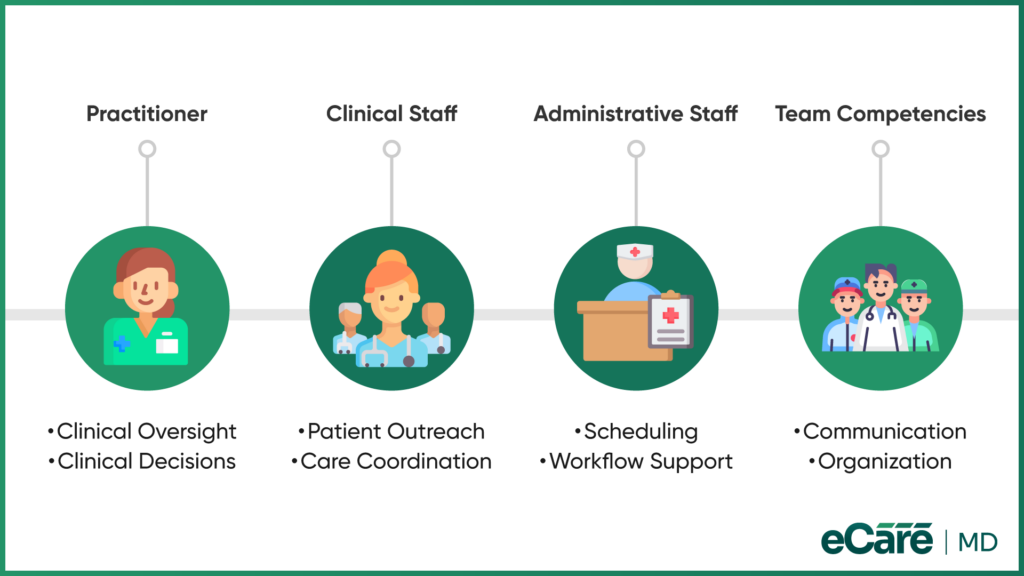
1. Clinical Oversight
The billing practitioner provides the required clinical oversight and handles issues that need clinical decision-making. Under CMS rules, clinical staff can provide certain CCM services under the billing practitioner’s general supervision, meaning the practitioner does not have to be physically present during the service.
However, CCM activities cannot simply be handed off completely; the billing practitioner retains required involvement and oversight.
2. Care Coordination and Outreach
Clinical staff and care managers can support recurring patient outreach, care-plan activities, follow-ups, coordination, and documentation within their permitted roles. This gives the chronic care management team a practical way to divide ongoing work without placing every task on the billing practitioner.
3. Operational and Administrative Support
Administrative staff can support scheduling, workflow coordination, and appropriate billing or operational processes. Their responsibilities should remain aligned with their qualifications, licensure, and scope of practice.
With clear ownership across these areas, a practice can build a CCM team structure that fits its size, patient population, and daily workload.
CCM Staffing Models for Chronic Care Management
As a CCM program grows, the way work is divided may need to change with it. There is no single staffing arrangement that fits every practice. The right CCM staffing models for chronic care management depend on factors such as active CCM enrollment, patient complexity, recurring workload, practice resources, available staff capacity, and how efficiently technology supports the workflow.
These three approaches are operational models, not CMS-mandated staffing categories:
| Staffing Model | When It May Fit | Primary Benefit | Key Consideration |
|---|---|---|---|
| Shared-Staff Model | Smaller or early-stage CCM programs | Uses existing staff and resources | CCM duties may compete with other responsibilities |
| Dedicated CCM Model | Larger or mature CCM programs | Provides clearer ownership and dedicated capacity | Requires enough workload and resources to support dedicated staff |
| Hybrid Model | Growing CCM programs | Combines shared and dedicated resources | Requires clear boundaries around responsibilities |
A practice does not need to move directly from one model to another as enrollment increases. For example, a small program may begin with shared staff and later add dedicated capacity as the workload grows.
Patient volume can help with planning, but any volume figures should be treated as illustrative benchmarks rather than universal staffing standards. The goal is to match staffing capacity with the actual work the CCM program needs to handle.
CCM Team Roles, Responsibilities, and Competencies
Once a staffing model is in place, each team member needs to know where their responsibilities begin and end. Clear CCM team roles and responsibilities help prevent tasks from being overlooked or passed between team members without clear ownership.
1. Billing Practitioner / Qualified Practitioner
The billing practitioner provides clinical oversight, participates appropriately in the care plan, makes clinical decisions, and handles issues that require practitioner expertise. Concerns identified by other team members should be escalated when clinical judgment is needed.
2. Clinical Care-Management Staff
Clinical staff can support patient outreach and engagement, care-plan updates, care coordination, follow-up, and documentation of applicable CCM activities within their permitted roles. They also help identify concerns that require practitioner attention.
3. Administrative / Operational Staff
Administrative staff can support scheduling, outreach coordination, workflow administration, appropriate documentation or time-tracking processes, and applicable billing workflows.
4. Core Care Management Team Competencies
Regardless of the staffing model, a strong team needs effective patient communication, care coordination, organization, accurate documentation, appropriate clinical knowledge, technology skills, and clear team communication. Knowing when and how to escalate an issue is just as important as completing the task itself.
Building a Chronic Care Management Team for Healthcare Practices
Before adding staff, a practice needs to understand its CCM workload. Patient volume, care complexity, and recurring activities can help show where more capacity may be needed.
For building a chronic care management team for healthcare practices, assign clear ownership for outreach, care plans, documentation, care coordination, escalation, and administrative or billing workflows. Clear communication pathways can also help the team know when a task needs to move to another member.
Simple measures such as outstanding tasks, outreach completion, documentation timeliness, and workload distribution can help practices identify capacity gaps.
CCM Team Capacity Planning
A simple planning formula can help estimate staffing needs:
Active CCM patients × Average workload per patient ÷ Available staff capacity = Estimated staffing need
For example, if 100 active CCM patients require an estimated 45 minutes of combined CCM work per patient each month, the total workload would be about 75 hours per month. If one staff member has 60 hours of available CCM capacity, the practice would need additional capacity to handle the remaining workload.
This is only a planning scenario, not a CMS or industry staffing standard. Actual capacity can vary with patient complexity, workflow design, staff experience, and technology.
How Technology Supports CCM Team Coordination
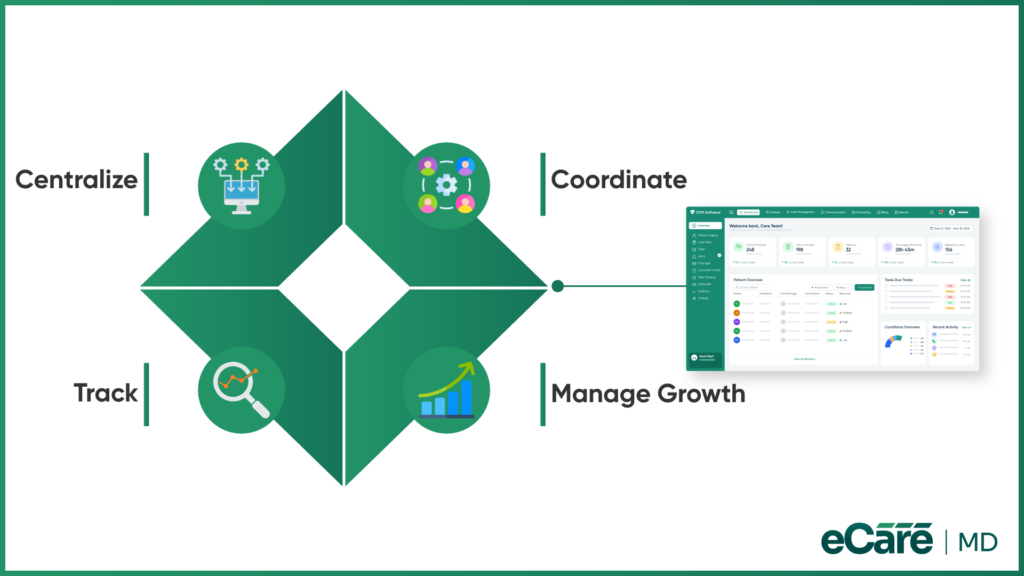
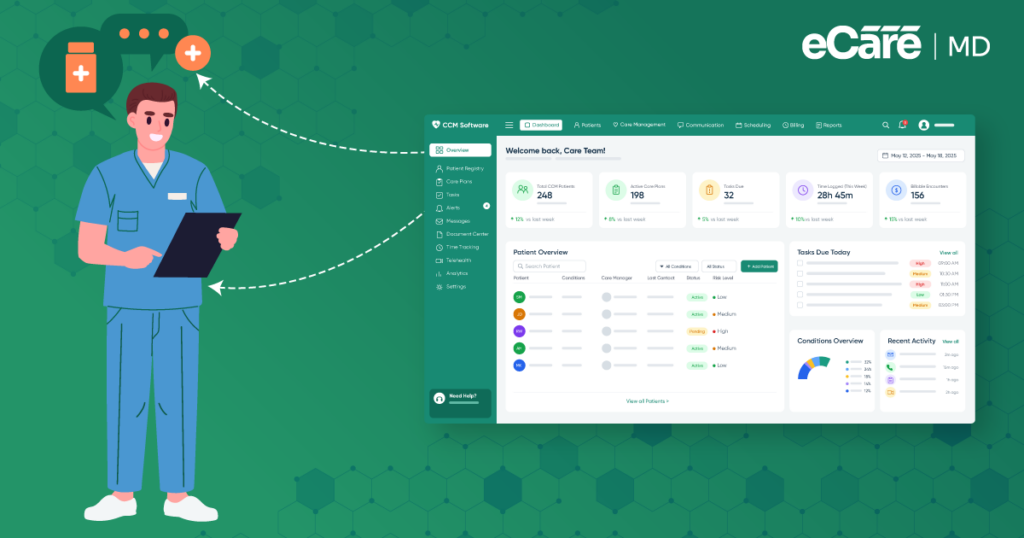
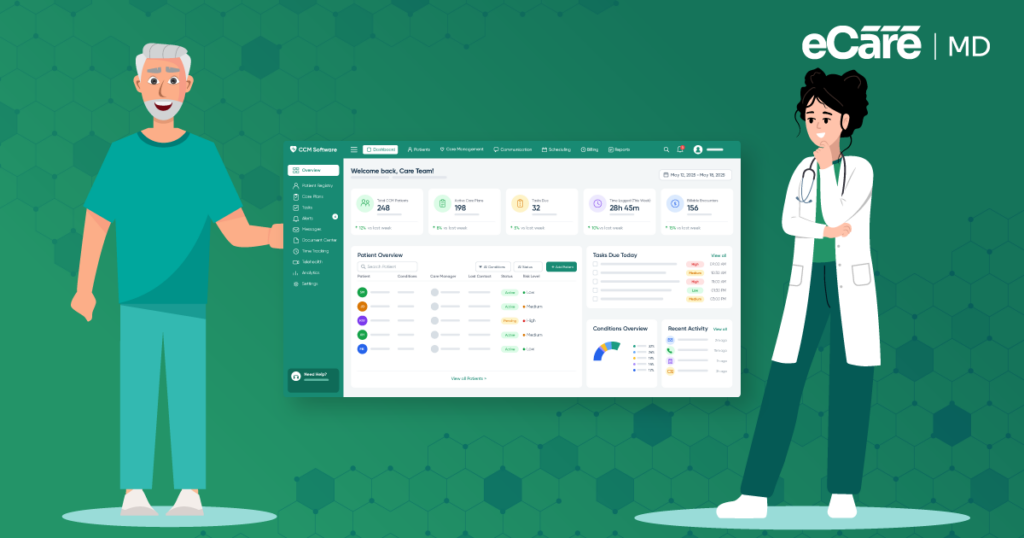
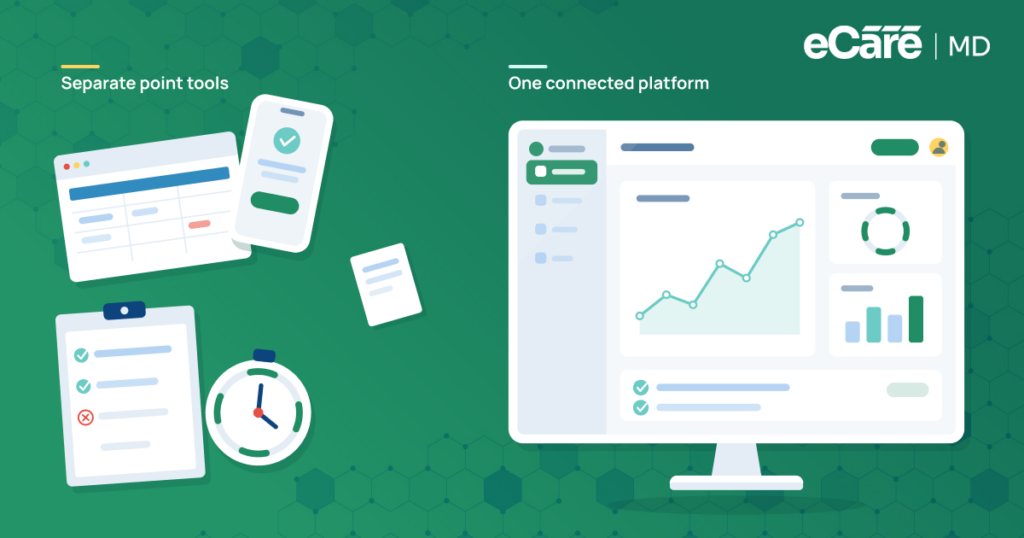
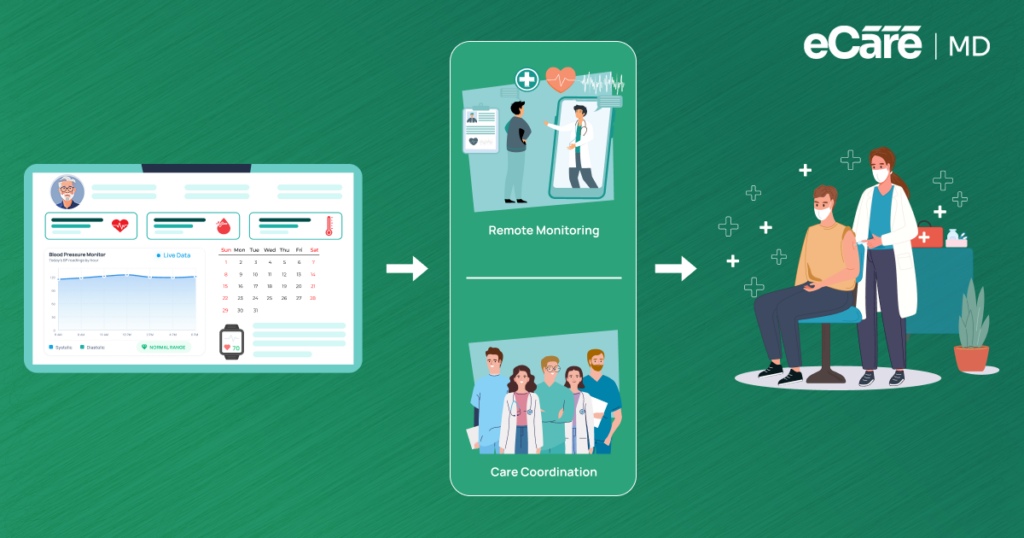
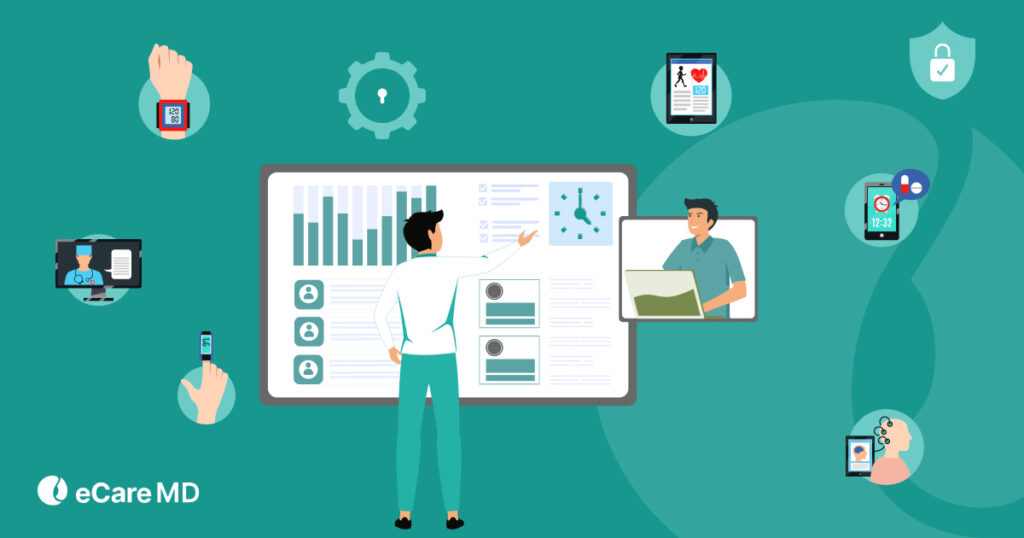
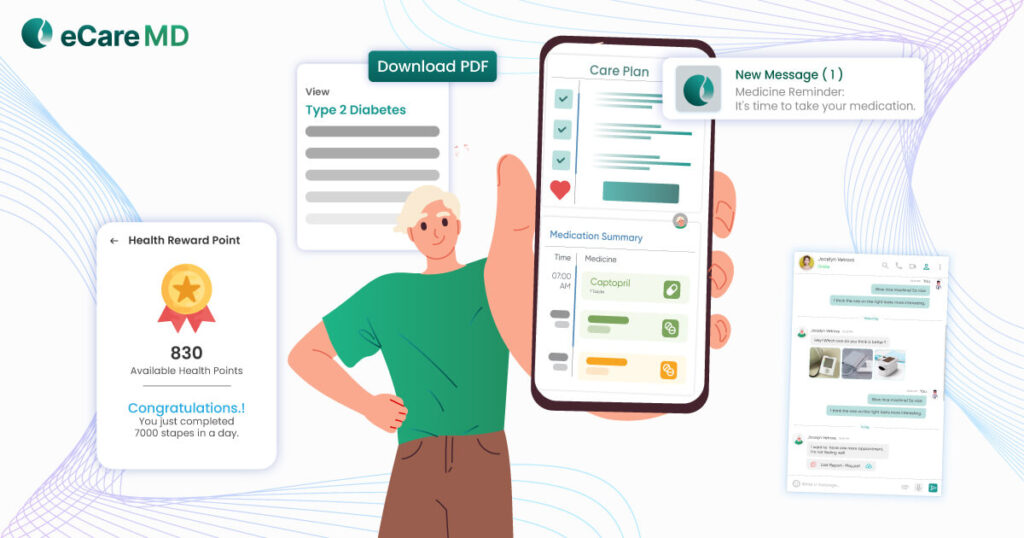
Once responsibilities are divided, the team needs a reliable way to see what is happening. CCM technology can bring relevant patient and care-management information together, making assigned tasks, outstanding activities, care plans, and documentation easier to track.
For example, Medicare chronic care management software can support time and activity tracking, care-plan access, documentation, and recurring outreach. Team members can see what has been completed and what still needs attention, which can improve accountability and reduce confusion as the CCM patient population grows.
Technology does not replace a staffing plan or establish CMS compliance on its own. Instead, it can give the team better visibility into its workload and make coordination easier. When evaluating technology, practices should consider whether it supports their CCM workflows, keeps information accessible, and helps different team members work from the same process.
Give Your CCM Team a More Connected Workflow
See the PlatformHow eCareMD Supports CCM Teams
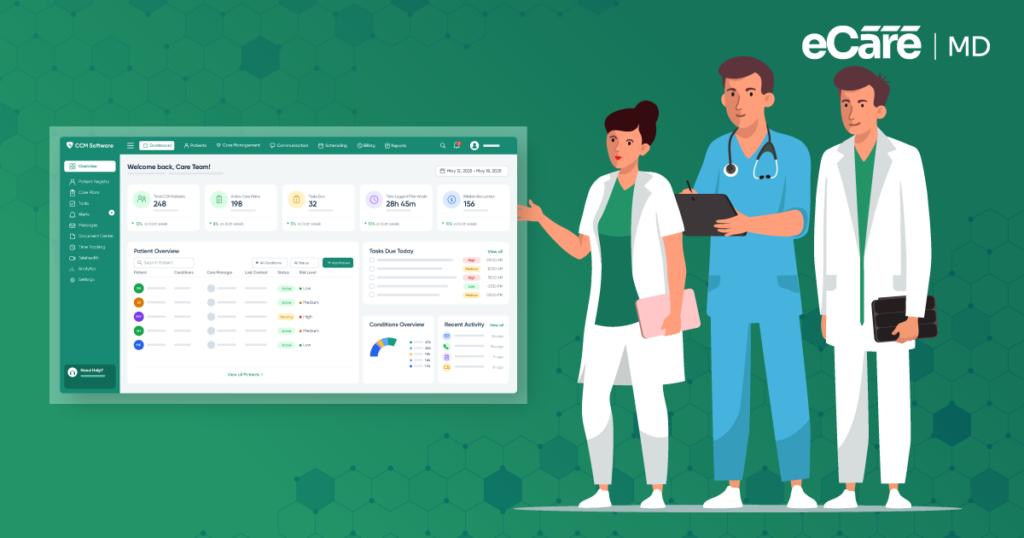
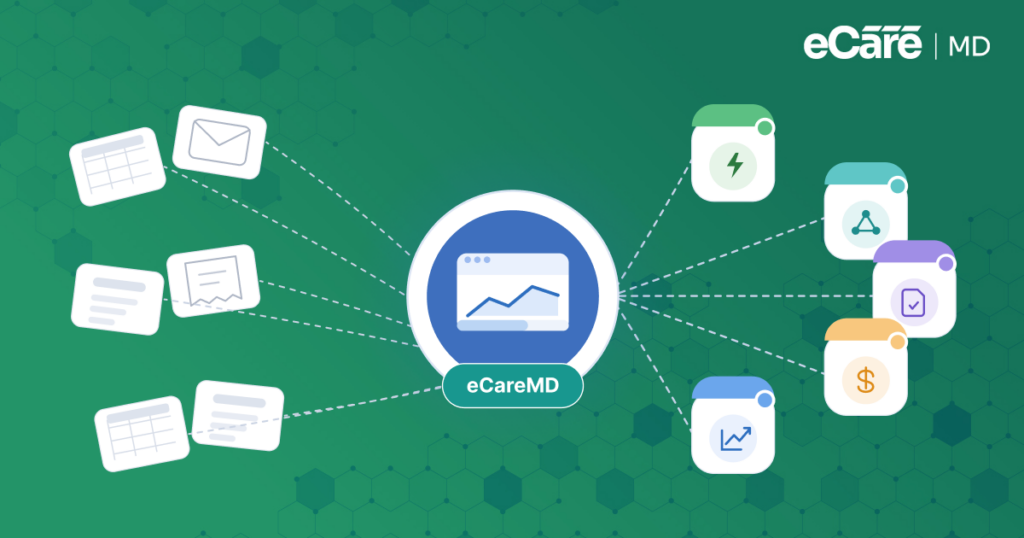
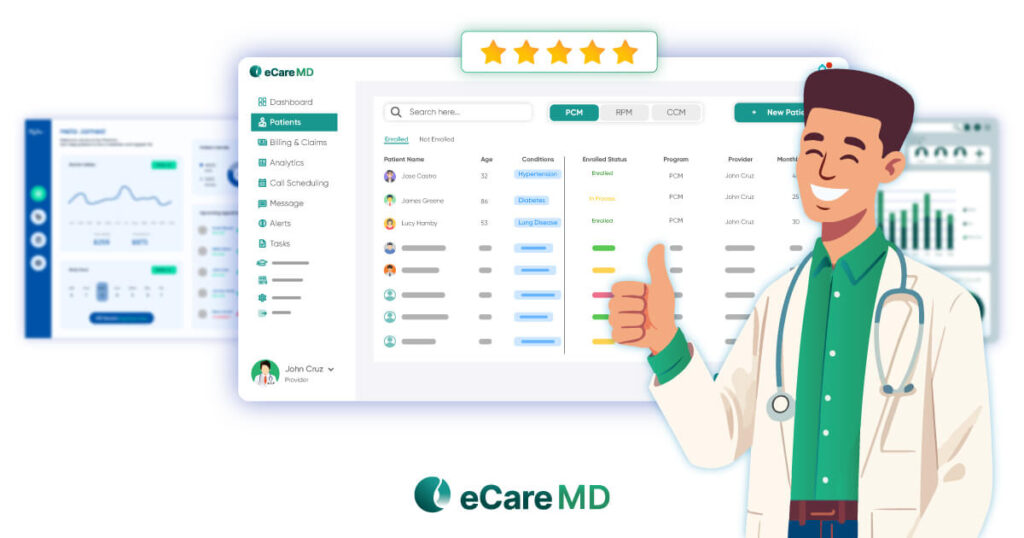
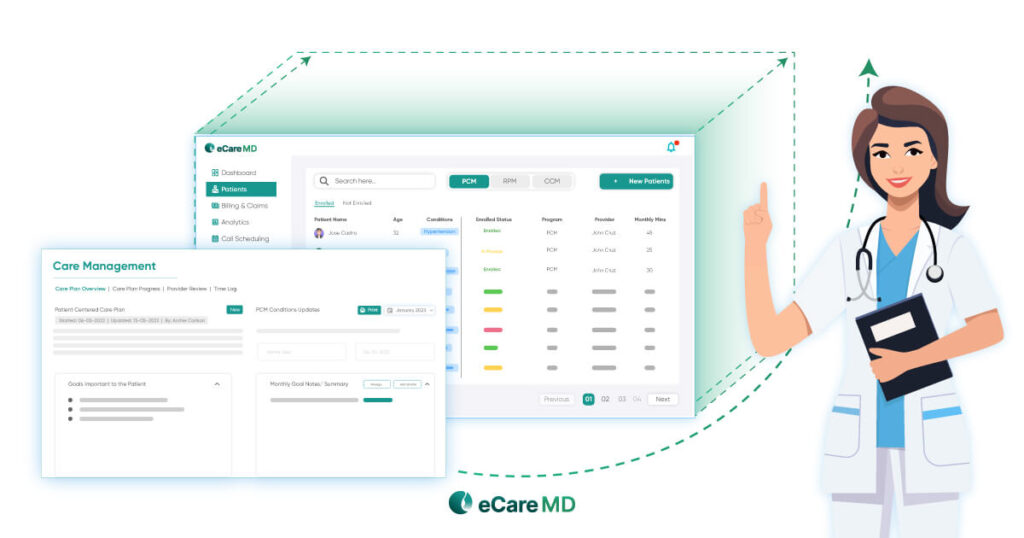
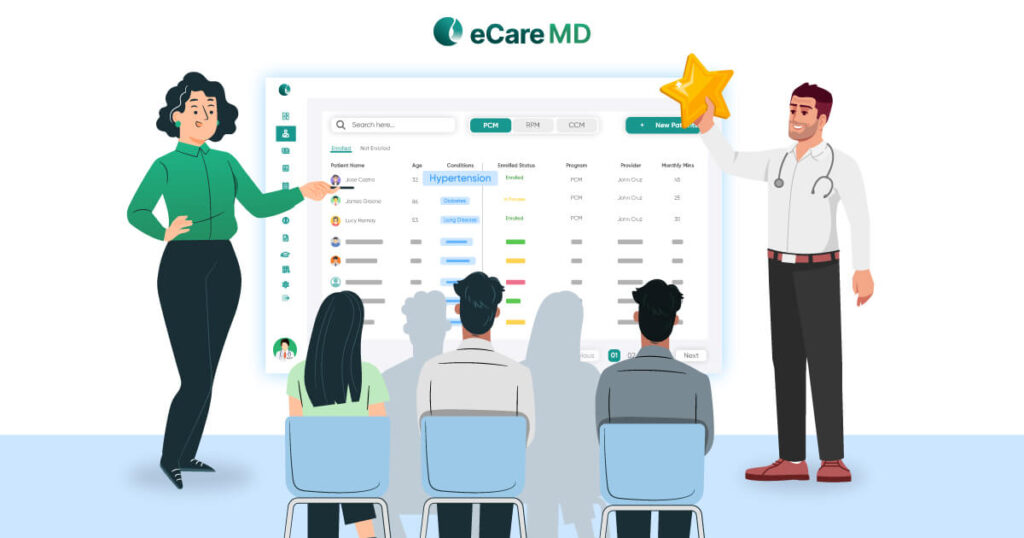
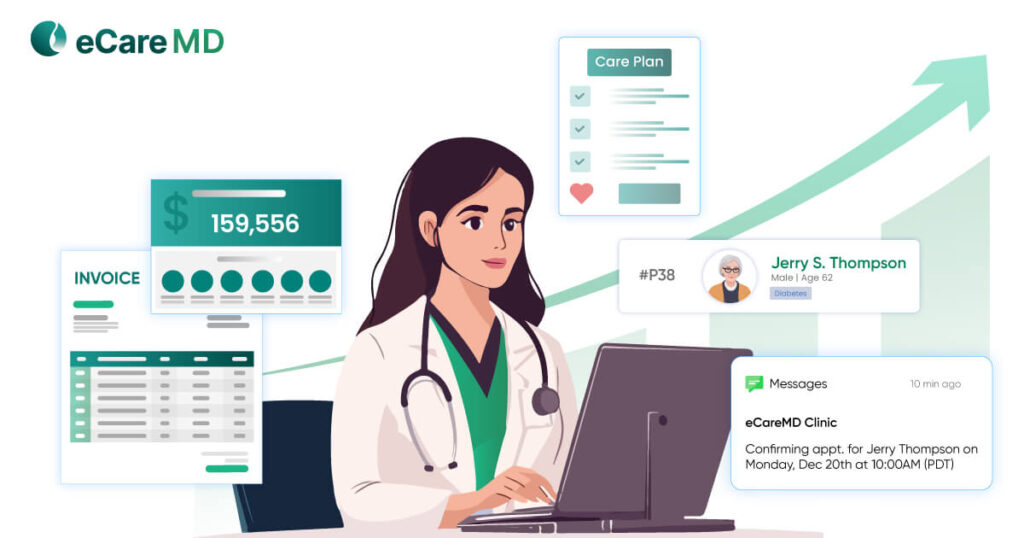
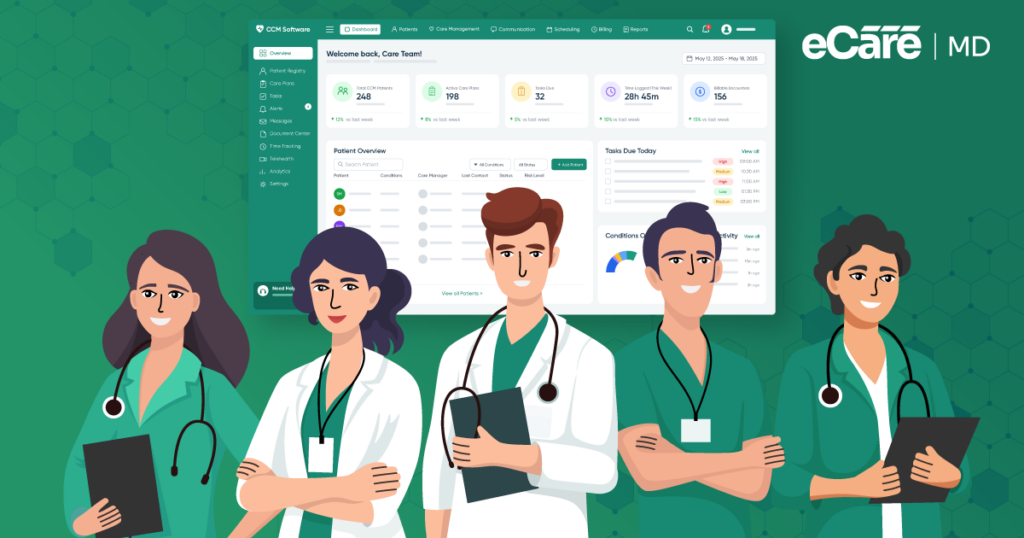
Once a CCM team has defined its roles and workflows, having the right information in one place can make coordination easier. eCareMD supports this structure by organizing patient information, care plans, tasks, and documentation within a connected CCM workflow.
Care teams can use the platform to manage care-plan activities, coordinate tasks, document CCM work, and maintain visibility into ongoing patient activities. This gives team members a clearer view of what has been completed and what still needs attention.
For a growing CCM program, that shared visibility can support more consistent workflows across the team. However, technology does not replace appropriate staffing, clinical oversight, or professional judgment.
Instead, eCareMD can provide workflow support that helps team members carry out their assigned responsibilities more consistently.
Conclusion
Building a successful CCM team starts with understanding the workload, choosing a practical team structure, and giving each member clear responsibilities. The right competencies, communication, and regular capacity reviews help keep the work organized as the program grows.
Suitable technology can strengthen that structure by supporting shared workflows, patient information, documentation, and team coordination. When combined with clear accountability and appropriate scope of practice, Medicare chronic care management software can help practices manage their CCM operations more consistently.
Frequently Asked Question’s
There is no universal staffing requirement for 100 CCM patients. Staffing needs depend on patient complexity, average workload, staff capacity, workflow design, and technology. For example, if 100 patients require about 45 minutes of CCM work each month, the total workload is approximately 75 hours monthly, which can help a practice estimate the capacity needed.
Practices should consider active CCM enrollment, patient complexity, recurring workload, practice size, available staff, staff capacity, and existing workflows. Technology efficiency also matters because better task tracking, documentation, and coordination can affect how much work the team can manage.
A chronic care management team may include a billing practitioner or qualified practitioner, clinical care-management staff, and administrative or operational staff. Responsibilities should be clearly assigned based on each person’s qualifications, scope of practice, and role in clinical oversight, patient outreach, coordination, documentation, and administrative workflows.
CCM team members should have strong patient communication, care coordination, organization, prioritization, documentation, and technology skills. Clinical team members also need appropriate clinical knowledge for their roles. All team members should understand their responsibilities and know when an issue needs to be escalated.
Technology can centralize patient information, care plans, assigned tasks, documentation, and time or activity tracking. This gives team members better visibility into completed and outstanding work, supports coordination, and helps practices monitor workload as their CCM population grows.