Last Updated: October 13, 2026
In just one day, a CCM program can generate a large amount of information, including your patient readings, care-plan updates, phone calls, follow-ups, and engagement records. However, when all of this information keeps piling up, one thing starts to become clear: Collecting data is half of the story.
The real value lies in knowing what the data is saying. For example, a few missed check-ins can highlight an engagement issue; a repeated change in your patient readings may require closer attention. If your care team can spot these patterns, it becomes easier for them to act before it becomes worse.
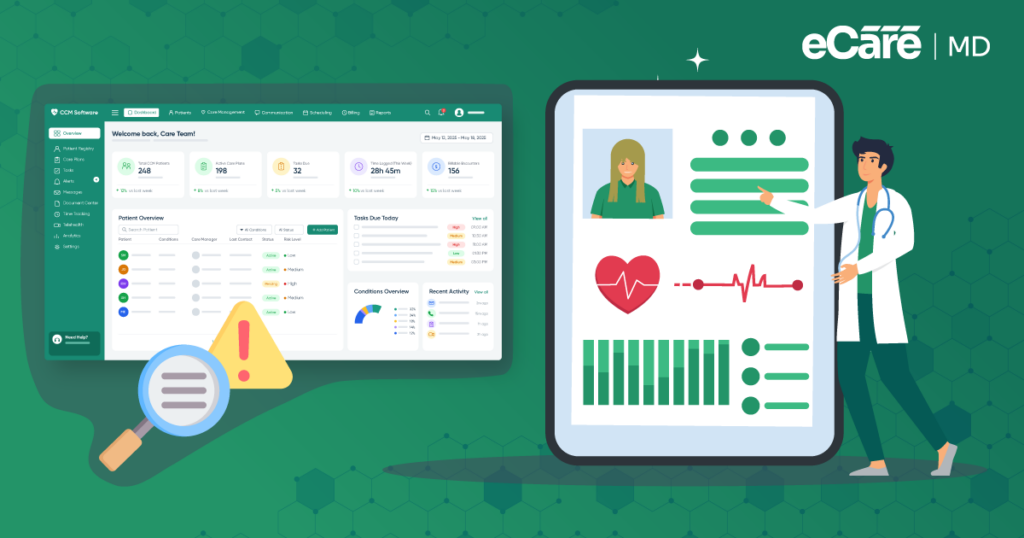
This is exactly where CCM clinical analytics come into the spotlight. It helps your care team turn already generated data through CCM into actionable chronic care management data insights that can guide everyday decisions. It can bring different data points together, highlight patterns, and help teams understand what may need attention.
To make that possible, practices first need a reliable way to organize and access the information their CCM program produces. This is where chronic care management technology becomes an important part of the process.
With the right foundation in place, teams can gradually move from collecting data to understanding it, finding useful insights, and putting those insights into action.
This blog explores how CCM data analytics can support that process, from making sense of clinical and care-management data to using those insights to improve everyday CCM workflows.
What Is CCM Clinical Analytics?
The information collected during CCM does not all carry the same meaning. A single blood pressure reading tells a care manager something, but it does not tell the whole story. The picture becomes clearer when that reading is viewed alongside other readings, medication activity, and patient follow-ups.
This is the basic idea behind CCM clinical analytics. It involves examining the clinical and care-management data generated during CCM to find patterns, trends, and changes that may be useful to the care team. Instead of looking at each data point on its own, analytics helps connect the dots.
Think of it as moving through four simple stages:
| Stage | Definition | CCM Example |
|---|---|---|
| Raw Data | An individual, unprocessed data point | One blood pressure reading of 145/90 mmHg |
| Information | Data viewed in context | Three consecutive elevated readings over 10 days |
| Analytics | Examining data to identify trends or patterns | An upward blood pressure trend alongside missed medication refills |
| Actionable Insight | A finding that can help guide an appropriate response | Scheduling care manager outreach to review medication adherence |
The shift from raw data to actionable insight is what makes analytics useful in CCM. It helps care teams see patterns across ongoing patient information and identify where follow-up may be needed.
At the same time, CCM data analytics supports clinical decision-making; it does not replace clinical judgment. The care team still considers the patient’s overall situation before deciding what action is appropriate.
That makes analytics less about collecting more data and more about making better sense of the data already in hand.
Key Chronic Care Management Data Insights Care Teams Can Use

Once CCM data is brought together, the next step is to understand what it can reveal. A care manager may start the morning by reviewing patient updates and notice several things at once: a change in symptoms, an overdue follow-up, fewer patient interactions, or a care plan that has not been updated recently.
Each detail tells part of the story. Together, they can provide chronic care management data insights that help the team see what is changing and where attention may be needed.
1. Patient Trend Insights
Patient information collected over time can reveal changes that are easy to overlook in individual records. Trends in symptoms, vital signs, or chronic conditions can help care teams understand whether a patient’s needs are changing and whether closer monitoring may be appropriate.
2. Care-Gap Insights
Sometimes the issue is not a new clinical change but something that has not happened yet. An overdue follow-up, missed screening, or incomplete care activity can point to a care gap that needs attention.
3. Utilization Insights
CCM data can also show how patients are using healthcare services. Patterns in visits, hospitalizations, or other services may help teams understand where patients are using more care and where additional coordination may be useful.
4. Engagement Insights
A patient who regularly responds to calls and messages may suddenly become less engaged. Changes in communication, participation, and follow-up can give care teams another signal that a patient may need outreach.
5. Care-Plan Insights
Care plans are not meant to stay the same forever. As a patient’s condition or needs change, reviewing care-plan progress can help teams identify what is working, what needs updating, and where the next follow-up should focus.
Taken together, these insights give care teams more than a collection of patient records. They provide a clearer view of what is changing, where gaps exist, and where follow-up may be needed.
Clinical Analytics Strategies for Chronic Care Management
Finding a useful pattern is only the beginning. A CCM team also needs a practical way to review that information and decide what to do with it. Without a consistent process, even useful clinical data analytics in chronic care management can end up sitting in a report that no one has time to act on.
A practical approach starts with the basics:
- Keep the data clean and consistent: Make sure patient information, care activities, and other CCM records are accurate and entered consistently. Reliable data gives teams a stronger starting point for analysis.
- Choose the right metrics: Focus on clinical and operational measures that matter to the CCM program, such as patient trends, care gaps, engagement, follow-ups, and other workflow measures.
- Review trends regularly: Set a regular time for the CCM team to look at the data. A weekly or monthly review can help turn analytics into an ongoing part of the workflow rather than a one-time task.
- Look at the bigger picture: Longitudinal data can show changes that a single encounter may miss. Comparing information over time helps teams spot recurring gaps, gradual changes, and patterns that deserve attention.
- Turn findings into action: When a meaningful trend appears, connect it to an appropriate next step, such as patient outreach, care-plan review, or another workflow adjustment.
- Review and refine: After taking action, teams can return to the data to see what changed. Over time, this helps practices improve both their analytics process and the way they use insights.
The goal is not to build an overly complicated analytics system. It is to create a repeatable process where the CCM team can review the data, recognize what matters, and act on it. That practical approach is what makes CCM clinical analytics useful in everyday care management.
How CCM Clinical Analytics Improve Chronic Care Management
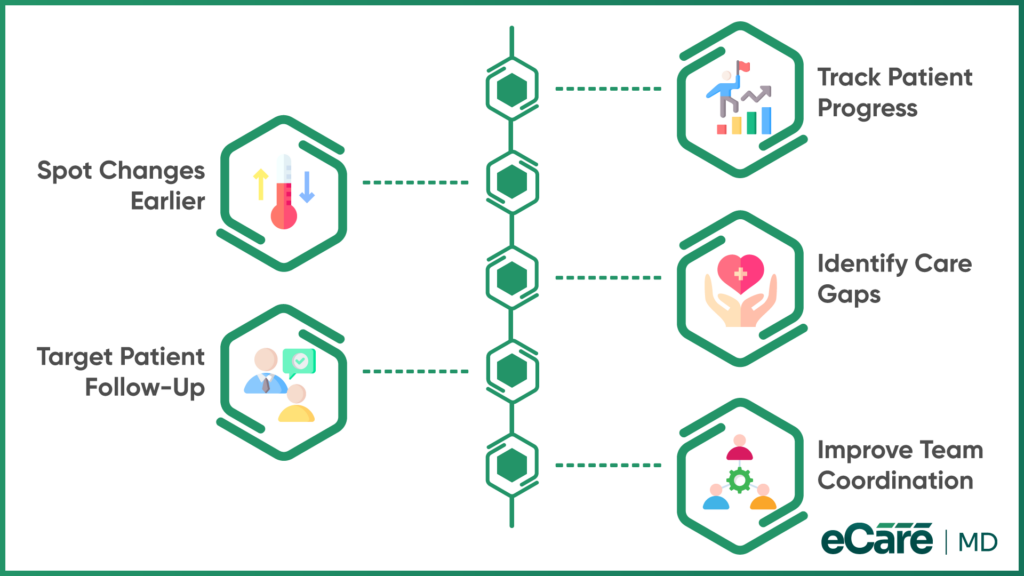
The value of analytics becomes clearer when a care team starts using it as part of its daily work. Instead of waiting for a problem to become obvious during the next patient encounter, the team can look at changes across the information collected over time.
For example, a review may show that a patient’s readings have been changing, follow-ups have become less consistent, and a care-plan goal has not been reviewed recently. None of these details alone may tell the full story. Together, they give the care team a reason to take a closer look.
That can lead to a more informed care-plan review, a targeted patient follow-up, or coordination with another member of the care team. The same approach can help teams spot care gaps, monitor patient progress over time, and see where communication or follow-up needs more attention.
Analytics can also give the broader CCM team a shared view of what is happening. Rather than different team members working from separate pieces of information, relevant trends can be reviewed together and connected to the next step in the workflow.
This is where CCM clinical analytics becomes practical. It does not replace clinical judgment or guarantee a particular patient outcome. It gives care teams clearer information to consider when deciding where to focus their time and what follow-up may be appropriate.
In the end, the goal is simple: use the information already being collected to make everyday CCM work more focused, connected, and responsive.
How Technology Turns CCM Data Into Actionable Insights
A growing CCM program can leave care teams jumping between spreadsheets, EHR screens, and manually prepared reports just to find one useful pattern. The more patients a practice manages, the harder that routine becomes.
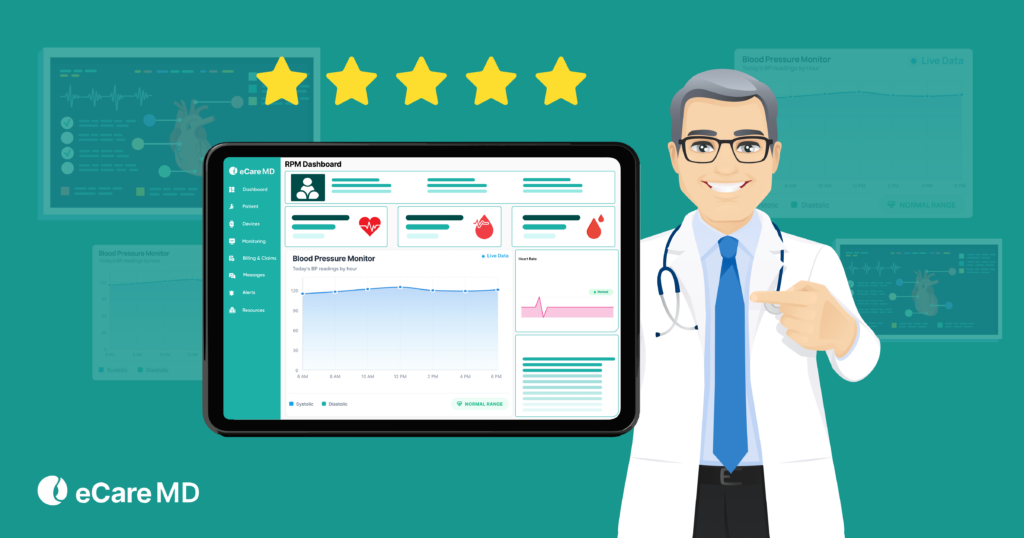
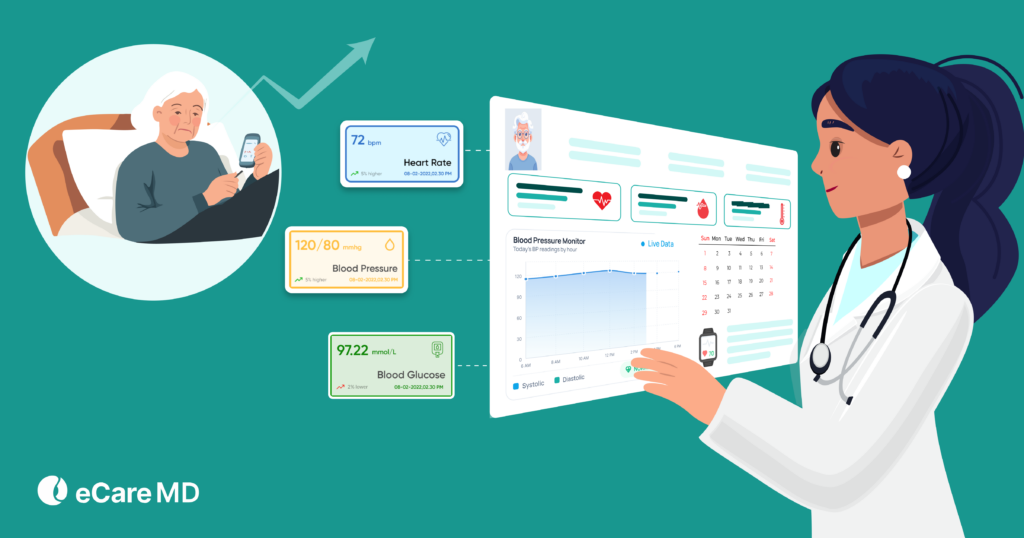
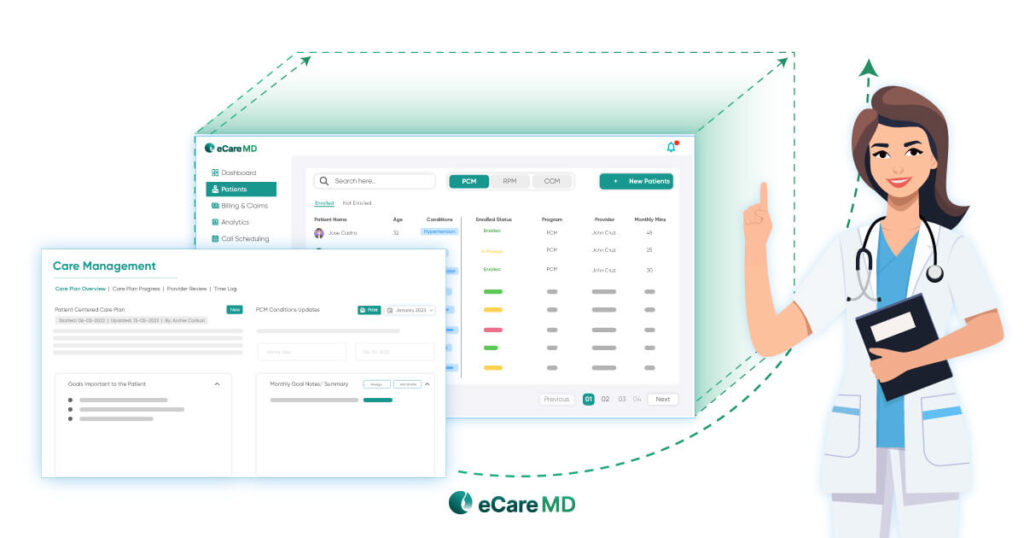
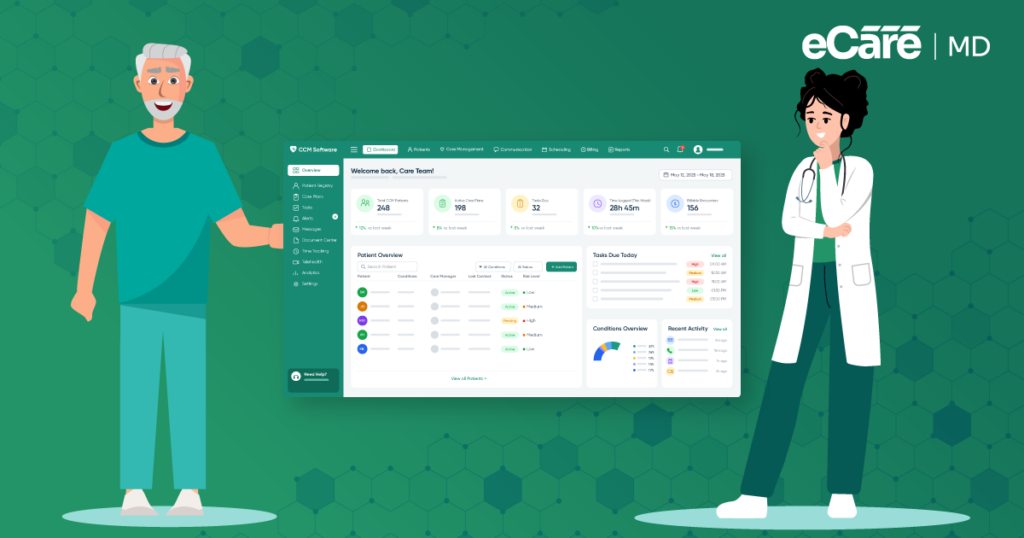
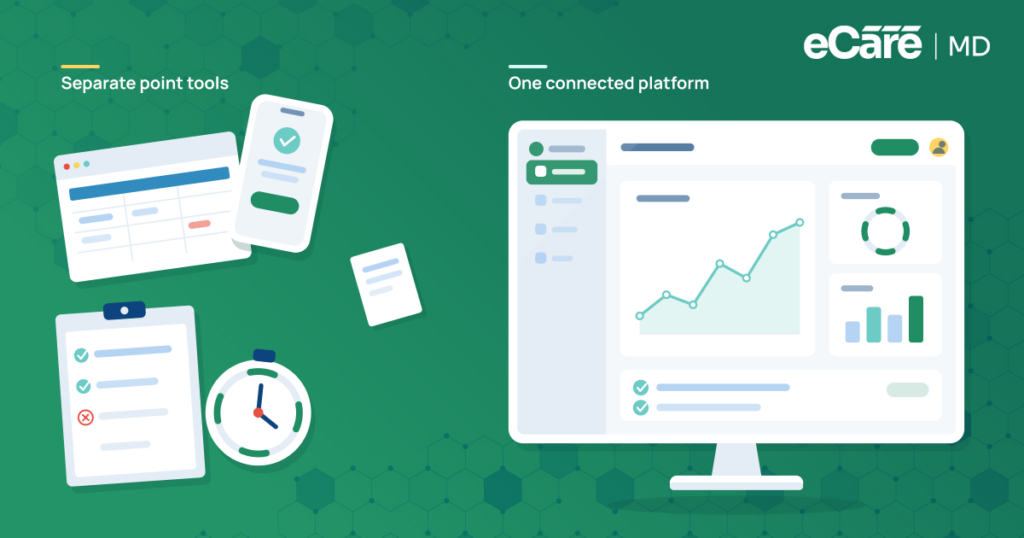
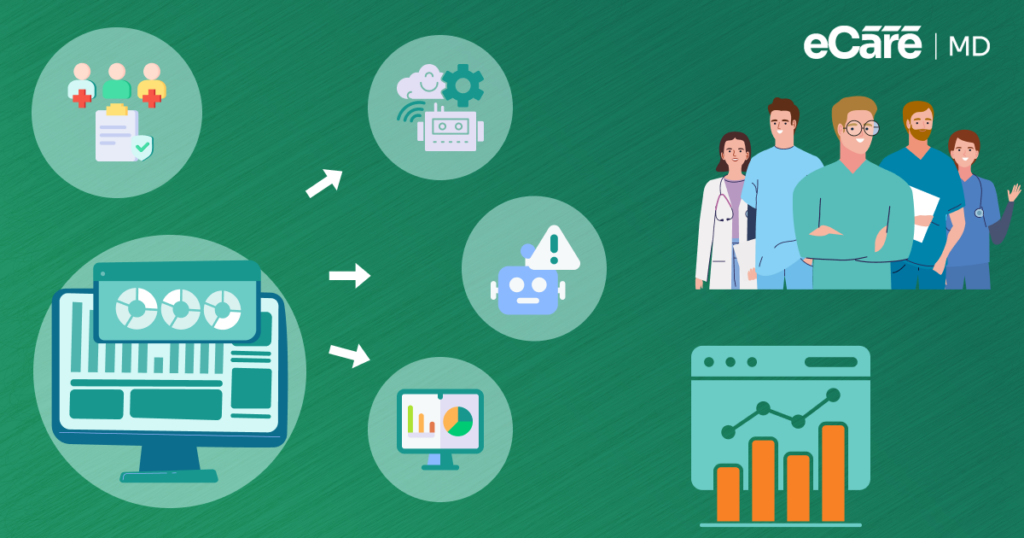
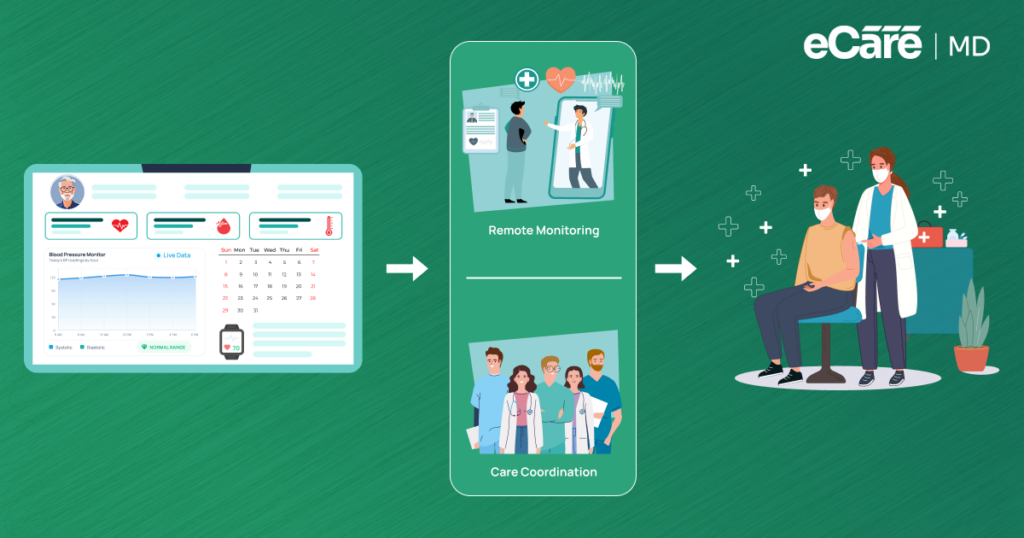
Chronic care management technology can bring those pieces into one organized place. Patient information, care plans, reports, and other CCM data become easier to access and review, giving the team a clearer view of what is happening across its patients.
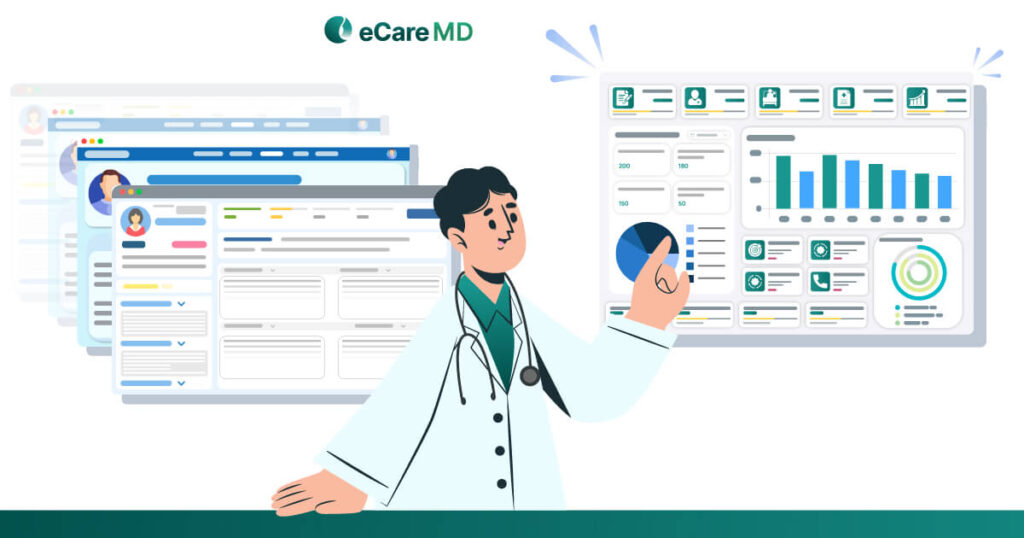
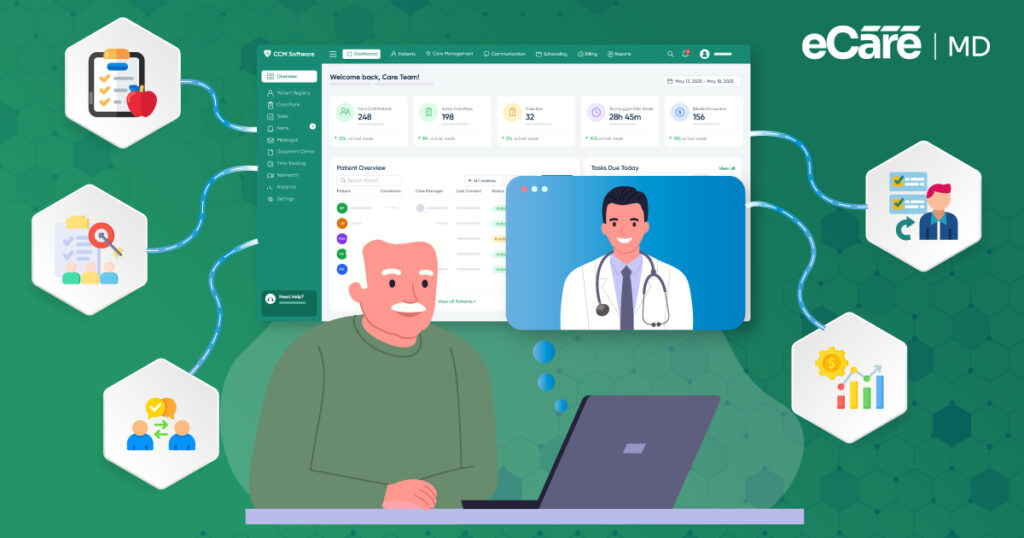
From there, the path is simple: organized data → analytics → insight → action. A dashboard may reveal a recurring care gap, for example, and that finding can lead to a care-plan review or targeted follow-up.
Analytics does not necessarily mean AI. Analytics looks at available data to find patterns and trends, while AI and predictive technologies use more advanced approaches to generate predictions or recommendations. For everyday CCM, simply making existing data easier to understand can already make a meaningful difference.
Turn CCM Data Into More Actionable Insights
Explore eCareMDHow eCareMD Supports Clinical Analytics in CCM
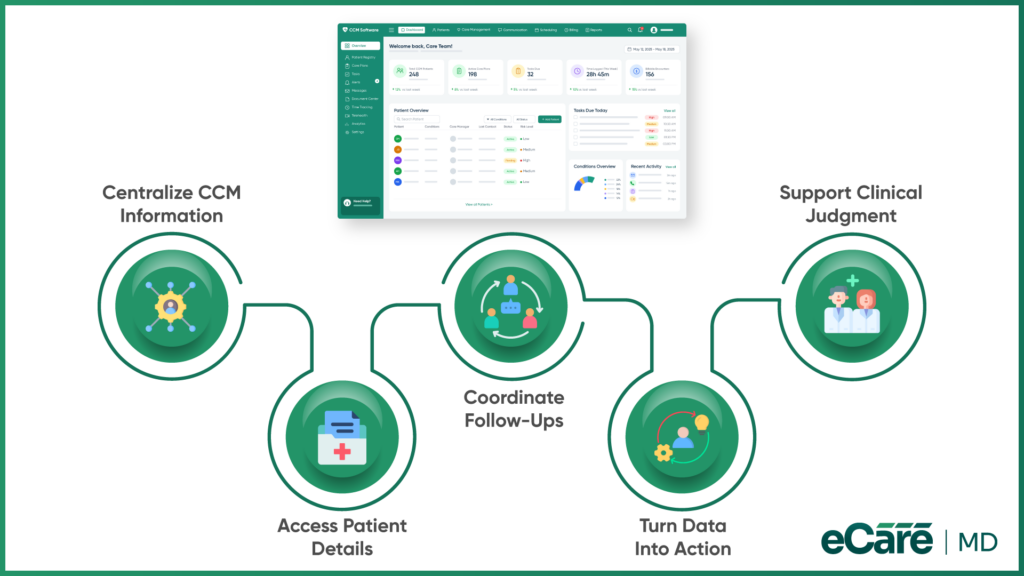
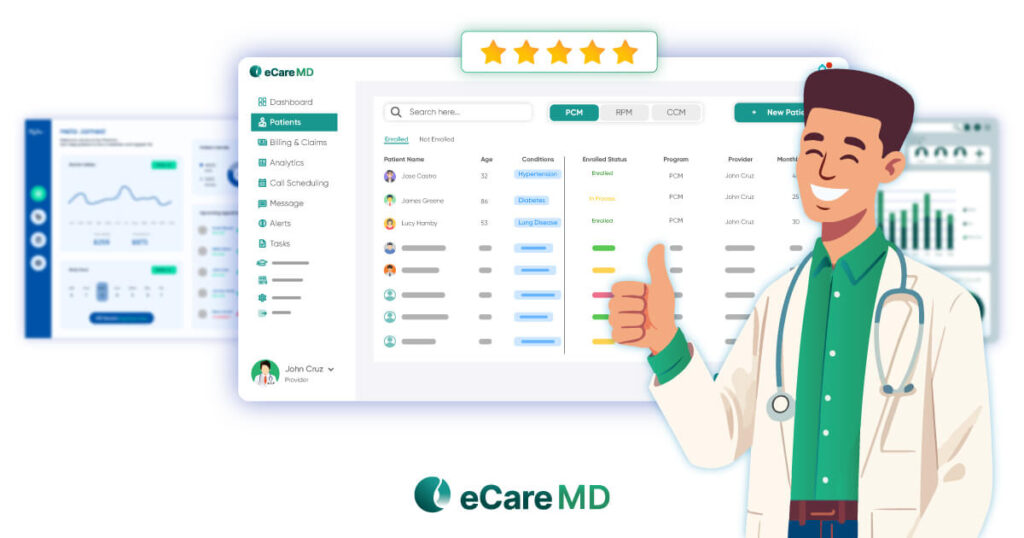
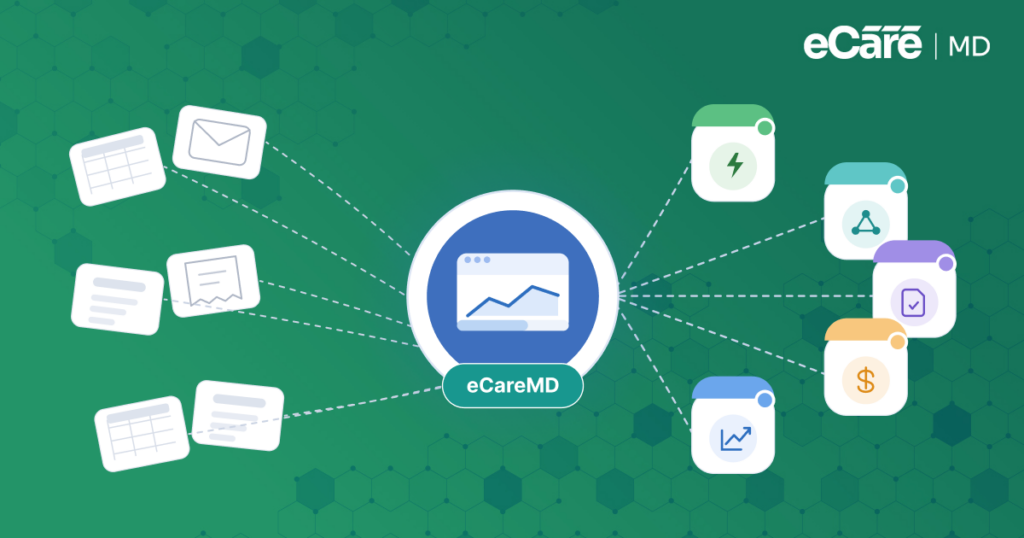
Once CCM information is organized, the next challenge is making it easy for the care team to use. Medarch Inc.’s eCareMD can serve as the operational layer that brings patient and care-management information into the CCM workflow.
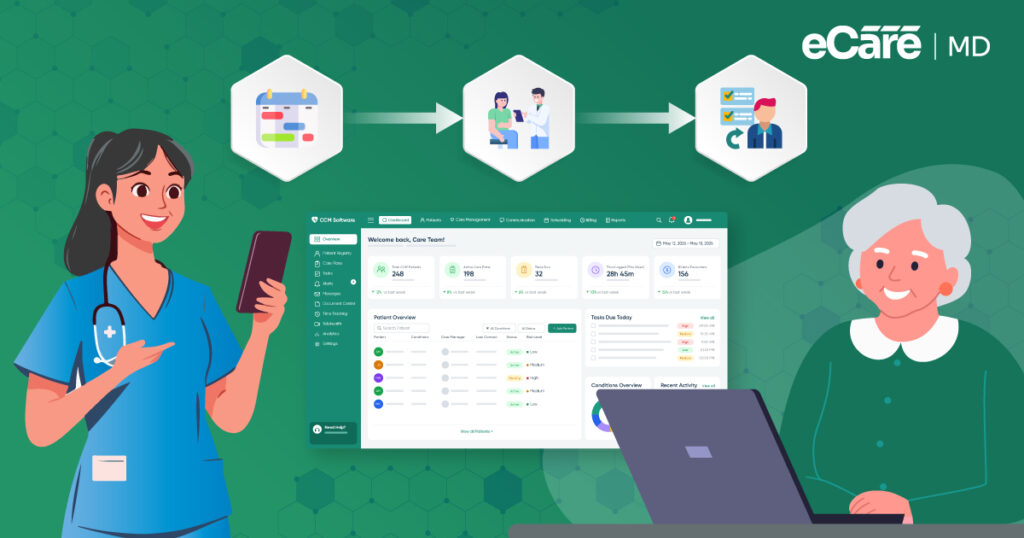
Care teams can access patient information, care-plan details, and care activities in one place, making it easier to keep track of ongoing needs and coordinate follow-ups. Instead of piecing together information from different sources, teams have a more connected view of the work in front of them.
That creates a simpler path from data → insight → action. The information remains with the care team, where clinicians and other authorized staff can review it, apply their professional judgment, and decide what follow-up is appropriate.
eCareMD supports this process; it does not independently make clinical decisions.
Conclusion
CCM clinical analytics turns ongoing patient data into useful insights by moving from data → patterns → insights → action → review. The value is not in collecting more information, but in helping care teams understand what needs attention.
eCareMD helps organize CCM information and workflows, making it easier for teams to manage data and connect relevant insights with follow-up.
With the right care management software systems, practices can spend less time managing scattered information and more time acting on what the data shows.
Frequently Asked Question’s
CCM clinical analytics is the process of reviewing clinical and care-management data generated through chronic care management to identify useful patterns and trends. It helps care teams understand changing patient needs, recognize gaps, and support appropriate follow-up while keeping clinical decisions with qualified healthcare professionals.
Chronic care management analytics can use information such as patient readings, symptoms, care-plan updates, follow-up records, medication-related information, patient engagement, and healthcare utilization. Reviewing these details over time can help care teams identify patterns and understand where a patient or workflow may need attention.
Clinical analytics can bring different CCM data points together to highlight missed follow-ups, overdue care activities, changes in patient engagement, or other recurring gaps. By reviewing these patterns regularly, care teams can identify areas that may require attention and connect them with appropriate follow-up.
Care teams can use CCM data insights to better understand patient trends, review care plans, prioritize follow-up, and coordinate care. These insights provide additional information for decision-making, helping teams focus their efforts while allowing clinicians and care managers to apply their professional judgment.
Effective strategies include maintaining accurate and consistent data, choosing relevant clinical and operational metrics, reviewing trends regularly, examining information over time, identifying recurring gaps, and connecting useful findings to workflow actions. Teams should also review results and refine their analytics process as their CCM program evolves.











![The Future of Remote Patient Monitoring: CMS Innovations & Emerging Trends [2026]](/wp-content/uploads/2024/07/Blog-36-The-Future-of-Remote-Patient-Monitoring_-Trends-AI-Innovation-CMS-Updates-for-2026-1024x538.png)